Cloudflare alternatives: 50 options by service and type

Cloudflare is a bundle of network services, and our data names the main ones: CDN, DNS, WAF and DDoS protection, Zero Trust access and gateway, Workers edge functions, Tunnel and a domain registrar. It was founded in 2009 in the United States, has 3217 employees according to our data, and its domain holds Majestic rank 163 and Tranco rank 2. That breadth is the first thing to understand about this page, because it means almost nobody replaces Cloudflare in one move.
We list 50 alternatives and sort them into ten types: direct competitors, budget-friendly tools, free options, enterprise-grade platforms, open-source projects, self-hosted software, regional specialists, built-in cloud services, adjacent products and a do-it-yourself build. Because of the bundle, each entry is tied to the Cloudflare service it replaces. Public sources describe Zero Trust and Tunnel as the weakest spot of the market, where fewer products match Cloudflare closely. We found no sign of a shutdown or rebrand.
Everything here rests on public sources reviewed in November 2026. We did not run hands-on trials and we do not publish prices or feature tables, because those change often and are not part of our data. Use the page to build a shortlist per service, then check current plans and limits on each vendor site. The cloud hosting category shows how these products relate.
Cloudflare is available at cloudflare.com. Public records list Cloudflare as founded in 2009. Its headquarters country is recorded as United States. The most recent public figure for its headcount is about 3,217 employees. Its domain ranks #163 in the Majestic Million, a free public list of the most-linked-to domains on the web. Its domain ranks #2 in the Tranco list of the most visited domains.
This page lists 50 alternatives to Cloudflare, spread across 10 types: direct (8), budget (4), free (4), enterprise (4), open source (7), self-hosted (3), regional (11), built-in (6), adjacent (2), diy (1).
27 of the 50 entries were seen in live web search results during our November 2026 review; the remaining entries are labelled unconfirmed so you know where extra checking is needed.
Regional options cover Europe, Russia, India, Asia.
- Direct: 8 (16%)
- Budget: 4 (8%)
- Free: 4 (8%)
- Enterprise: 4 (8%)
- Open source: 7 (14%)
- Self-hosted: 3 (6%)
- Regional: 11 (22%)
- Built-in: 6 (12%)
- Adjacent: 2 (4%)
- DIY: 1 (2%)
27 of 50 entries (54%) were seen in live search results during our review; the rest are labelled “unconfirmed” and should be checked on the vendor site.
Quick comparison: the closest alternatives to Cloudflare
| Site | Name | Type | Founded | Majestic rank | Check |
|---|---|---|---|---|---|
 | Amazon CloudFront | Direct | n/a | n/a | seen in search |
 | Fastly | Direct | 2011 | #3,232 | seen in search |
 | Imperva | Direct | 2002 | #6,077 | seen in search |
 | Gcore | Direct | 2011 | #41,065 | seen in search |
 | Sucuri | Direct | 2010 | #4,347 | unconfirmed |
What is Cloudflare and why do people look for alternatives?
Cloudflare sits between a website and its visitors. According to our data it combines a content delivery network, DNS, web application firewall and DDoS protection, Zero Trust products called Access and Gateway, Workers for running code at the edge, Tunnel for exposing services without opening ports, and a registrar. It was founded in 2009, is headquartered in the United States and employs 3217 people. Its domain is among the most heavily linked on the web.
People look for alternatives for reasons that vary with the service they use. Some want to avoid depending on one provider for DNS, CDN and security at once, because an outage or policy change then hits everything together. Others hit practical limits: a CDN-only buyer may prefer a simpler and cheaper product, a company on one hyperscale cloud may prefer the CDN and WAF built into that cloud, and a team in Russia or China may need a provider with local points of presence.
A further group wants control. Privacy-minded teams run their own reverse proxy, identity provider or authoritative DNS rather than send traffic through a third party. Developers compare Workers with other edge function platforms. The important point is to decide which Cloudflare service you actually use before you compare, since a DNS-only user and a Zero Trust user have almost nothing in common as shoppers. Related reading includes the Datadog page for monitoring and the DigitalOcean page for hosting.
How we built this list
The list was compiled in November 2026 from public sources only. We combined the Majestic Million ranking for domain prominence, the Tranco list, Wikidata for founding years and headquarters, and a manual review of public web search results to see which products are presented as substitutes for Cloudflare or for one of its services. The methodology page gives licences and limits.
Each entry carries one of two statuses. Seen in search means we found the product described as an alternative in public results. Unconfirmed means it appears in our source data but we could not match it in that review; such entries are shown for completeness and never offered as a top pick. Of the 50 entries, 27 were seen in search and 23 are unconfirmed.
We sort entries into types because the word alternative hides very different trade-offs, and here each entry also names the service it replaces. Read the hubs for direct alternatives and regional alternatives to see how a type works across categories. We do not rank by quality or accept payment for inclusion.
How to choose a Cloudflare alternative
Begin by listing the Cloudflare services you actually use today: authoritative DNS, proxying and caching, firewall rules, bot and DDoS protection, Access policies, Tunnel connections, Workers scripts, or domain registration. Open the account dashboard and check traffic and rules for each. Many accounts use only DNS and a free proxy, and for them the shortlist is short. Others use a dozen features, and replacing them means choosing several tools.
Then decide whether to replace everything or only part. A partial move is often safer: move DNS first, then the CDN, then the security layer, testing at each step. Keep in mind that DDoS capacity cannot be reproduced on a single server, so the DIY option in our data is described as having no DDoS capacity. If attack protection matters, look at providers whose business is absorbing attacks.
Finally, consider where your visitors are and where your data may travel. Regional providers fit local traffic better, and some organisations have rules about which companies may see their traffic. The criteria below are worth weighing:
- Service match: which Cloudflare features the candidate replaces, and which it does not.
- Network reach: points of presence near your visitors, including mainland China or Russia if relevant.
- Security depth: WAF rules, bot handling and DDoS capacity, not only a marketing claim.
- Zero Trust and tunnels: identity providers supported, device checks and how connections are brokered.
- Edge compute: language support, cold starts, limits and how deployment fits your build pipeline.
- DNS features: DNSSEC, API access, record limits and failover options.
- Exit plan: ability to export zones, rules and policies, and the effort to switch again.
Quick picks by situation
For a CDN, Amazon CloudFront is described as convenient on an AWS stack, Fastly pairs a CDN with edge compute, and Gcore offers CDN, WAF and DNS from one vendor. For a cheap CDN, Bunny.net is the entry seen in search, with a note that it has no WAF or Zero Trust. For security, Imperva is described as deeper on WAF, DDoS and bots than CDN-first vendors, and Akamai is one of the oldest names in CDN, WAF and DDoS.
For DNS, ClouDNS and NS1 are seen in search with free tiers according to forum reports, and Amazon Route 53 is DNS inside AWS. Open-source deSEC offers DNS hosting. For edge functions, Deno Deploy, Vercel Edge Functions and Netlify Edge Functions are seen in search as Workers substitutes, and AWS Lambda@Edge runs on CloudFront.
For Zero Trust and tunnels, which our data calls the weakest area, the options are mostly self-assembled: Pangolin for tunnelled reverse proxying, Authentik for SSO as an Access analogue, Headscale for your own Tailscale control server, and Control D for DNS filtering. Enterprise buyers can look at Zscaler, Palo Alto Prisma Access and Netskope, all unconfirmed. For Russian or Chinese markets, see the regional group below, and for planned moves read the PRTG page.
All 50 alternatives to Cloudflare by type
Direct alternatives to Cloudflare (8)
Products that solve the same core problem for the same kind of buyer. Switching usually means moving data and retraining people, not changing how you work. For Cloudflare, this list contains 8 entries in this group, including Amazon CloudFront, Fastly, Imperva, Gcore and Sucuri. See all direct alternatives across every product →
Choosing among direct alternatives to Cloudflare
Our data lists eight direct options, seven seen in search. For CDN, Amazon CloudFront (founded 2006) is convenient on AWS and Fastly (2011) adds edge compute. Imperva (2002) is deeper on WAF, DDoS and bots, and Gcore (2011, Luxembourg) offers CDN, WAF and DNS together. For edge functions there are Deno Deploy (2018), Vercel Edge Functions (2015) and Netlify Edge Functions (2014). Sucuri, a WAF and CDN for CMS sites, is unconfirmed. Match each to the single service you want to replace. See the direct hub.
| Site | Name | Type | Founded | Majestic rank | Check |
|---|---|---|---|---|---|
| Amazon CloudFront | Direct | n/a | n/a | seen in search |
| Fastly | Direct | 2011 | #3,232 | seen in search |
| Imperva | Direct | 2002 | #6,077 | seen in search |
| Gcore | Direct | 2011 | #41,065 | seen in search |
| Sucuri | Direct | 2010 | #4,347 | unconfirmed |
 | Deno Deploy | Direct | 2018 | #15,072 | seen in search |
 | Vercel Edge Functions | Direct | 2015 | #1,473 | seen in search |
 | Netlify Edge Functions | Direct | 2014 | #2,665 | seen in search |
Budget-friendly alternatives to Cloudflare (4)
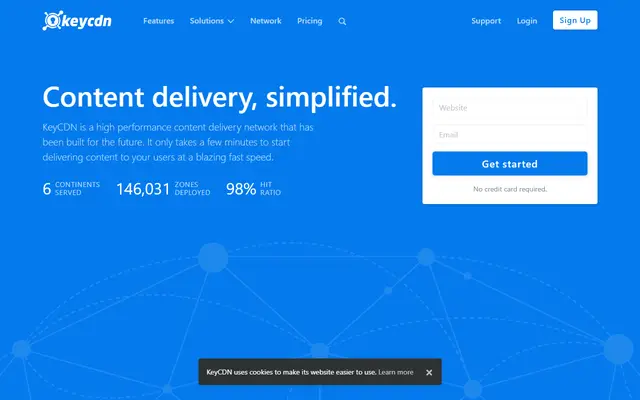
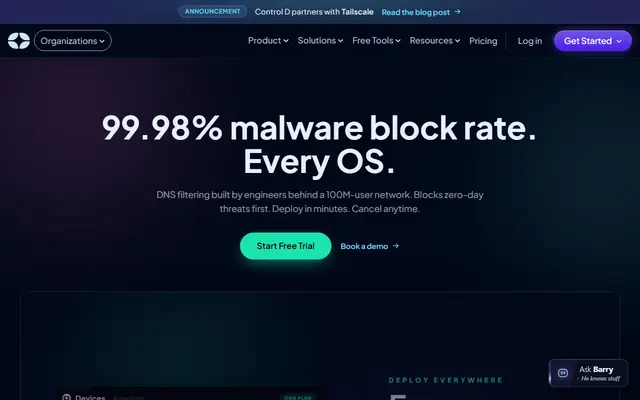
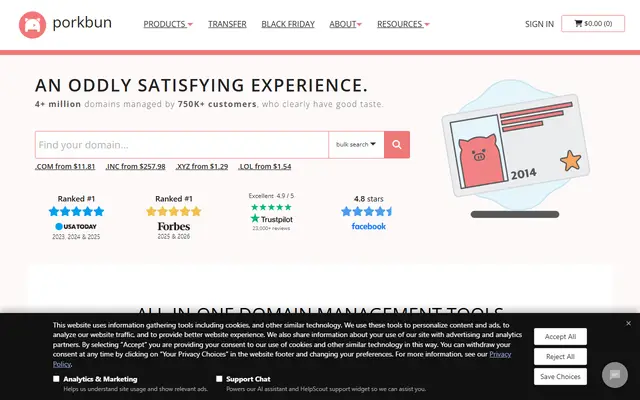
Lower-cost tools that cover the essential jobs without the full feature surface. A good fit when you pay for seats or features you rarely open. For Cloudflare, this list contains 4 entries in this group, including Bunny.net, KeyCDN, Control D and Porkbun. See all budget alternatives across every product →
Choosing among budget-friendly alternatives to Cloudflare
Four budget-friendly entries appear. Bunny.net is a CDN without WAF or Zero Trust, KeyCDN is a simple CDN and is unconfirmed, Control D does DNS filtering comparable to Gateway but not Tunnel, and Porkbun is a registrar that permits third-party DNS. These replace single services, so a full move means combining them. Check egress and request pricing against your traffic, since a low base price can rise with volume. See the budget hub and the Ultahost page for hosting.

Free options to Cloudflare (4)
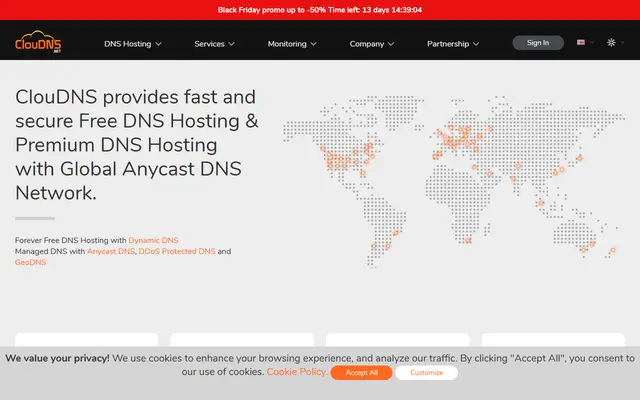
Tools with a free plan or free access that is usable on its own. Limits on volume, users or history usually apply, so check them before you commit. For Cloudflare, this list contains 4 entries in this group, including ClouDNS, NS1, Tailscale and Twingate. See all free alternatives across every product →
Choosing among free alternatives to Cloudflare
Four free options appear. ClouDNS offers a free DNS plan without DNSSEC, and NS1 a free developer account, both according to forum reports and both seen in search. Tailscale, a mesh VPN described as a replacement for WARP and Tunnel, and Twingate, which offers Zero Trust network access, are unconfirmed. Free tiers often cap queries, users or devices, so verify current terms. They suit small projects and testing. See the free hub and the open-source group for no-cost software.
Enterprise-grade alternatives to Cloudflare (4)
Platforms built for large teams: governance, audit trails, integrations and support contracts. They tend to cost more and take longer to roll out. For Cloudflare, this list contains 4 entries in this group, including Akamai, Zscaler, Palo Alto Prisma Access and Netskope. See all enterprise alternatives across every product →
Choosing among enterprise-grade alternatives to Cloudflare
Our data lists four. Akamai, founded in 1998 in the United States, is described as an old CDN, WAF and DDoS provider and was seen in search. Zscaler (2008), Palo Alto Prisma Access (2005) and Netskope (2012) are Zero Trust and SASE platforms, unconfirmed in our review. These suit organisations that need contracts, support and compliance paperwork. Expect sales-led buying and ask for a pilot. See the enterprise hub and the Datadog page for the monitoring side of an enterprise estate.
| Site | Name | Type | Founded | Majestic rank | Check |
|---|---|---|---|---|---|
 | Akamai | Enterprise | 1998 | #1,551 | seen in search |
 | Zscaler | Enterprise | 2008 | #6,899 | unconfirmed |
 | Palo Alto Prisma Access | Enterprise | 2005 | #1,832 | unconfirmed |
 | Netskope | Enterprise | 2012 | #20,004 | unconfirmed |
Open-source alternatives to Cloudflare (7)
Projects whose source code is public. You can inspect, modify and often self-host them, at the price of doing more of the maintenance yourself. For Cloudflare, this list contains 7 entries in this group, including Pangolin, Authentik, BunkerWeb, SafeLine (Chaitin) and Headscale. See all open source alternatives across every product →
Choosing among open-source alternatives to Cloudflare
Seven open-source entries appear, six seen in search: Pangolin, a tunnelled reverse proxy that replaces Tunnel, Authentik for SSO as an Access analogue, BunkerWeb as an NGINX-based WAF, SafeLine from Chaitin as a self-hosted WAF in Docker, Headscale as your own Tailscale control server, and deSEC for DNS hosting. NetBird, a WireGuard mesh from 2021, is unconfirmed. These give control but not network scale, so you run the servers. See the open-source hub.
| Site | Name | Type | Founded | Majestic rank | Check |
|---|---|---|---|---|---|
 | Pangolin | Open source | n/a | #183,248 | seen in search |
 | Authentik | Open source | n/a | #51,721 | seen in search |
 | BunkerWeb | Open source | n/a | #32,606 | seen in search |
| SafeLine (Chaitin) | Open source | n/a | n/a | seen in search | |
| Headscale | Open source | n/a | n/a | seen in search | |
 | deSEC | Open source | n/a | #128,908 | seen in search |
 | NetBird | Open source | 2021 | #62,080 | unconfirmed |
Self-hosted alternatives to Cloudflare (3)
Software you run on your own server or computer. You keep control of the data and the uptime, and you take on updates, backups and security. For Cloudflare, this list contains 3 entries in this group, including PowerDNS, Keycloak and Caddy. See all self-hosted alternatives across every product →
Choosing among self-hosted alternatives to Cloudflare
Three self-hosted tools appear, all unconfirmed in our review: PowerDNS for your own authoritative DNS, Keycloak (founded 2014) as an identity provider for Zero Trust, and Caddy, a reverse proxy with automatic TLS. They replace pieces of the stack and need operating skills, monitoring and backups. They cannot match the capacity of a global network. Check each project's current status and the self-hosted hub before planning around them. Teams that already run Linux servers will find the learning curve gentler.
| Site | Name | Type | Founded | Majestic rank | Check |
|---|---|---|---|---|---|
 | PowerDNS | Self-hosted | n/a | #35,515 | unconfirmed |
 | Keycloak | Self-hosted | 2014 | #11,279 | unconfirmed |
 | Caddy | Self-hosted | n/a | #1,932 | unconfirmed |
Regional and local alternatives to Cloudflare (11)
Vendors that are strongest in a particular country or region: local languages, local payment methods, local data-residency rules and local support hours. For Cloudflare, this list contains 11 entries in this group, including CDN77, OVHcloud, Myra Security, Qrator Labs and DDoS-Guard. See all regional alternatives across every product →
Choosing among regional alternatives to Cloudflare
This is the largest regional group in the data, with 11 entries. OVHcloud, with anti-DDoS in its hosting, and AppTrana from Indusface in India, listed among WAF replacements, were seen in search. CDN77 (Czech), Myra Security (German WAF and DDoS), Qrator Labs, DDoS-Guard, Selectel CDN and Yandex Cloud CDN (Russia), Alibaba Cloud CDN and Tencent EdgeOne (Asia) and Azion (Brazil) are unconfirmed. Local points of presence help local visitors. See the regional hub.
| Site | Name | Type | Founded | Majestic rank | Check |
|---|---|---|---|---|---|
 | CDN77 | Regional · Europe | n/a | #84,949 | unconfirmed |
 | OVHcloud | Regional · Europe | n/a | #297 | seen in search |
 | Myra Security | Regional · Europe | n/a | #274,076 | unconfirmed |
| Qrator Labs | Regional · Russia | n/a | #139,212 | unconfirmed | |
| DDoS-Guard | Regional · Russia | n/a | #253,994 | unconfirmed | |
 | Selectel CDN | Regional · Russia | 2008 | #35,752 | unconfirmed |
 | Yandex Cloud CDN | Regional · Russia | n/a | #15,295 | unconfirmed |
 | AppTrana (Indusface) | Regional · India | n/a | #110,202 | seen in search |
 | Alibaba Cloud CDN | Regional · Asia | 2009 | #2,949 | unconfirmed |
 | Tencent EdgeOne | Regional · Asia | 2013 | #29,163 | unconfirmed |
 | Azion | Regional | n/a | #484,094 | unconfirmed |
Built-in features of platforms you already use to Cloudflare (6)
Capabilities that already ship inside a suite or platform you pay for. They rarely match a specialist tool feature for feature, but they cost nothing extra. For Cloudflare, this list contains 6 entries in this group, including Google Cloud CDN, Azure Front Door / CDN, AWS WAF, Amazon Route 53 and AWS Lambda@Edge. See all built-in alternatives across every product →
Choosing among built-in alternatives to Cloudflare
Built-in services come with a hyperscale cloud. Our data lists Google Cloud CDN, Azure Front Door and CDN, AWS WAF, Amazon Route 53 and AWS Lambda@Edge, all seen in search, and Google Cloud Armor, unconfirmed. They keep traffic, billing and access control inside one platform, which suits teams already there. The trade-off is lock-in and different pricing models. Route 53 is described as paid per zone. See the built-in hub and the DigitalOcean page.
| Site | Name | Type | Founded | Majestic rank | Check |
|---|---|---|---|---|---|
 | Google Cloud CDN | Built-in | 2008 | n/a | seen in search |
 | Azure Front Door / CDN | Built-in | 2010 | n/a | seen in search |
 | AWS WAF | Built-in | n/a | n/a | seen in search |
 | Amazon Route 53 | Built-in | n/a | n/a | seen in search |
 | AWS Lambda@Edge | Built-in | 2006 | #156 | seen in search |
| Google Cloud Armor | Built-in | 2008 | n/a | unconfirmed |
Adjacent tools to Cloudflare (2)
Products that cover part of the job or approach it from another angle. Useful when you only need a slice of the original product. For Cloudflare, this list contains 2 entries in this group, including Cisco Umbrella and ngrok. See all adjacent alternatives across every product →
Choosing among adjacent alternatives to Cloudflare
Two adjacent products appear. Cisco Umbrella, seen in search, is DNS security rather than a Tunnel replacement. ngrok, unconfirmed, provides tunnels to a local machine. Neither is a full substitute, but each covers a narrow job near Cloudflare's services. Pick one only when that job is the real need, and see the adjacent hub for similar products. Cisco Umbrella works at the DNS layer and complements, rather than replaces, a proxy, while ngrok suits developers who need a quick public address for local work, so check each vendor's own description of scope.

DIY and self-made approaches to Cloudflare (1)
Spreadsheets, scripts and workflows you assemble yourself. Cheap and flexible for small needs, but they depend on whoever built them. For Cloudflare, this list contains 1 entry in this group, including VPS + nginx/Caddy + WireGuard + fail2ban. See all diy alternatives across every product →
Choosing among DIY alternatives to Cloudflare
One DIY pattern appears and is unconfirmed: a VPS running nginx or Caddy, WireGuard and fail2ban as your own proxy and VPN. Our data notes it has no DDoS capacity, so it fits private access and small sites, not exposed targets. You own updates and incident response. See the DIY hub and consider the Ultahost page when choosing a host. If you try it, keep the configuration in version control and test failover before you depend on it.
| Site | Name | Type | Founded | Majestic rank | Check |
|---|---|---|---|---|---|
| VPS + nginx/Caddy + WireGuard + fail2ban | DIY | n/a | n/a | unconfirmed |
Migration checklist: moving away from Cloudflare
Changing network providers affects live traffic, so move one service at a time. Export before you touch anything: DNS zone files, firewall rules, page rules, Worker scripts and Access policies. Lower DNS time-to-live values a day or two ahead so that changes spread quickly, and plan the cutover for a quiet period with a clear rollback.
Test the new path before switching production. Send a small share of traffic or a staging hostname through it, and check TLS certificates, redirects and headers. Remember that moving DNS away from a proxy exposes your origin address, so rotate it if needed. For another planned move, see the PRTG page.
- Export DNS records, including MX, TXT and any records proxied through Cloudflare.
- Save firewall, rate-limit and bot rules, and note their order and exceptions.
- Copy Worker scripts, bindings and environment variables to version control.
- Document Access and Gateway policies, identity providers and device rules.
- List Tunnel connections and the internal services they publish.
- Lower DNS TTL values before cutover and keep the old records in place.
- Check TLS certificates, redirects and caching headers on the new path.
- Move the registrar last, and keep the old setup until traffic is stable.
Mistakes to avoid when switching
The most common mistake is expecting one product to replace everything. Public sources say there is no single replacement, so plan for several tools and the integration between them. Another is forgetting that email records live in DNS, and a lost MX or TXT record can silently break mail.
Teams also overlook origin exposure, DDoS capacity and the hidden dependency of internal tools on tunnels. Finally, treat unconfirmed entries with care: 23 of the 50 here were not confirmed in our review, so check their status directly. For a related comparison, read the Datadog page.
- Expecting a single vendor to replace CDN, DNS, WAF, Zero Trust and Workers.
- Dropping MX, TXT or verification records while copying DNS.
- Leaving the origin server exposed after removing the proxy.
- Replacing a DDoS-absorbing network with a single server.
- Cutting over without lowering TTL values or a rollback plan.
- Relying on an unconfirmed entry without checking it is active.
What the public data says about these alternatives
Our data contains 50 alternatives, of which 27 were seen in search and 23 are unconfirmed. By type, direct has 8, regional 11, open-source 7, built-in 6, budget 4, free 4, enterprise 4, self-hosted 3, adjacent 2 and DIY 1. The size of the regional group reflects how much local CDN and DDoS supply exists outside the global providers.
Cloudflare was founded in 2009 and has a Majestic rank of 163 and a Tranco rank of 2. Among alternatives, the aws.amazon.com domain behind CloudFront, WAF, Route 53 and Lambda@Edge holds rank 156, OVHcloud sits at 297, Vercel at 1473 and Akamai at 1551. At the other end, Azion is at 484094 and NS1 at 237889.
Where founding years are known, Akamai (1998) and Imperva (2002) are the oldest direct and enterprise names, while NetBird (2021) and Tailscale (2019) are the newest. The United States dominates the listed headquarters, with Luxembourg and Canada appearing once each. Treat these as signals of prominence and origin, not quality. The methodology page explains each source.
Frequently asked questions
What is the best free alternative to Cloudflare?
It depends on the service. ClouDNS and NS1 were seen in search with free DNS tiers according to forum reports, while Tailscale and Twingate are free options for private access but unconfirmed. For open-source software, see Pangolin, Authentik and BunkerWeb. Verify current terms and limits.
Is there an open-source alternative to Cloudflare?
There are open-source pieces, not one replacement. Pangolin replaces Tunnel, Authentik resembles Access, BunkerWeb and SafeLine are WAFs, Headscale is a Tailscale control server, and deSEC hosts DNS. They do not provide a global network, so you run the servers yourself.
What is the cheapest alternative to Cloudflare?
Bunny.net is the budget CDN seen in search, though our data notes it has no WAF or Zero Trust. Control D and Porkbun are other budget entries. We do not list prices, so compare traffic, request and egress charges against your own usage.
Which Cloudflare alternative is closest in features?
No single product matches, according to public sources. Gcore bundles CDN, WAF and DNS, Fastly pairs CDN with edge compute, and Imperva goes deeper on WAF and DDoS. For Zero Trust and Tunnel, the market is thinnest, so expect to combine tools.
Which alternatives replace Cloudflare Workers?
Deno Deploy, Vercel Edge Functions and Netlify Edge Functions were seen in search as edge function platforms. AWS Lambda@Edge runs on CloudFront. Compare language support, limits and how each fits your deployment pipeline before moving code.
Are there alternatives for Russia or China?
Our regional group lists Qrator Labs, DDoS-Guard, Selectel CDN and Yandex Cloud CDN for Russia, and Alibaba Cloud CDN and Tencent EdgeOne for Asia. All are unconfirmed in our review, so check availability and terms yourself.
Can I export my configuration from Cloudflare before switching?
DNS zones can generally be exported as files, and rules and scripts can be saved from the dashboard or through its API, but we do not verify export features. Export early, keep copies in version control and keep the old setup running until the new one is proven.
Is Cloudflare shutting down or being renamed?
We found no sign of a closure or rebrand in public search results. Cloudflare was founded in 2009 and remains one of the most visited domains in our data. People compare alternatives for scope, cost, control and regional reasons, not because the service is ending.
Bottom line
Cloudflare is a bundle, and the public data gives no sign that it is going away. That is why the right question is which service you want to replace. A cheap CDN, a deeper WAF, a hyperscale cloud's built-in tools, a regional provider or self-run open source each answer a different need, and Zero Trust and Tunnel remain the hardest to replace.
For most teams a practical path is to move one service at a time: choose a direct option such as Gcore, Fastly or CloudFront for the CDN, a DNS provider such as ClouDNS or Route 53, and open-source or enterprise tools for access. Verify unconfirmed entries yourself. Continue with the PRTG page or the cloud hosting category.
More alternatives pages related to Cloudflare


Where Cloudflare shows up as an alternative
Cloudflare appears in the alternatives lists of 3 other products: DigitalOcean, SendGrid, Vimeo. Comparing those lists shows which tools keep being recommended across the whole category.
Explore more in Cloud, Hosting & Infrastructure
Virtual servers, hosting providers, virtualization and edge networks. Browse the full Cloud, Hosting & Infrastructure hub, or jump to a related comparison: DigitalOcean, Ultahost, VMware.