Telephony, video and communications alternatives
Communications software is a broad family. A cloud phone system for a sales team, a contact-centre suite with queues and agent desktops, an API that sends text messages from your own application and a video host for marketing clips all sit under one heading here, because buyers of one often end up comparing notes with buyers of another. This hub brings together the five products in that area that have their own alternatives pages: Genesys, Aircall, RingCentral, Twilio and Vimeo.
Across those five pages our data holds 238 alternative entries, sorted into ten types such as direct, budget-friendly, free, enterprise-grade, open-source, self-hosted, regional, built-in, adjacent and DIY. Regional options form the biggest group with 52 entries, followed by direct competitors with 44 and open-source projects with 42. The mix tells you something about this market: it is full of local carriers, regional specialists, and a deep bench of open telephony software.
Everything on these pages comes from public sources reviewed in November 2026, not from hands-on trials. We do not quote prices, call-quality scores or feature tables, because our data does not contain them. What you get is a map that helps you build a shortlist. Read the methodology for the exact sources, then open the product pages below for the full lists.
- Direct: 44 (18%)
- Budget: 12 (5%)
- Free: 5 (2%)
- Enterprise: 31 (13%)
- Open source: 42 (18%)
- Self-hosted: 20 (8%)
- Regional: 52 (22%)
- Built-in: 11 (5%)
- Adjacent: 15 (6%)
- DIY: 6 (3%)
Telephony, Video & Communications guides: pick the product you want to replace

What this category covers
Telephony and communications products fall into roughly four jobs. The first is the business phone: a cloud system that gives employees numbers, voicemail, call routing and a softphone app. RingCentral and Aircall live here. The second is the contact centre: software for queues, agent screens, scripts and reporting, which is where Genesys sits. The third is communications infrastructure for developers, where Twilio offers building blocks for voice, text and messaging. The fourth is video hosting, represented by Vimeo.
These jobs overlap in the real world. A support team may run a contact-centre suite on top of a carrier connection, add a text-message API for appointment reminders and embed hosted videos in a help centre. That is why our data often lists the same names under several products. Asterisk, FreePBX and FreeSWITCH appear in four of the five telephony and messaging guides, while Nextiva, 3CX, Callytics and FusionPBX each turn up in three. Names that recur are a sign of a product that is relevant across more than one need.
It also helps to know what this category is not. Email delivery, customer support desks and CRM tools have their own hubs, such as customer support and CRM and sales. If your question is about a helpdesk ticket queue rather than the phone line that feeds it, start there and come back when the voice layer becomes the issue.
How to choose in telephony and communications
Start from the user, not the logo. A five-person office needs a phone app, a main number and call forwarding. A hundred-seat support floor needs queue logic, supervisor tools and integration with a ticketing system. A product team needs an API and wants to send messages in a dozen countries. Each of these users will rank the same vendors differently, so write down who will actually pick up the phone or call the API before you open any comparison.
Then look at geography. Telephony is regulated country by country, and number availability, carrier relationships and emergency calling rules differ. Our data shows many regional specialists for exactly this reason, from European providers to Indian ones. If most of your callers live in one country, a local provider may offer numbers and support in your language that a global vendor handles through partners.
Finally, decide how much of the stack you want to own. A hosted service is quick to start but ties you to the vendor's roadmap. Open-source PBX software gives control but also gives you the on-call burden. The criteria below are a practical checklist:
- Number of users and expected call volume, including peaks.
- Countries where you need numbers, and local regulatory requirements for them.
- Integration needs: CRM, helpdesk, calendar and reporting tools.
- Channels beyond voice, such as text, WhatsApp, chat or video.
- Recording, retention and consent rules for your industry.
- Whether you need an API and programmable call flows or only a ready-made app.
- Who will administer the system day to day and how support is delivered.
Why people switch away from the big names
The reasons are fairly consistent. Cost structure is the first: seat-based plans grow with headcount, and usage-based APIs grow with traffic, so teams revisit their choice when a bill stops looking proportionate. Complexity is the second, since a full contact-centre platform may be more than a ten-agent team needs. Local coverage is the third, as noted above.
Ownership and strategy changes also prompt reviews. Our data records that Vimeo was bought by Bending Spoons for 1.38 billion USD, that large layoffs were reported in January 2026, and that vendor blogs say Vimeo On Demand closes on 20 November 2026, although we did not find a primary source for that date. The main Vimeo video hosting service continues to operate. For Twilio, our data notes a mention that the authentication company Stytch now belongs to it, from a single compilation rather than a primary source.
None of this proves that a product is declining. It simply explains why buyers keep an alternatives list at hand. Treat each reason as a question to put to the vendor you are considering, and check current terms on its own site before deciding.
About Genesys alternatives
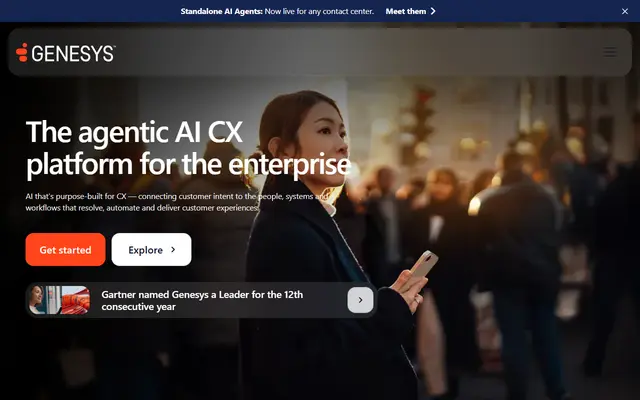
Genesys, founded in 1990 in the United States, is a contact-centre platform with a Majestic rank of 13,697. Our Genesys alternatives page lists 48 options, 47 of them seen in search. Direct competitors include Vonage Contact Center, Zoom Contact Center, Dialpad Support and Nextiva. Enterprise-grade names include Five9, NiCE CXone, Talkdesk and Amazon Connect. Teams that want control can look at open-source VICIdial, Asterisk and FreePBX, while Cisco UCCX appears for on-premises deployments. Regional entries range from Mango Office to Exotel and Zenvia.
About Aircall alternatives
Aircall, a French company founded in 2014, is a cloud phone system for sales and support teams. The Aircall alternatives page lists 48 options, 46 seen in search. Close rivals include JustCall, CloudTalk, Quo, Dialpad and Ooma. Budget-minded readers will find Talkroute, MightyCall, KrispCall and Google Voice in the budget group, and Freshdesk Contact Center is the single free entry. Regional specialists such as Ringover, Placetel, sipgate, NFON and Voys are listed as regional options, and Microsoft Teams Phone is the built-in route for Microsoft 365 shops.
About RingCentral alternatives
RingCentral was founded in 2003 in the United States and has a Majestic rank of 5,600. Our RingCentral alternatives page covers 42 options, with 40 seen in search. The direct group includes Dialpad, 8x8, GoTo, Nextiva, Vonage, Sangoma and Aircall. Enterprise names include Cisco Webex Calling, Zoom Phone and Microsoft Teams Phone, while Avaya and Mitel are listed but not confirmed in our review. Ten open-source projects, including Asterisk, FreePBX, Elastix and FusionPBX, show how deep the self-run option is. Slack and TrueConf appear among adjacent tools.
About Twilio alternatives
Twilio, founded in 2008 in the United States, is a communications platform for developers with a Majestic rank of 1,578. The Twilio alternatives page holds 50 entries, 48 seen in search. Direct options include Vonage, Telnyx, Plivo, Bird and CM.com. Enterprise carriers such as Sinch, Infobip, Bandwidth and Kaleyra appear next, and AWS offers built-in routes through Amazon SNS and AWS End User Messaging. Open-source alternatives range from Fonoster and Somleng to TextBee and Novu. Regional entries cover Africa's Talking, MSG91 and Voximplant, and 360dialog is a WhatsApp specialist.
About Vimeo alternatives
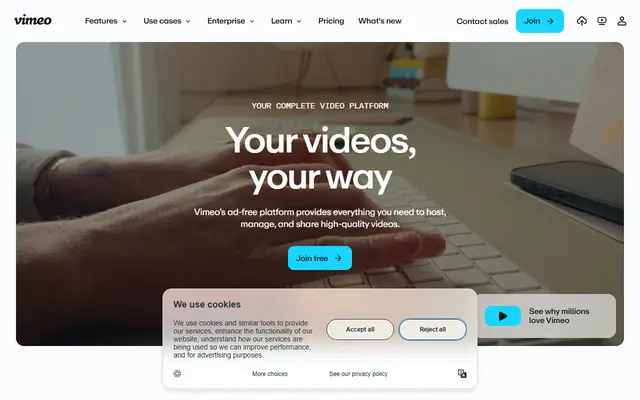
Vimeo, founded in 2004 in the United States, has a Majestic rank of 25, one of the most prominent domains in our data. The Vimeo alternatives page lists 50 options, 49 seen in search. Direct hosts include Wistia, Vidyard, Mux, Dacast, Cloudflare Stream and Bunny Stream in the budget group. Brightcove, JW Player, Kaltura and Panopto serve larger organisations. Self-run options include PeerTube, MediaCMS and Jellyfin, and regional entries such as Dailymotion, Kinescope and 3Q Video Hosting cover other regional markets.
Tools that keep showing up across telephony & video lists
When the same name appears in several alternatives lists, it is a useful signal that the tool is broadly relevant in this category. These are the names that appear most often across the 5 guides above:
- Asterisk — listed in 4 guides
- FreePBX — listed in 4 guides
- FreeSWITCH — listed in 4 guides
- Nextiva — listed in 3 guides
- 3CX — listed in 3 guides
- Callytics — listed in 3 guides
- FusionPBX — listed in 3 guides
- Exotel — listed in 3 guides
- OpenSIPS — listed in 3 guides
- Freshdesk Contact Center — listed in 2 guides
- Avaya — listed in 2 guides
- Wazo — listed in 2 guides
- IvozProvider — listed in 2 guides
- Twilio Flex — listed in 2 guides
- CloudTalk — listed in 2 guides
- Quo — listed in 2 guides
- Dialpad — listed in 2 guides
- Ooma — listed in 2 guides
- Google Voice — listed in 2 guides
- 8x8 — listed in 2 guides
- AiPBX — listed in 2 guides
- Linphone — listed in 2 guides
- Wildix — listed in 2 guides
- STARFACE — listed in 2 guides
Browse telephony & video alternatives by type
- Direct alternatives: 44 in this category. Products that solve the same core problem for the same kind of buyer. Switching usually means moving data and retraining people, not changing how you work.
- Budget-friendly alternatives: 12 in this category. Lower-cost tools that cover the essential jobs without the full feature surface. A good fit when you pay for seats or features you rarely open.
- Free options: 5 in this category. Tools with a free plan or free access that is usable on its own. Limits on volume, users or history usually apply, so check them before you commit.
- Enterprise-grade alternatives: 31 in this category. Platforms built for large teams: governance, audit trails, integrations and support contracts. They tend to cost more and take longer to roll out.
- Open-source alternatives: 42 in this category. Projects whose source code is public. You can inspect, modify and often self-host them, at the price of doing more of the maintenance yourself.
- Self-hosted alternatives: 20 in this category. Software you run on your own server or computer. You keep control of the data and the uptime, and you take on updates, backups and security.
- Regional and local alternatives: 52 in this category. Vendors that are strongest in a particular country or region: local languages, local payment methods, local data-residency rules and local support hours.
- Built-in features of platforms you already use: 11 in this category. Capabilities that already ship inside a suite or platform you pay for. They rarely match a specialist tool feature for feature, but they cost nothing extra.
- Adjacent tools: 15 in this category. Products that cover part of the job or approach it from another angle. Useful when you only need a slice of the original product.
- DIY and self-made approaches: 6 in this category. Spreadsheets, scripts and workflows you assemble yourself. Cheap and flexible for small needs, but they depend on whoever built them.
How the ten types show up in this category
Across the five products our data lists 44 direct, 12 budget-friendly, 5 free, 31 enterprise-grade, 42 open-source, 20 self-hosted, 52 regional, 11 built-in, 15 adjacent and 6 DIY entries. A few patterns stand out. Regional is the largest group because telephony is local by nature. Open-source is nearly as large because a mature stack of free PBX and SIP software has existed for years.
Read the direct and enterprise-grade hubs if you want a like-for-like replacement from a commercial vendor. Choose budget-friendly or free when the headline cost is the problem, keeping in mind that free tiers are thin in this category. If you want to run the software yourself, the open-source and self-hosted hubs explain the trade-offs. Local specialists are collected under regional, and platform add-ons such as Microsoft Teams Phone sit under built-in. The smallest group, DIY, contains custom builds such as an Asterisk setup tied to a carrier trunk.
Pitfalls when changing communications tools
The biggest risk is number porting. Moving a business phone number between providers takes time and paperwork, and a rushed cutover can leave customers hearing a dead line. Keep the old service running until the new one has passed real calls. A second pitfall is forgetting integrations: call logging in a CRM, screen pops in a helpdesk and call recording archives are easy to overlook and painful to rebuild.
Compliance is the third. Call recording, consent announcements and data retention rules depend on the country and the industry, and a new vendor may store recordings in a different region. Finally, remember that low-level open-source tooling is not a product: Asterisk or FreeSWITCH gives you the engine, not the agent desktop, reporting and support. Budget for the people who will run it, and read the methodology page to see what our entries do and do not confirm.
Frequently asked questions
Which alternatives to Genesys are built for large contact centres?
Our data lists Five9, NiCE CXone, Talkdesk, Amazon Connect, Cisco Webex Contact Center, Microsoft and Google Cloud Contact Center AI in the enterprise group, with Avaya listed but not confirmed in our review. They suit organisations with formal procurement and many agents. See the Genesys page for the full list.
What are common alternatives to Aircall for small teams?
JustCall, CloudTalk, Quo and Dialpad are direct options, while Talkroute, MightyCall, KrispCall and Google Voice sit in the budget group. Based on public sources, they cover similar cloud phone needs. Compare the number of users, integrations and country coverage you need rather than headline names alone.
Is there an open-source alternative to RingCentral?
Yes. Asterisk, FreePBX, FusionPBX, FreeSWITCH, Elastix, SIPfoundry, AiPBX, OpenSIPS, Linphone and IvozProvider are all listed in our data. They give you control over the phone system but require your own hosting, updates and security work, so they suit teams with technical staff.
What can replace Twilio for sending text messages?
Vonage, Telnyx, Plivo, Bird, CM.com and Dexatel are direct API options in our data, and Sinch, Infobip and Bandwidth target enterprise buyers. Amazon SNS and AWS End User Messaging are built-in choices if you already use AWS. Check country coverage and sender registration rules before committing.
What are the options for a Vimeo replacement?
Wistia, Vidyard, Mux, Dacast, Cloudflare Stream and Bunny Stream are the main hosted options, and PeerTube or MediaCMS cover open-source self-run hosting. Our data records that Vimeo was acquired by Bending Spoons and that vendor blogs report Vimeo On Demand closing on 20 November 2026; confirm details with the vendor.
Are there regional telephony providers outside the United States?
Yes, regional entries are the largest group in this category. Examples include Ringover, Placetel, sipgate, NFON and Voys, Exotel, MSG91 and Knowlarity, and Mango Office, Oktell and Voximplant. They can offer local numbers and support but may have narrower integrations.
Does this page recommend a single best product?
No. We do not test products or rank them by quality. Our data is a structured map based on public sources reviewed in November 2026. Entries marked as unconfirmed were not matched in our search review and are never offered as a top pick. Use the lists to build a shortlist, then verify current plans yourself.
How many alternatives are listed for each product here?
Genesys has 48 entries, Aircall 48, RingCentral 42, Twilio 50 and Vimeo 50. Most were seen in search: 47, 46, 40, 48 and 49 respectively. The remainder are unconfirmed, meaning they appear in our source data but we could not match them during the review.
Other categories
- CRM & Sales SoftwarePipeline management, customer records and sales automation.
- Lead Intelligence & ProspectingB2B contact data, enrichment, visitor identification and outreach.
- Email Marketing & DeliveryNewsletters, automation, transactional email and sending infrastructure.
- SEO & Search ToolsKeyword research, rank tracking, audits and content optimization.
- Marketing Analytics & TrackingWeb analytics, reporting dashboards, click-fraud protection and tag management.
- Social, Influencer & Affiliate MarketingSocial media management, influencer marketplaces and partner programs.
- Customer Support & MessagingHelp desks, shared inboxes, live chat and messaging platforms.
- IT Management & MonitoringService management, infrastructure monitoring, device management and remote access.
- Cloud, Hosting & InfrastructureVirtual servers, hosting providers, virtualization and edge networks.
- Payments, Spend & CryptoPayment processing, corporate cards, expense management and exchanges.
- Accounting & ERP SoftwareBookkeeping, invoicing and small-business ERP.
- HR & Global HiringHR information systems, employer-of-record and global payroll.
- Documents, Projects & ProductivityE-signature, proposals, project management, intranets and surveys.
- Data, Proxies & UtilitiesWeb data collection, proxy networks and system utilities.
- Everyday AlternativesAlternatives for fitness, cooking, car parts and legal streaming.
- Personal Finance & InvestingAlternatives to traditional student loans, investing platforms and credit scoring. General information only.