Email marketing and delivery alternatives, compared by type
Email remains the channel that most businesses own outright, and it is also the category where product choices are easiest to get wrong. Two quite different needs hide under one name. Marketing platforms help people write campaigns, manage lists, build automations and read reports. Delivery services, by contrast, are infrastructure: an API or SMTP relay that gets receipts, password resets and notifications into inboxes reliably. This hub brings together our guides for five products spanning both.
The guides cover Mailchimp, Constant Contact, MailerLite, ActiveCampaign and SendGrid. Together they hold 198 entries, each placed into one of ten types. Brevo, Klaviyo, Mailjet, Listmonk and Mailtrain each appear in all five guides, and names such as GetResponse, Campaign Monitor, AWeber, Omnisend, Mautic, Keila and Sendy turn up in four. That repetition is useful: it shows which products people consider regardless of which tool they start from.
All of this comes from public sources reviewed in November 2026. We did not test any product, and we do not state prices, send limits or deliverability scores, because they change often and are not part of our data. Treat the pages as a way to build a shortlist, then check current plans on each vendor site. Our methodology page explains how entries are sorted and what unconfirmed means.
- Direct: 52 (26%)
- Budget: 16 (8%)
- Free: 12 (6%)
- Enterprise: 15 (8%)
- Open source: 32 (16%)
- Self-hosted: 8 (4%)
- Regional: 35 (18%)
- Built-in: 8 (4%)
- Adjacent: 17 (9%)
- DIY: 3 (2%)
Email Marketing & Delivery guides: pick the product you want to replace
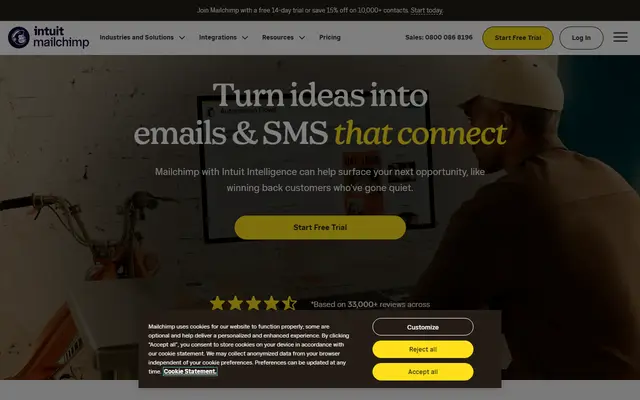
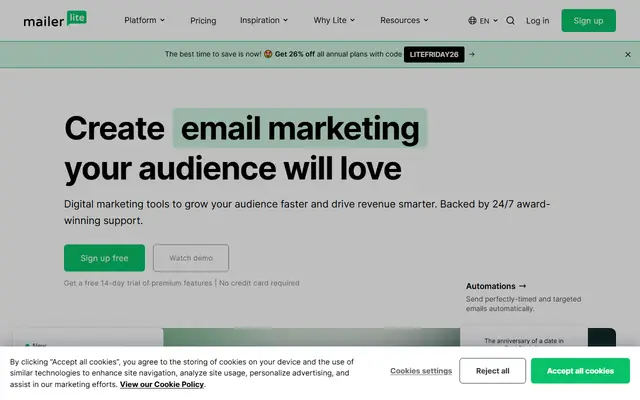
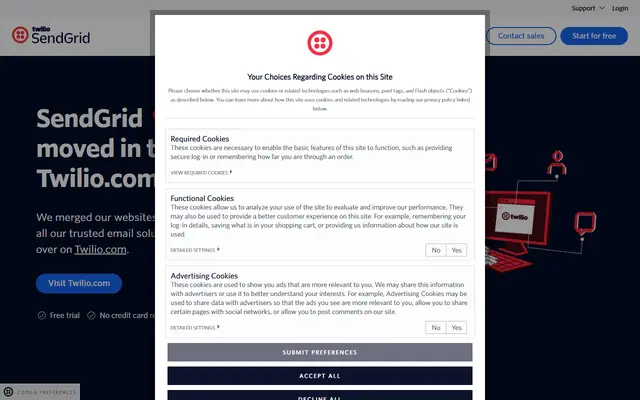
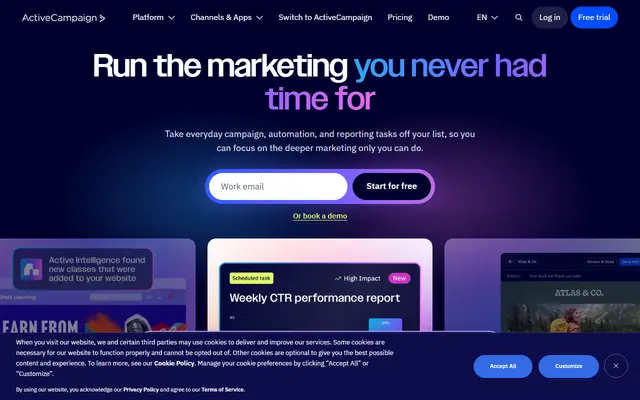
Email marketing and delivery: what the category contains
Campaign platforms are the part most people picture: drag-and-drop editors, audience segments, signup forms and automations that send a welcome series. Mailchimp, founded in 2001 in the United States, is the best-known example, and our data lists it at a Majestic rank of 263. Constant Contact, founded in 1995, is an older mainstream rival. MailerLite, founded in 2010, aims at small businesses, and ActiveCampaign, founded in 2003, leans toward automation.
Delivery services sit underneath. SendGrid, founded in 2009 and now part of Twilio, offers an email API and a marketing product. Its alternatives are not mainly newsletter tools but API-first services such as Mailgun, Postmark, Amazon SES and Resend. The difference matters when you evaluate options: a newsletter platform replaces an editor and a list manager, while a delivery service replaces the pipe that your application already calls.
By type, our data counts direct alternatives (61), regional options (42), open-source projects (38), enterprise-grade platforms (22), adjacent products (21), budget-friendly tools (20), free options (14), built-in options (14), self-hosted software (11) and DIY setups (5). The open-source count is high because the category has a long tradition of self-run newsletter software, such as Listmonk, Mautic, Keila and Sendy.
How to choose an email platform or delivery service
First decide whether you are replacing a marketing tool or a delivery service, because the shortlists barely overlap. If marketers build campaigns, judge the editor, segmentation and automation. If developers send system email, judge the API, webhooks, logs and how bounces and complaints are reported. Some products, such as Brevo and Mailjet in our data, do both, which is convenient but can mean compromises in either half.
Second, think about list size and sending pattern. A platform that charges by subscriber count behaves very differently from one that charges by messages sent, and a business with a large, quiet list will pay very different amounts under the two models. Our data describes Elastic Email as pay-per-send and Sendy as a licence for software that sends through Amazon SES, which shows how many pricing shapes exist. We do not list prices, so compare the models on your own numbers.
Third, treat deliverability and compliance as first-class criteria. Sender authentication, dedicated or shared addresses, unsubscribe handling and consent records decide whether messages reach people and whether you stay within the law. This is general information, and rules depend on your country. Our guides to free alternatives and open-source alternatives show how those trade-offs change when you run the software yourself. The main criteria to weigh are these:
- Use case: newsletters and automation, transactional messages, or both through one provider.
- Pricing model: by subscribers, by sends or by flat licence, tested against your own list and volume.
- Deliverability tooling: authentication setup, reputation monitoring, bounce and complaint reporting.
- Automation depth: branching journeys, tagging and e-commerce triggers if you sell online.
- Data location: regional hosting, for example servers in the European Union, for privacy requirements.
- Integrations: forms, CMS, e-commerce platform, CRM and webhooks into your own systems.
- Export and portability: lists, tags, templates and suppression records must be exportable.
Why teams change email providers
Plan changes are the most visible trigger. Our data records that Twilio closed SendGrid free plans on 28 May 2025, with a 60-day period to move and a 60-day trial for new accounts. For MailerLite it notes a reduction of the free plan from 1000 to 500 subscribers in September 2025, according to a vendor source, and ownership by the Polish company Vercom since 2022. Neither fact says a product is poor, but both explain why people compare options.
Cost growth comes second. List-based pricing grows with the audience even when engagement is low, so teams look at Brevo, Sender, EmailOctopus and Moosend. Another driver is the wish for control: Listmonk, Mautic, Keila and Mailtrain let a team keep subscriber data on its own servers. A third driver is geography. Our data lists CleverReach, rapidmail and Mailcoach for German-speaking markets, Acumbamail in Spain, Unisender and eSputnik for Eastern European senders, and Laposta in the Netherlands.
Finally, scope changes. A newsletter that becomes an online shop needs commerce automation, which is why Klaviyo and Omnisend appear in the ActiveCampaign guide. A product team outgrowing a marketing tool for system email moves toward Postmark, Mailgun or Amazon SES. The regional alternatives hub collects the location-driven options.
About Mailchimp alternatives
Mailchimp is the reference point for small-business email marketing, founded in 2001 in the United States and listed with about 800 employees. Its guide lists 50 alternatives. Direct options include Brevo, MailerLite, GetResponse, ActiveCampaign and Constant Contact. Free-oriented entries include Sender, Substack and Beehiiv, and open-source options include Listmonk, Mautic, Keila, Plunk and Billion Mail. Enterprise-grade names include HubSpot Email Marketing and Adobe Marketo Engage. See the full Mailchimp alternatives page.
About Constant Contact alternatives
Constant Contact was founded in 1995 in the United States, making it one of the oldest names here. The guide covers 50 alternatives. Direct options include MailerLite, AWeber, GetResponse and Campaign Monitor, while budget tools include Moosend, Benchmark Email and SendPulse. WordPress-based built-in options such as MailPoet appear alongside store-platform tools. Self-hosted entries include Sendy, and enterprise-grade names include Braze and Iterable. Read the Constant Contact alternatives guide for each type in detail.
About MailerLite alternatives
MailerLite is a small-business platform of Lithuanian origin, now owned by Vercom according to our data. Its guide lists 50 alternatives. Mailchimp, Brevo, GetResponse, ActiveCampaign and Constant Contact lead the direct group, Zoho Campaigns and Elastic Email the budget group, and Sender, Buttondown and Beehiiv the free group. Regional options include rapidmail, CleverReach and Unisender, and adjacent tools include Mailgun and MailerSend. Compare them on the MailerLite alternatives page.
About SendGrid alternatives
SendGrid, founded in 2009 in the United States, is an email API and marketing product operating under the Twilio SendGrid brand. Its guide lists 50 alternatives and leans toward developer services. Mailgun, Postmark, Amazon SES, Resend and Mailjet are the direct options. Open-source and self-hosted entries include Postal, useSend, Plunk and Postfix. European options include Scaleway Transactional Email and Spotler SendPro. Cloud platforms offer built-in sending too. Open the SendGrid alternatives page for the complete list.
About ActiveCampaign alternatives
ActiveCampaign was founded in 2003 in the United States and is known for automation. Our guide lists 48 alternatives. Mailchimp, Klaviyo, Kit, Omnisend and Drip lead the direct group, while Brevo, MailerLite and Moosend lead the budget group, and Systeme.io is the free entry. Enterprise-grade options include HubSpot Marketing Hub, Adobe Marketo Engage, Oracle Eloqua and Braze. Open-source choices include Mautic and Listmonk. The ActiveCampaign alternatives page covers the rest.
Tools that keep showing up across email marketing lists
When the same name appears in several alternatives lists, it is a useful signal that the tool is broadly relevant in this category. These are the names that appear most often across the 4 guides above:
- Brevo — listed in 4 guides
- Klaviyo — listed in 4 guides
- Mailjet — listed in 4 guides
- Listmonk — listed in 4 guides
- Mailtrain — listed in 4 guides
- GetResponse — listed in 3 guides
- Constant Contact — listed in 3 guides
- Campaign Monitor — listed in 3 guides
- AWeber — listed in 3 guides
- Omnisend — listed in 3 guides
- Moosend — listed in 3 guides
- Zoho Campaigns — listed in 3 guides
- Elastic Email — listed in 3 guides
- Sender — listed in 3 guides
- Beehiiv — listed in 3 guides
- Adobe Marketo Engage — listed in 3 guides
- Salesforce Marketing Cloud — listed in 3 guides
- Mautic — listed in 3 guides
- Keila — listed in 3 guides
- Plunk — listed in 3 guides
- Sendy — listed in 3 guides
- Maillayer — listed in 3 guides
- rapidmail — listed in 3 guides
- CleverReach — listed in 3 guides
Browse email marketing alternatives by type
- Direct alternatives: 52 in this category. Products that solve the same core problem for the same kind of buyer. Switching usually means moving data and retraining people, not changing how you work.
- Budget-friendly alternatives: 16 in this category. Lower-cost tools that cover the essential jobs without the full feature surface. A good fit when you pay for seats or features you rarely open.
- Free options: 12 in this category. Tools with a free plan or free access that is usable on its own. Limits on volume, users or history usually apply, so check them before you commit.
- Enterprise-grade alternatives: 15 in this category. Platforms built for large teams: governance, audit trails, integrations and support contracts. They tend to cost more and take longer to roll out.
- Open-source alternatives: 32 in this category. Projects whose source code is public. You can inspect, modify and often self-host them, at the price of doing more of the maintenance yourself.
- Self-hosted alternatives: 8 in this category. Software you run on your own server or computer. You keep control of the data and the uptime, and you take on updates, backups and security.
- Regional and local alternatives: 35 in this category. Vendors that are strongest in a particular country or region: local languages, local payment methods, local data-residency rules and local support hours.
- Built-in features of platforms you already use: 8 in this category. Capabilities that already ship inside a suite or platform you pay for. They rarely match a specialist tool feature for feature, but they cost nothing extra.
- Adjacent tools: 17 in this category. Products that cover part of the job or approach it from another angle. Useful when you only need a slice of the original product.
- DIY and self-made approaches: 3 in this category. Spreadsheets, scripts and workflows you assemble yourself. Cheap and flexible for small needs, but they depend on whoever built them.
How the ten types apply to email
Direct alternatives are other full platforms with editors, lists and automation, and they make up the largest group. Budget-friendly and free options suit small senders, but they often cap list size, features or support. Enterprise-grade platforms such as Salesforce Marketing Cloud, Adobe Marketo Engage and Braze serve organisations with complex data, many channels and procurement rules.
Open-source and self-hosted tools give you subscriber data on your own servers, but you must still solve delivery, usually through Amazon SES or another relay, plus sender reputation, bounce handling and upgrades. Regional options respond to language, law and hosting location. Built-in options come with your website builder, hosting plan or workspace suite, and they cover simple newsletters. Adjacent products include sending-from-Gmail tools and lifecycle messaging, while DIY routes combine Amazon SES with scripts. Compare these on the built-in and self-hosted hubs.
Pitfalls when moving email lists and sending
The classic mistake is moving a large list to a new sender all at once. Mailbox providers judge a new sending identity by its history, so a sudden volume on a fresh domain or address can land in spam. Warm up gradually, start with your most engaged subscribers and keep authentication records correct.
Another mistake is losing suppression data. Unsubscribes, bounces and complaints must follow the list, or you will write to people who opted out and damage your reputation. Plan to export these records, import them first and verify the counts.
- Exporting subscribers without their unsubscribe, bounce and complaint status.
- Switching sending domains or addresses without gradual warm-up.
- Assuming automations rebuild automatically; branching journeys usually need manual recreation.
- Choosing self-hosted software and forgetting that delivery, abuse handling and updates are now yours.
- Comparing subscriber-based and send-based pricing without modelling both on your own list.
- Relying on unconfirmed entries without checking that the vendor is still active.
Frequently asked questions
What is the best free alternative to Mailchimp?
Our Mailchimp guide lists Sender, Substack and Beehiiv as free-oriented options, with Buttondown and Benchmark Email among budget tools. Open-source projects like Listmonk and Mautic have no licence fee but need hosting. Free plans change frequently, so verify current limits on each vendor site before moving.
Which open-source tools can replace newsletter platforms?
The most frequently named are Listmonk, Mautic, Keila and Mailtrain, with Plunk, Billion Mail and phpList also listed. Sendy and Maillayer are self-hosted scripts that send through Amazon SES. All of them require server work, delivery setup and maintenance, so they suit technical teams.
What replaces SendGrid for transactional email?
Our SendGrid guide lists Mailgun, Postmark, Amazon SES, Resend and Mailjet as direct options, Zoho ZeptoMail and Elastic Email as budget choices, and Postal as a self-hosted route. Our data notes that Twilio closed SendGrid free plans on 28 May 2025, so check current terms.
Are there European email marketing alternatives?
Yes. Our data lists Brevo from France, rapidmail, CleverReach and Mailcoach for German-speaking users, Acumbamail in Spain, Laposta, Smaily, Mailpro with hosting in Switzerland and Scaleway Transactional Email. Check data location, language support and contract terms against your own requirements.
Which alternatives suit ActiveCampaign automation?
For automation depth, our guide names Klaviyo, Omnisend and Drip for online shops, plus HubSpot Marketing Hub, Adobe Marketo Engage and Oracle Eloqua at enterprise scale, and Mautic as an open-source route. Match the tool to your journey logic and test a real workflow before migrating.
What changed with MailerLite recently?
According to our data, MailerLite has belonged to the Polish company Vercom since 2022, and a vendor source reports a cut in the free plan from 1000 to 500 subscribers in September 2025. A review also reports plan renames and price rises in mid-2026 without independent confirmation. Verify current plans directly.
Can I send newsletters from Gmail or my hosting plan?
For small lists, yes. Our data lists Gmail and Google Workspace, Hostinger Reach, MailPoet for WordPress and store-platform tools as built-in options. They cover simple sends but offer limited automation, reporting and deliverability tooling, so growing lists usually move to a dedicated platform.
How do I avoid spam folders after switching?
Set up sender authentication on your domain, move your most engaged subscribers first, increase volume gradually and carry over unsubscribe and bounce records. Keep complaint rates low and monitor results for several weeks. This is general guidance; rules and mailbox provider behaviour differ by country and provider.
Other categories
- CRM & Sales SoftwarePipeline management, customer records and sales automation.
- Lead Intelligence & ProspectingB2B contact data, enrichment, visitor identification and outreach.
- SEO & Search ToolsKeyword research, rank tracking, audits and content optimization.
- Marketing Analytics & TrackingWeb analytics, reporting dashboards, click-fraud protection and tag management.
- Social, Influencer & Affiliate MarketingSocial media management, influencer marketplaces and partner programs.
- Customer Support & MessagingHelp desks, shared inboxes, live chat and messaging platforms.
- IT Management & MonitoringService management, infrastructure monitoring, device management and remote access.
- Cloud, Hosting & InfrastructureVirtual servers, hosting providers, virtualization and edge networks.
- Payments, Spend & CryptoPayment processing, corporate cards, expense management and exchanges.
- Accounting & ERP SoftwareBookkeeping, invoicing and small-business ERP.
- HR & Global HiringHR information systems, employer-of-record and global payroll.
- Telephony, Video & CommunicationsCloud phone systems, contact centers, CPaaS and video hosting.
- Documents, Projects & ProductivityE-signature, proposals, project management, intranets and surveys.
- Data, Proxies & UtilitiesWeb data collection, proxy networks and system utilities.
- Everyday AlternativesAlternatives for fitness, cooking, car parts and legal streaming.
- Personal Finance & InvestingAlternatives to traditional student loans, investing platforms and credit scoring. General information only.