SendGrid Alternatives: 50 Email Delivery Options Compared by Type
SendGrid, now sold as Twilio SendGrid, is one of the best-known email delivery services on the internet. It was founded in 2009 in the United States, and its domain currently sits at rank 5,532 in the Majestic Million. Developers know it mainly as an API for transactional mail, such as password resets and receipts, and marketers know it through the Marketing Campaigns product. That reach explains why so many teams ask what else is out there.
The reasons for looking are practical rather than dramatic. According to the Twilio changelog, free plans were closed on 28 May 2025, with 60 days given to move, and new accounts now receive a 60-day trial. Teams that relied on a free tier have had to either pay or leave. Others want a different deliverability profile, a European data location, a simpler API, or a lower price per thousand messages.
This page lists 50 alternatives collected from public sources in November 2026 and sorts them into ten types, from direct competitors to do-it-yourself mail servers. Each entry is labelled as seen in our search review or not confirmed. Use it to build a shortlist, then check current pricing and limits on each vendor's own site, because we do not verify those details. See the email marketing category for related products.
SendGrid is available at sendgrid.com. Public records list SendGrid as founded in 2009. Its headquarters country is recorded as United States. Its domain ranks #5,532 in the Majestic Million, a free public list of the most-linked-to domains on the web. Its domain ranks #5,694 in the Tranco list of the most visited domains.
This page lists 50 alternatives to SendGrid, spread across 10 types: direct (11), budget (3), free (4), enterprise (3), open source (8), self-hosted (3), regional (7), built-in (3), adjacent (7), diy (1).
47 of the 50 entries were seen in live web search results during our November 2026 review; the remaining entries are labelled unconfirmed so you know where extra checking is needed.
Regional options cover France, Europe, Netherlands, Finland, Russia.
- Direct: 11 (22%)
- Budget: 3 (6%)
- Free: 4 (8%)
- Enterprise: 3 (6%)
- Open source: 8 (16%)
- Self-hosted: 3 (6%)
- Regional: 7 (14%)
- Built-in: 3 (6%)
- Adjacent: 7 (14%)
- DIY: 1 (2%)
47 of 50 entries (94%) were seen in live search results during our review; the rest are labelled “unconfirmed” and should be checked on the vendor site.
Quick comparison: the closest alternatives to SendGrid
| Site | Name | Type | Founded | Majestic rank | Check |
|---|---|---|---|---|---|
 | Mailgun | Direct | 2010 | #7,001 | seen in search |
 | Postmark | Direct | n/a | #13,806 | seen in search |
 | Amazon SES | Direct | 2006 | #156 | seen in search |
 | Resend | Direct | n/a | #5,448 | seen in search |
 | Mailjet | Direct | 2010 | #6,747 | seen in search |
What is SendGrid and why do people look for alternatives?
SendGrid is a cloud email delivery platform. Per public sources it began in 2009 in the United States and operates today under the Twilio SendGrid name as part of Twilio. Its core job is to accept messages from your application over an API or SMTP and deliver them to inboxes, while handling the unglamorous parts of email: IP reputation, bounce processing, feedback loops and authentication records such as SPF and DKIM. On top of that sits Marketing Campaigns, which covers list management and newsletters.
The status note in our data describes it as an API for transactional email plus Marketing Campaigns inside Twilio, still working under the Twilio SendGrid brand. Searches found no rename and no sale. The one change worth knowing about is the end of free plans: the Twilio changelog says they closed on 28 May 2025, with a 60-day window to move, and new accounts get a 60-day trial instead.
That change is the most common trigger, but not the only one. People also look elsewhere when they want a provider that only does transactional mail and nothing else, when they need data stored in a particular region, when a shared IP pool hurts their deliverability, or when the bill grows faster than the product value. Some teams outgrow a hosted service and want to run their own relay. Others realise they only need a simple SMTP route and do not want a full marketing suite.
The alternatives therefore fall into very different groups. Mailgun, Postmark, Amazon SES, Resend and Mailjet compete head on. Brevo and SendPulse are listed in the free group. Postal, Haraka and Listmonk are open-source. A few are tied to larger clouds, such as Azure Communication Services and Cloudflare Email Service. Knowing which group fits your situation saves a lot of comparison time.
How we built this list
The list was compiled from public sources in November 2026: web search results, vendor sites, open data sets such as the Majestic Million and Tranco rankings, and Wikidata for company facts. We did not sign up for these services or run test sends, so nothing here describes hands-on performance.
Each entry carries a label. Seen in search means the product turned up in our public search review as a real, active alternative to SendGrid. Not confirmed in our search review means we found a reference to it but could not establish the same thing, so it is listed with a caution and never as a top pick. In this list, 47 of the 50 entries were seen in search and three were not confirmed.
Entries are grouped into types because the word alternative hides large differences. A free tier, a self-hosted relay and an enterprise omnichannel platform answer different questions. Our methodology page explains the types in full, and the direct and open-source hubs show how each group works across categories.
How to choose a SendGrid alternative
Start by deciding what kind of email you actually send. Transactional mail, meaning messages triggered by a user action, has different needs from marketing newsletters. Some services in this list do only transactions, some do both, and some are closer to lifecycle messaging tools. If you pick a tool built for the wrong job, you will pay for features you never use or miss ones you need.
Next, think about who operates it. A hosted service means someone else manages sending infrastructure and reputation. A self-hosted relay gives you control and lower per-message cost but makes you responsible for IP warm-up, blocklists and abuse handling. Many small teams underestimate that workload, so be honest about your capacity.
Finally, consider how reversible your choice is. Email touches templates, webhooks, suppression lists, DNS records and application code. A provider that uses standard SMTP and a simple REST API is far easier to replace later than one that wraps everything in a proprietary template language. Check the vendor sites for current pricing, limits and region options before committing, since those change often and are outside what this directory verifies.
A short pilot is the best way to settle close calls. Pick two or three candidates from different types, send a small share of real traffic through each for a week or two, and compare bounce rates, complaint rates and how easy the logs are to read. Public rankings and feature lists only get you to a shortlist; your own recipients decide the winner. Keep the pilot honest by using the same sending domain, the same templates and comparable volume for each candidate.
- Message type: pure transactional, marketing campaigns, or a mix of both
- Deliverability tooling: dedicated IPs, reputation dashboards, bounce and complaint handling
- Data location: a European or other regional provider if your policy requires it
- Integration effort: SMTP compatibility, SDKs for your language, webhook formats
- Price shape: per-message, per-thousand, or flat subscription, and what happens at overage
- Exit cost: whether you can export suppression lists, templates and event history
- Operations load: how much you are willing to run yourself if you choose open-source
Quick picks by situation
If you are a developer who wants an API-first replacement with a similar scope, start with Mailgun or Resend. Mailgun is described in our data as an API for developers with validation and an EU region, while Resend is aimed at React and Next.js projects. If your priority is receipts and password resets that reach the inbox, Postmark is transactional only and puts its emphasis on deliverability.
If cost per message is the main concern, Amazon SES is described as cheap sending with minimal tooling, and Zoho ZeptoMail is transactional only and inexpensive. Elastic Email charges by number of sends and offers API and SMTP. You trade away dashboards and campaign features, which matters only if you need them.
If you used SendGrid's free plan and want another free route, our data lists Brevo at up to 300 emails a day according to Brevo, and SendPulse at up to 12,000 emails a month according to SendPulse. Confirm both on the vendor sites, as free limits shift. SMTP2GO is noted as a reliable SMTP relay with EU and UK servers.
If you want to own the stack, Postal is called the most complete self-hosted analogue and is MIT-licensed, while Haraka is a Node.js SMTP server with plugins. Teams with a European data requirement can look at Scaleway Transactional Email, Lettermint, SMTPeter or Spotler SendPro. If you run a large multi-channel programme, Bird and Braze sit in the enterprise group. The email marketing hub and the Mailchimp alternatives page are good next stops.
All 50 alternatives to SendGrid by type
Direct alternatives to SendGrid (11)
Products that solve the same core problem for the same kind of buyer. Switching usually means moving data and retraining people, not changing how you work. For SendGrid, this list contains 11 entries in this group, including Mailgun, Postmark, Amazon SES, Resend and Mailjet. See all direct alternatives across every product →
Choosing among direct alternatives to SendGrid
Direct alternatives do roughly the same job: send email for applications over API or SMTP. Our data lists 11 of them, all seen in search. Mailgun offers an API for developers, validation and an EU region. Postmark is transactional only with a focus on deliverability. Amazon SES is cheap sending with a minimal toolset, and Resend targets React and Next.js developers.
Mailjet covers marketing and transactions and is part of Sinch, with a France headquarters listed. SparkPost is aimed at large volumes and is now part of Bird. Mailchimp Transactional, formerly Mandrill, requires a paid Mailchimp plan. MailerSend does transactions and SMS with EU data, Netcore is an Indian vendor covering transactions and marketing, and SMTP.com focuses on mail infrastructure and deliverability.
To choose among them, compare the shape of your traffic first: steady volume, bursty sends or occasional receipts. Then check how much of the surrounding tooling you need, such as templates, analytics and validation. The direct alternatives hub explains how this group behaves across categories.
| Site | Name | Type | Founded | Majestic rank | Check |
|---|---|---|---|---|---|
| Mailgun | Direct | 2010 | #7,001 | seen in search |
| Postmark | Direct | n/a | #13,806 | seen in search |
| Amazon SES | Direct | 2006 | #156 | seen in search |
| Resend | Direct | n/a | #5,448 | seen in search |
| Mailjet | Direct | 2010 | #6,747 | seen in search |
| SparkPost | Direct | n/a | n/a | seen in search | |
 | Mailchimp Transactional (Mandrill) | Direct | n/a | #14,056 | seen in search |
 | MailerSend | Direct | n/a | #90,526 | seen in search |
| Netcore | Direct | n/a | n/a | seen in search | |
 | SMTP.com | Direct | n/a | #207,546 | seen in search |
| Swift Missive | Direct | n/a | n/a | seen in search |
Budget-friendly alternatives to SendGrid (3)
Lower-cost tools that cover the essential jobs without the full feature surface. A good fit when you pay for seats or features you rarely open. For SendGrid, this list contains 3 entries in this group, including Zoho ZeptoMail, Elastic Email and GoodSender. See all budget alternatives across every product →
Choosing among budget-friendly alternatives to SendGrid
Budget-friendly options trade breadth for price. Our data names three, all seen in search. Zoho ZeptoMail is transactional only and inexpensive, and it belongs to the Zoho family, which has its own page in this directory at Zoho alternatives. Elastic Email is described as pay-per-send with API and SMTP access, and our data lists Canada as its headquarters. GoodSender is noted for marketing strictly on an opt-in basis.
Because there are only three here, it is worth comparing them against the cheap end of the direct group too, especially Amazon SES, which our data describes as low-cost sending with minimal tooling. The decision usually comes down to whether you need a user interface and reporting, or whether your developers will happily live with logs and webhooks.
Be cautious about judging by headline price alone. Per-message pricing hides costs in dedicated IPs, extra users, log retention and support. See the budget type page for questions to ask before you move.
| Site | Name | Type | Founded | Majestic rank | Check |
|---|---|---|---|---|---|
 | Zoho ZeptoMail | Budget | 1996 | #651 | seen in search |
 | Elastic Email | Budget | 2010 | #55,957 | seen in search |
| GoodSender | Budget | n/a | n/a | seen in search |
Free options to SendGrid (4)
Tools with a free plan or free access that is usable on its own. Limits on volume, users or history usually apply, so check them before you commit. For SendGrid, this list contains 4 entries in this group, including Brevo, SMTP2GO, SendPulse and OneSignal Email. See all free alternatives across every product →
Choosing among free alternatives to SendGrid
Since SendGrid closed its free plans, free tiers matter more. Our data lists four, all seen in search. Brevo, headquartered in France and founded in 2012, is noted for a free allowance of up to 300 emails a day, according to Brevo. SendPulse, founded in 2015, is noted for up to 12,000 emails a month, according to SendPulse. SMTP2GO is a reliable SMTP relay with EU and UK servers, and OneSignal Email adds email to a push-notification platform.
Free tiers are best treated as a starting point. They suit side projects, early prototypes and low-volume internal alerts. They are less suitable if your business depends on every message arriving, because limits, branding and support can change. Always read the current terms on the vendor site, since we do not verify them.
A sensible approach is to pick a free service whose paid plan you would also be comfortable with, so growth does not force a second migration. The free alternatives hub covers this reasoning in more depth.




Enterprise-grade alternatives to SendGrid (3)
Platforms built for large teams: governance, audit trails, integrations and support contracts. They tend to cost more and take longer to roll out. For SendGrid, this list contains 3 entries in this group, including Bird, Braze and Salesforce Marketing Cloud. See all enterprise alternatives across every product →
Choosing among enterprise-grade alternatives to SendGrid
Enterprise-grade options are platforms rather than relays. Our data lists three. Bird is an omnichannel platform that includes SparkPost, founded in 2011 with a Netherlands headquarters listed. Braze handles cross-channel lifecycle messaging for large organisations, founded in 2011 in the United States. Salesforce Marketing Cloud is described as enterprise marketing and mailings, but it is not confirmed in our search review, so treat it with caution.
These tools make sense when email is one channel among several, such as push, SMS and in-app messages, and when marketing teams rather than developers drive the work. They usually involve longer procurement, onboarding and contract discussions than a developer-led API service. Contract length, minimum commitments and the support model deserve as much attention as the feature list.
If you only need reliable transactional delivery, an enterprise platform is probably more than you need. If you are consolidating several messaging tools, it may be the right scale. For Salesforce context, see the Salesforce alternatives page and the enterprise type hub.
| Site | Name | Type | Founded | Majestic rank | Check |
|---|---|---|---|---|---|
 | Bird | Enterprise | 2011 | #22,104 | seen in search |
 | Braze | Enterprise | 2011 | #15,763 | seen in search |
 | Salesforce Marketing Cloud | Enterprise | 1999 | #344 | unconfirmed |
Open-source alternatives to SendGrid (8)
Projects whose source code is public. You can inspect, modify and often self-host them, at the price of doing more of the maintenance yourself. For SendGrid, this list contains 8 entries in this group, including Postal, useSend, Plunk, Cuttlefish and Haraka. See all open source alternatives across every product →
Choosing among open-source alternatives to SendGrid
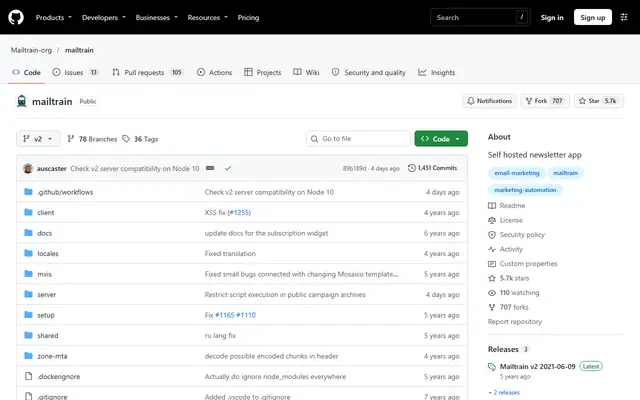
Open-source tools give you code you can inspect and run yourself. Our data lists eight, all seen in search. Postal is called the most complete self-hosted analogue and uses the MIT licence. useSend offers REST, SMTP and SDKs, and also has a cloud version. Plunk combines marketing, transactions and newsletters. Cuttlefish is a simple transactional gateway over SMTP.
Haraka is a Node.js SMTP server with plugins, listed with a 2011 founding year. Listmonk sends newsletters through an external SMTP or SES connection, which means it handles lists and campaigns but not the delivery itself. Mailtrain covers newsletters, automation and A/B tests, and Notifuse handles newsletters and transactions with MJML templates.
The key point is that open-source rarely removes the need for a sending route. Several of these sit on top of SMTP or Amazon SES, so you still depend on someone for IP reputation. Read the open-source type hub for the wider trade-offs, and compare with the self-hosted group if you plan to run servers yourself.
| Site | Name | Type | Founded | Majestic rank | Check |
|---|---|---|---|---|---|
| Postal | Open source | n/a | n/a | seen in search | |
| useSend | Open source | n/a | n/a | seen in search | |
| Plunk | Open source | n/a | n/a | seen in search | |
| Cuttlefish | Open source | n/a | n/a | seen in search | |
 | Haraka | Open source | 2011 | n/a | seen in search |
 | Listmonk | Open source | n/a | #19,867 | seen in search |
 | Mailtrain | Open source | n/a | #728,635 | seen in search |
| Notifuse | Open source | n/a | n/a | seen in search |
Self-hosted alternatives to SendGrid (3)
Software you run on your own server or computer. You keep control of the data and the uptime, and you take on updates, backups and security. For SendGrid, this list contains 3 entries in this group, including Postfix / OpenSMTPD, Mailu and Maillayer. See all self-hosted alternatives across every product →
Choosing among self-hosted alternatives to SendGrid
Self-hosted means you operate the software on your own servers. Our data lists three, all seen in search. Postfix and OpenSMTPD are described as a bare relay without an interface or analytics. Mailu is a Docker-based mail server with limited scope. Maillayer is a paid script that works with Amazon SES.
This group is the most demanding. You will manage DNS authentication, IP warm-up, queue monitoring, blocklist checks and abuse complaints yourself. For teams with a sysadmin and a steady, modest volume, it can work well. For anyone who wants to stop thinking about email infrastructure, it will likely feel like a step backwards.
A middle path is to self-host the application layer, such as a campaign manager, while using a hosted SMTP relay for the actual delivery. Compare this approach with the open-source tools above, and see the self-hosted type page for planning notes. Mailu and Postfix are best for people comfortable reading mail logs.
| Site | Name | Type | Founded | Majestic rank | Check |
|---|---|---|---|---|---|
 | Postfix / OpenSMTPD | Self-hosted | n/a | #5,676 | seen in search |
 | Mailu | Self-hosted | n/a | #129,547 | seen in search |
| Maillayer | Self-hosted | n/a | n/a | seen in search |
Regional and local alternatives to SendGrid (7)
Vendors that are strongest in a particular country or region: local languages, local payment methods, local data-residency rules and local support hours. For SendGrid, this list contains 7 entries in this group, including Scaleway Transactional Email, Lettermint, SMTPeter, Spotler SendPro and NexusProMail. See all regional alternatives across every product →
Choosing among regional alternatives to SendGrid
Regional alternatives are tied to a country or region, usually for data location or local support. Our data lists seven, all seen in search. Scaleway Transactional Email offers API and SMTP from a French cloud. Lettermint is a European transactional service. SMTPeter, from the Netherlands, is a European SMTP service priced per thousand messages. Spotler SendPro, also Netherlands, is called a European replacement for SendGrid.
NexusProMail is a Finnish company that mentions GDPR. Unisender Go is the transactional part of Unisender, listed under Russia, and RuSender, also Russia, offers a free tier and an address validator. If sanctions, data residency or payment methods affect your choice, check the vendor's current terms directly.
A regional provider can simplify compliance conversations, but it may offer fewer integrations than a global service. Match the region to where your recipients and your legal obligations are. The regional type hub describes the general considerations. Also confirm where logs and recipient data are stored, since that is often the real reason for choosing a regional vendor.
| Site | Name | Type | Founded | Majestic rank | Check |
|---|---|---|---|---|---|
 | Scaleway Transactional Email | Regional · France | 2000 | #6,604 | seen in search |
 | Lettermint | Regional · Europe | n/a | #624,205 | seen in search |
| SMTPeter | Regional · Netherlands | n/a | n/a | seen in search | |
 | Spotler SendPro | Regional · Netherlands | n/a | #28,687 | seen in search |
| NexusProMail | Regional · Finland | n/a | n/a | seen in search | |
 | Unisender Go | Regional · Russia | n/a | #39,160 | seen in search |
| RuSender | Regional · Russia | n/a | n/a | seen in search |
Built-in features of platforms you already use to SendGrid (3)
Capabilities that already ship inside a suite or platform you pay for. They rarely match a specialist tool feature for feature, but they cost nothing extra. For SendGrid, this list contains 3 entries in this group, including Cloudflare Email Service, Azure Communication Services (Email) and Google Workspace SMTP relay. See all built-in alternatives across every product →
Choosing among built-in alternatives to SendGrid
Built-in options come from platforms you may already use. Our data lists three. Cloudflare Email Service sends from Workers and is listed as a public beta, with a page in this directory at Cloudflare alternatives. Azure Communication Services includes email, SMS and chat in the Microsoft cloud. Google Workspace SMTP relay works through a Workspace subscription, with limits, but it is not confirmed in our search review.
The appeal is fewer vendors and a single bill. The risk is that these services were not designed primarily as email delivery products, so sending limits, reporting depth and deliverability tools may be thinner than at a specialist. A beta label, as on Cloudflare's service, also calls for caution on production traffic.
Built-in routes fit small internal notifications or teams deeply committed to one cloud. Check the built-in type hub before relying on one for customer-facing mail at scale. Also check whether sending limits and reputation controls are documented clearly enough for your volume.



Adjacent tools to SendGrid (7)
Products that cover part of the job or approach it from another angle. Useful when you only need a slice of the original product. For SendGrid, this list contains 7 entries in this group, including Mailtrap, Customer.io, Loops, Courier and SendOps. See all adjacent alternatives across every product →
Choosing among adjacent alternatives to SendGrid
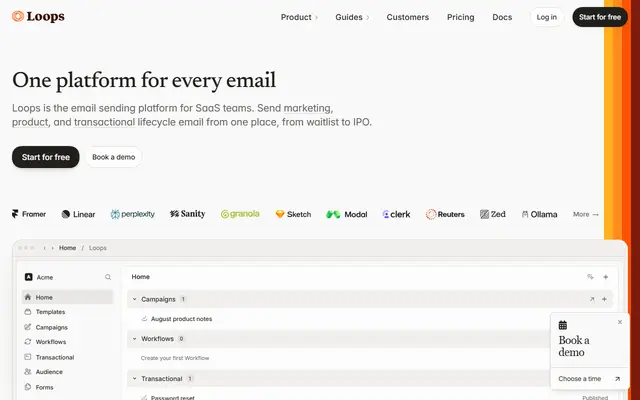
Adjacent tools solve a nearby problem and may replace part of what SendGrid does. Our data lists seven, all seen in search. Mailtrap offers a sandbox and email testing. Customer.io focuses on lifecycle scenarios rather than pure sending. Loops, founded in 2022, targets SaaS companies with marketing and transactional mail. Courier routes notifications across channels, and SendOps is a control panel on top of Amazon SES.
Mailchimp is listed for marketing newsletters rather than an API, and it has its own page at Mailchimp alternatives. Klaviyo, founded in 2012 in the United States, covers e-commerce email and SMS.
These tools make sense when your real need is campaigns, lifecycle automation or testing, and SendGrid was only a means to that end. They are a poor match if you simply need a fast, plain transactional pipe. See the adjacent type hub for guidance on judging fit. Many teams end up pairing one adjacent tool with a plain relay rather than replacing SendGrid outright.
| Site | Name | Type | Founded | Majestic rank | Check |
|---|---|---|---|---|---|
 | Mailtrap | Adjacent | n/a | #24,094 | seen in search |
 | Customer.io | Adjacent | n/a | #23,339 | seen in search |
 | Loops | Adjacent | 2022 | #133,752 | seen in search |
 | Courier | Adjacent | n/a | #185,449 | seen in search |
| SendOps | Adjacent | n/a | n/a | seen in search | |
 | Mailchimp | Adjacent | 2001 | #263 | seen in search |
 | Klaviyo | Adjacent | 2012 | #4,679 | seen in search |
DIY and self-made approaches to SendGrid (1)
Spreadsheets, scripts and workflows you assemble yourself. Cheap and flexible for small needs, but they depend on whoever built them. For SendGrid, this list contains 1 entry in this group, including Own MTA: Postfix + DKIM + queue. See all diy alternatives across every product →
Choosing among DIY alternatives to SendGrid
The DIY group has a single entry in our data: an own MTA built from Postfix, DKIM signing and a queue. It is described as a fully custom stack with your own IP reputation, and it is not confirmed in our search review, so we list it as a reference point rather than a recommendation.
Building your own mail transfer agent means you control every part, but also carry every risk. You need a clean IP range, reverse DNS, SPF, DKIM and DMARC, feedback loop registrations, warm-up schedules and monitoring for blocklists. Large mailbox providers judge new senders harshly, and mistakes can take weeks to repair.
It can be reasonable for a team that already runs mail infrastructure, or for learning purposes. For most businesses, a hosted relay or a self-hosted tool that routes through a reputable provider is a safer choice. Compare this against the self-hosted and DIY type pages before deciding.
| Site | Name | Type | Founded | Majestic rank | Check |
|---|---|---|---|---|---|
| Own MTA: Postfix + DKIM + queue | DIY | n/a | n/a | unconfirmed |
Migration checklist: moving away from SendGrid
Email migrations fail quietly. Messages may still leave your application while landing in spam, so plan for monitoring as well as switching. Work in stages and keep SendGrid active until the new provider has proven itself on real traffic.
Begin with an inventory. List every system that sends through SendGrid: application code, background jobs, marketing tools, monitoring alerts and third-party plugins. Note the sender domains, the templates in use, and any webhooks that depend on SendGrid event formats. Then export what you can, including suppression lists, unsubscribes, bounces and spam complaints, so you do not mail people who opted out.
Set up the new provider next. Add and verify your sending domain, publish the required DNS records, and keep your existing SPF and DKIM records in place until cutover. If you will use a dedicated IP, plan a warm-up schedule that increases volume gradually instead of switching everything in one day.
Cut over gradually. Send a small share of traffic through the new route, compare delivery and complaint rates, and then raise the share. Keep your SendGrid account open for a defined period so that late webhooks and replies are not lost. Check the vendor sites for current export options, as we do not verify them.
- Inventory every sender: apps, cron jobs, plugins and marketing tools
- Export suppression, unsubscribe, bounce and complaint lists before anything else
- Verify the new sending domain and publish SPF, DKIM and DMARC records
- Recreate templates and test rendering in the main mail clients
- Update webhook endpoints and map the new event names to your code
- Warm up any new dedicated IP gradually over several days
- Move a small share of traffic first and watch bounce and complaint rates
- Keep the old account active until late events stop arriving
Mistakes to avoid when switching
Most problems come from rushing. A new provider has no reputation with your sending domain until you build it, and a sudden move of full volume can trigger throttling or spam placement. Slow, measured cutovers protect your delivery.
Another frequent error is treating email as only a code change. Templates, links, tracking domains and unsubscribe handling all matter, and legal obligations such as honouring opt-outs do not pause during a migration. If your suppression list is lost, you may email people who asked to be removed, which harms reputation and can breach rules in your country.
Finally, avoid choosing on a single metric. A low price or a large free tier means little if your messages land in spam, and a polished dashboard does not help if the API does not fit your stack. Weigh several criteria and read each vendor's current documentation.
- Moving all volume on day one instead of ramping up
- Forgetting to export suppression and unsubscribe lists
- Dropping old SPF or DKIM records before the new ones are verified
- Choosing a free tier without checking current limits and terms
- Picking a self-hosted relay without anyone to run it
- Ignoring webhook differences and losing bounce data
What the public data says about these alternatives
SendGrid is listed with a 2009 founding year, a United States headquarters and a Majestic rank of 5,532, with a Tranco rank of 5,694. Of the 50 alternatives in this directory, 47 were seen in our search review and three were not confirmed: Salesforce Marketing Cloud, Google Workspace SMTP relay and the own-MTA approach.
By type, the largest group is direct with 11 entries, followed by open-source with 8, regional and adjacent with 7 each, free with 4, budget, enterprise, self-hosted and built-in with 3 each, and DIY with 1. That spread shows how much of this market is driven by developers who prefer tools they can run themselves.
Some ranks stand out. Amazon SES is listed at rank 156 and Cloudflare at 163, which reflects the size of their parent domains rather than email quality. Brevo sits at 1,136 and Mailchimp at 263. Among dedicated email vendors, Resend is at 5,448, Mailjet at 6,747 and Mailgun at 7,001. Regional entries cover France, the Netherlands, Finland, Russia and a general European label. Majestic rank measures link popularity, not performance, so use it only as a rough signal.
Frequently asked questions
What is the best free alternative to SendGrid?
Based on public sources, Brevo is listed with up to 300 emails a day and SendPulse with up to 12,000 emails a month, both according to the vendors. SMTP2GO and OneSignal Email are also in the free group. Free limits change, so confirm them on each vendor site before you rely on them.
Why are people leaving SendGrid?
One documented trigger is that, according to the Twilio changelog, free plans closed on 28 May 2025 with 60 days to move, and new accounts get a 60-day trial. Other reasons include wanting transactional-only tools, European data location, a different API, or lower cost per message.
Is there an open-source alternative to SendGrid?
Yes. Our data lists eight open-source options, including Postal, described as the most complete self-hosted analogue under the MIT licence, plus useSend, Plunk, Cuttlefish, Haraka, Listmonk, Mailtrain and Notifuse. Several of them still depend on an outside SMTP or Amazon SES route for the actual delivery of messages.
What is the cheapest SendGrid alternative?
Our data points to Amazon SES for cheap sending with minimal tooling, Zoho ZeptoMail for inexpensive transactional mail, and Elastic Email for pay-per-send pricing. We do not verify prices, so compare current rate cards and include extras such as dedicated IPs and support in your calculation.
Which alternatives are good for developers?
Mailgun is described as an API for developers with validation and an EU region, Resend targets React and Next.js, and Postmark is transactional only with a deliverability focus. useSend offers REST, SMTP and SDKs. Pick based on your language, webhook needs and how much tooling you want around the API.
Are there European alternatives to SendGrid?
Yes. The regional group includes Scaleway Transactional Email from France, Lettermint, SMTPeter and Spotler SendPro from the Netherlands, and NexusProMail from Finland. Mailjet lists a France headquarters, and MailerSend is noted for EU data. Check each vendor for current data location commitments before you decide.
Can I export my data from SendGrid before switching?
You should at least export suppression lists, unsubscribes, bounces and complaints, plus templates and contact lists. We do not verify current export features, so check SendGrid documentation for the options available on your plan, and test an import into the new provider before cutting over.
Should I run my own mail server instead?
Only if you have the skills and time. Postfix, OpenSMTPD and Haraka give control, but you handle IP reputation, warm-up, blocklists and abuse complaints. Many teams use a self-hosted application with a hosted SMTP relay behind it. The own-MTA approach in our list is not confirmed in our search review.
How long does a migration usually take?
It depends on how many systems send mail. A single application can move in days, while many senders, templates and webhooks take longer. Plan a gradual ramp so reputation builds, and keep the old account open until late events stop. We do not have timing data from the vendors.
Bottom line
There is no single replacement for SendGrid, because people use it for different things. For API-led transactional mail, Mailgun, Postmark, Amazon SES, Resend and Mailjet are the closest direct candidates in our public-source review. For a free start, Brevo and SendPulse are listed, and for European data location, Scaleway Transactional Email, Lettermint and Spotler SendPro are worth a look.
Whatever you choose, treat the move as a deliverability project. Export your suppression lists, verify DNS, ramp traffic slowly and keep the old account open for a while. Then confirm prices and limits on the vendor site, since those are not checked here. For related reading, see the email marketing category, the methodology and the Mailchimp alternatives page.
More alternatives pages related to SendGrid


Where SendGrid shows up as an alternative
SendGrid appears in the alternatives lists of 1 other product: ActiveCampaign. Comparing those lists shows which tools keep being recommended across the whole category.
Explore more in Email Marketing & Delivery
Newsletters, automation, transactional email and sending infrastructure. Browse the full Email Marketing & Delivery hub, or jump to a related comparison: Mailchimp, MailerLite, ActiveCampaign.