Salesforce alternatives: 47 CRM options compared by type
Salesforce is described in our data as the largest enterprise CRM platform, covering Sales, Service and Marketing Cloud, Slack, Tableau, MuleSoft and Agentforce. The public data behind this directory gives its founding year as 1999, its headquarters as the United States, about 35,000 employees, and a Majestic rank of 344 with a Tranco rank of 256, which puts it among the most visible business software domains.
This page collects 47 alternatives and sorts them into nine types: direct competitors, budget-friendly tools, free options, enterprise-grade platforms, open-source projects, regional vendors, built-in tools, adjacent products and do-it-yourself builds. All 47 were seen in search during our review, so each is presented as a real option, not a leftover.
Everything is based on public sources reviewed in November 2026. We did not run hands-on trials, and we do not publish prices or feature tables. Use the page to build a shortlist, then confirm plans and limits on each vendor's own site. The CRM and sales category shows how these products relate to each other.
Salesforce is available at salesforce.com. Public records list Salesforce as founded in 1999. Its headquarters country is recorded as United States. The most recent public figure for its headcount is about 35,000 employees. Its domain ranks #344 in the Majestic Million, a free public list of the most-linked-to domains on the web. Its domain ranks #256 in the Tranco list of the most visited domains.
This page lists 47 alternatives to Salesforce, spread across 9 types: direct (9), budget (3), free (2), enterprise (6), open source (10), regional (10), built-in (2), adjacent (1), diy (4).
47 of the 47 entries were seen in live web search results during our November 2026 review; the remaining entries are labelled unconfirmed so you know where extra checking is needed.
Regional options cover France, Belgium, Russia, India, Japan, Brazil.
- Direct: 9 (19%)
- Budget: 3 (6%)
- Free: 2 (4%)
- Enterprise: 6 (13%)
- Open source: 10 (21%)
- Regional: 10 (21%)
- Built-in: 2 (4%)
- Adjacent: 1 (2%)
- DIY: 4 (9%)
47 of 47 entries (100%) were seen in live search results during our review; the rest are labelled “unconfirmed” and should be checked on the vendor site.
Quick comparison: the closest alternatives to Salesforce
| Site | Name | Type | Founded | Majestic rank | Check |
|---|---|---|---|---|---|
 | HubSpot CRM / Sales Hub | Direct | 2006 | #200 | seen in search |
 | Zoho CRM | Direct | n/a | n/a | seen in search |
 | Pipedrive | Direct | 2010 | #3,858 | seen in search |
 | Freshsales | Direct | n/a | #3,029 | seen in search |
 | Insightly | Direct | n/a | #34,484 | seen in search |
What is Salesforce and why do people look for alternatives?
Our data describes Salesforce as the largest enterprise CRM platform, spanning Sales, Service and Marketing Cloud, Slack, Tableau, MuleSoft and Agentforce. Its status in 2026 is that it has not been closed and has not been renamed as a whole. The data notes that the Informatica from Salesforce line is developing after the Informatica purchase, alongside Agentforce 360 and Slack. One source, a Forrester analysis of Dreamforce 2026, mentions new Core, Advanced and Max editions and a renaming of Agent Fabric without MuleSoft; it is a single source, so treat it with care.
The same data adds that Salesforce often renames or closes individual products, with Advertising Studio given as an example. For a buyer, the practical lesson is that the platform is stable while its parts can change, which is one reason teams compare it with others before renewing.
Other motives are familiar. A platform of this breadth can be larger than a small team needs, and a simpler CRM may be quicker to set up and cheaper to run. Companies that want control look at open-source CRMs they can host. Firms in Russia, India, Japan or Brazil may want local language and support. Others discover that they need only a contact tracker, not a platform.
The sections below explain how the list was built, how to choose among types and what to check during a move. For neighbouring comparisons, the Pipedrive page and the Zoho page show two popular directions.
How we built this list
The list was compiled in November 2026 from public sources only: the Majestic Million ranking, the Tranco list, Wikidata for founding years and headquarters, and a review of public web search results. The methodology page gives licences and limits.
Each entry is marked seen in search, meaning we found it described as an alternative or competitor, or unconfirmed, meaning we could not match it. All 47 entries here were seen in search, and none is unconfirmed. Where our data adds a short remark about a product, we translated it faithfully and added nothing.
Types exist because alternative covers very different things: a hosted rival, a code project you run yourself and a spreadsheet-like database are not interchangeable. Start with the hubs for direct alternatives and open-source alternatives. We do not rank by quality or accept payment for inclusion.
How to choose a Salesforce alternative
Start with the sales process, not the vendor list. Describe how a lead becomes a customer: where leads arrive, who qualifies them, how deals are tracked and what happens after signature. A team with a short, repeatable process needs a simple pipeline. A team with long, multi-party deals needs custom objects, permissions and reporting. Write down the three reports management reads every week; if the new tool cannot produce them without a developer, it is the wrong tool.
Then count the people who will touch the system, including support, finance and management who only read reports. Some tools price by seat, others offer unlimited users on some plan, and the difference matters more as the company grows. Check also how much customisation you can do without a consultant. Also ask who will administer the system, because a configurable platform without an owner drifts into chaos within a year.
Finally, look at what the CRM must connect to: email, calendar, marketing automation, billing, support and data enrichment. Migration from a large platform is easier when the target imports custom fields and attachments. Read our guides to enterprise-grade options and free options for the two ends of the market. Weigh these criteria: Where compliance matters, ask about hosting region, audit logs and role-based access before the first demonstration.
- Pipeline fit: stages, deal types and forecasting that match your actual sales cycle.
- Customisation: custom fields, objects and automation without developer help.
- User model: how seats are counted and what unlimited-user plans include.
- Integrations: email, calendar, marketing, billing and support connections you rely on.
- Data import and export: custom fields, attachments, notes and history.
- Hosting and compliance: cloud region, self-hosting options and data protection needs.
- Support and ecosystem: partners, documentation and community size.
Quick picks by situation
For small and mid-sized teams that want a simpler CRM, our data describes HubSpot CRM and Sales Hub as simpler to launch with marketing included, Pipedrive as a simple pipeline for small business, and Zoho CRM as offering enterprise-level functions for less. Freshsales is described as a simple CRM with calls, and monday CRM as a visual CRM on the monday platform. Attio is listed as flexible and modern, and Insightly pairs a CRM with project management, which suits service firms.
For tight budgets, look at Bigin by Zoho, Less Annoying CRM and Capsule. Bitrix24 is noted for a free plan with unlimited users, and Folk for a light contact CRM. Larger companies tied to other platforms should read about Microsoft Dynamics 365 Sales, which integrates with Microsoft 365, and Creatio for no-code CRM and BPM.
Teams that want to host their own CRM should compare SuiteCRM, described as the closest to Salesforce and AGPL-licensed, with EspoCRM, Twenty, Corteza, Odoo CRM and Frappe CRM. Streak suits teams that live in Gmail. For deeper reading, see the ZoomInfo page for the data side and the monday page for a visual approach. Companies in Russia may look at amoCRM for small business or BPMSoft for large platforms, while Kintone is noted as strong in Japan.
All 47 alternatives to Salesforce by type
Direct alternatives to Salesforce (9)
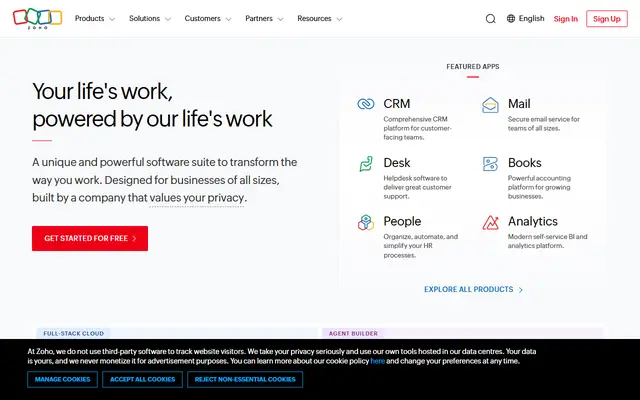
Products that solve the same core problem for the same kind of buyer. Switching usually means moving data and retraining people, not changing how you work. For Salesforce, this list contains 9 entries in this group, including HubSpot CRM / Sales Hub, Zoho CRM, Pipedrive, Freshsales and Insightly. See all direct alternatives across every product →
Choosing among direct alternatives to Salesforce
Nine direct CRMs are listed: HubSpot CRM and Sales Hub, Zoho CRM, Pipedrive, Freshsales, Insightly, Apptivo, Copper, monday CRM and Attio. Per our data, Insightly adds project management, Apptivo is a set of business apps with a CRM, Copper lives inside Google Workspace and Attio is flexible and modern. Pipedrive, founded in 2010, is based in Estonia, and monday in Israel. See the direct hub. Choose by team size and sales style: HubSpot is noted for marketing included, Pipedrive for a simple funnel, monday CRM for a visual layout. Trial two or three with a copy of real deals before deciding.
| Site | Name | Type | Founded | Majestic rank | Check |
|---|---|---|---|---|---|
| HubSpot CRM / Sales Hub | Direct | 2006 | #200 | seen in search |
| Zoho CRM | Direct | n/a | n/a | seen in search |
| Pipedrive | Direct | 2010 | #3,858 | seen in search |
| Freshsales | Direct | n/a | #3,029 | seen in search |
| Insightly | Direct | n/a | #34,484 | seen in search |
 | Apptivo | Direct | n/a | #103,709 | seen in search |
 | Copper | Direct | n/a | #42,963 | seen in search |
 | monday CRM | Direct | 2012 | #1,281 | seen in search |
 | Attio | Direct | n/a | #48,453 | seen in search |
Budget-friendly alternatives to Salesforce (3)
Lower-cost tools that cover the essential jobs without the full feature surface. A good fit when you pay for seats or features you rarely open. For Salesforce, this list contains 3 entries in this group, including Bigin by Zoho, Less Annoying CRM and Capsule. See all budget alternatives across every product →
Choosing among budget-friendly alternatives to Salesforce
Three are listed: Bigin by Zoho, a lighter small-business CRM; Less Annoying CRM, described as simple and inexpensive; and Capsule, a light CRM for small business founded in 2009. They trade depth for ease. See the budget hub and compare the Zoho page. Small teams lose little by choosing a lighter tool, but a growing sales team may outgrow it. Check how the price changes at ten and fifty users, and what automation each plan allows.
| Site | Name | Type | Founded | Majestic rank | Check |
|---|---|---|---|---|---|
 | Bigin by Zoho | Budget | n/a | n/a | seen in search |
 | Less Annoying CRM | Budget | n/a | #105,339 | seen in search |
 | Capsule | Budget | 2009 | #44,605 | seen in search |
Free options to Salesforce (2)
Tools with a free plan or free access that is usable on its own. Limits on volume, users or history usually apply, so check them before you commit. For Salesforce, this list contains 2 entries in this group, including Bitrix24 and Folk. See all free alternatives across every product →
Choosing among free alternatives to Salesforce
Two are listed: Bitrix24, founded in 2012, noted for a free plan with unlimited users, and Folk, a light CRM for contacts. Free plans change, so verify current limits. See the free hub. Free plans suit trial runs and very small teams. Ask what happens when you cross the limit, and whether your records can be exported cleanly if you leave.
Enterprise-grade alternatives to Salesforce (6)
Platforms built for large teams: governance, audit trails, integrations and support contracts. They tend to cost more and take longer to roll out. For Salesforce, this list contains 6 entries in this group, including Microsoft Dynamics 365 Sales, Oracle PeopleSoft CRM, SAP CRM, Pegasystems and Creatio. See all enterprise alternatives across every product →
Choosing among enterprise-grade alternatives to Salesforce
Six are listed: Microsoft Dynamics 365 Sales, Oracle PeopleSoft CRM, SAP CRM, Pegasystems, Creatio and Zendesk. Our data calls PeopleSoft CRM a legacy Oracle line and notes a source saying SAP CRM retires in 2027 to 2028. Pegasystems was founded in 1983 and focuses on processes and decisions. See the enterprise hub. Microsoft Dynamics 365 Sales integrates with Microsoft 365, Creatio combines no-code CRM and BPM, and Zendesk is strong in support. Expect longer implementation and sales-led buying.
| Site | Name | Type | Founded | Majestic rank | Check |
|---|---|---|---|---|---|
 | Microsoft Dynamics 365 Sales | Enterprise | n/a | n/a | seen in search |
| Oracle PeopleSoft CRM | Enterprise | 1977 | #87 | seen in search | |
| SAP CRM | Enterprise | n/a | n/a | seen in search | |
| Pegasystems | Enterprise | 1983 | #18,752 | seen in search | |
 | Creatio | Enterprise | n/a | #30,616 | seen in search |
 | Zendesk | Enterprise | 2007 | #204 | seen in search |
Open-source alternatives to Salesforce (10)
Projects whose source code is public. You can inspect, modify and often self-host them, at the price of doing more of the maintenance yourself. For Salesforce, this list contains 10 entries in this group, including Odoo CRM, Twenty, SuiteCRM, EspoCRM and Corteza. See all open source alternatives across every product →
Choosing among open-source alternatives to Salesforce
Ten are listed: Odoo CRM, Twenty, SuiteCRM, EspoCRM, Corteza, Krayin CRM, Vtiger Open Source, CiviCRM, Frappe CRM and Macro CRM. Licences noted include AGPL for several and MIT for Krayin. CiviCRM is aimed at non-profits. You pay in hosting and upkeep. See the open-source hub. Twenty is a modern AGPL CRM, EspoCRM is mature with a REST API, Vtiger Open Source is an older community line, and Krayin uses Laravel and Vue. Check recent activity before building on a project.
| Site | Name | Type | Founded | Majestic rank | Check |
|---|---|---|---|---|---|
 | Odoo CRM | Open source | 2004 | #340 | seen in search |
 | Twenty | Open source | n/a | #98,710 | seen in search |
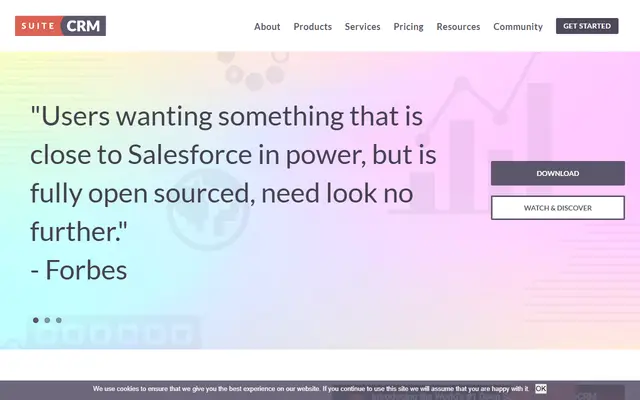 | SuiteCRM | Open source | n/a | #49,179 | seen in search |
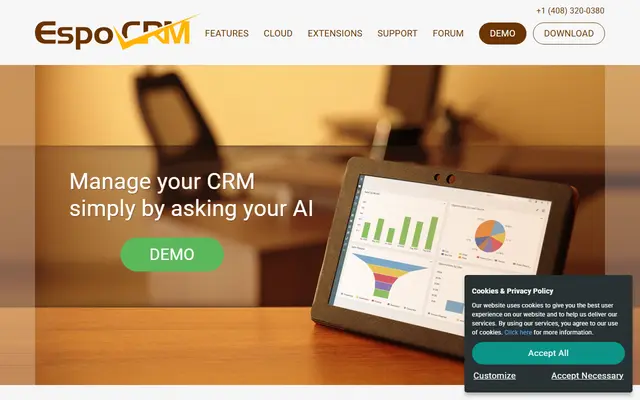 | EspoCRM | Open source | n/a | #53,806 | seen in search |
| Corteza | Open source | n/a | n/a | seen in search | |
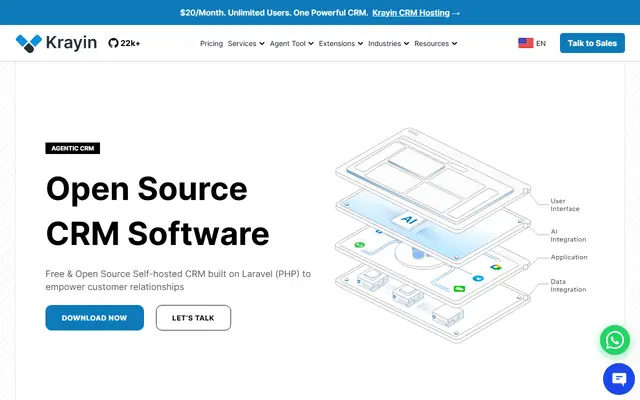 | Krayin CRM | Open source | n/a | #401,186 | seen in search |
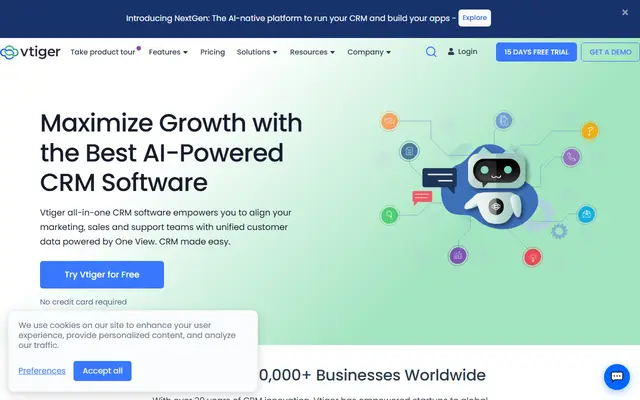 | Vtiger Open Source | Open source | n/a | #27,846 | seen in search |
 | CiviCRM | Open source | 2005 | #33,701 | seen in search |
 | Frappe CRM | Open source | n/a | #6,941 | seen in search |
| Macro CRM | Open source | n/a | n/a | seen in search |
Regional and local alternatives to Salesforce (10)
Vendors that are strongest in a particular country or region: local languages, local payment methods, local data-residency rules and local support hours. For Salesforce, this list contains 10 entries in this group, including Sellsy, Efficy, amoCRM, BPMSoft and Kylas. See all regional alternatives across every product →
Choosing among regional alternatives to Salesforce
Ten are listed: Sellsy (France), Efficy (Belgium), amoCRM and BPMSoft (Russia), Kylas and LeadSquared (India), Kintone and Sansan (Japan), RD Station CRM (Brazil) and Saphyte (Loyica), a Dubai CRM. See the regional hub for the type overall. Sellsy is noted for CRM plus invoices hosted in Paris, Efficy for the European mid-market and enterprise, and LeadSquared for no-code sales automation. Local vendors help with language and support but may have fewer integrations.
| Site | Name | Type | Founded | Majestic rank | Check |
|---|---|---|---|---|---|
 | Sellsy | Regional · France | n/a | #122,720 | seen in search |
 | Efficy | Regional · Belgium | n/a | #125,005 | seen in search |
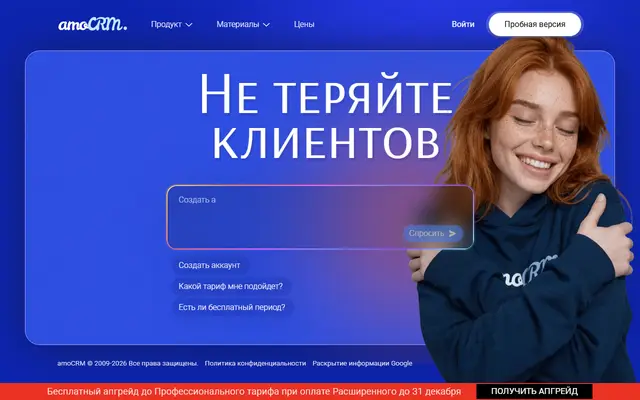 | amoCRM | Regional · Russia | n/a | #37,259 | seen in search |
| BPMSoft | Regional · Russia | n/a | n/a | seen in search | |
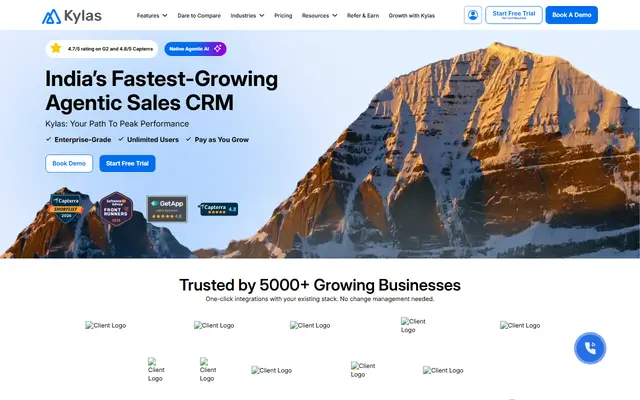 | Kylas | Regional · India | n/a | #577,667 | seen in search |
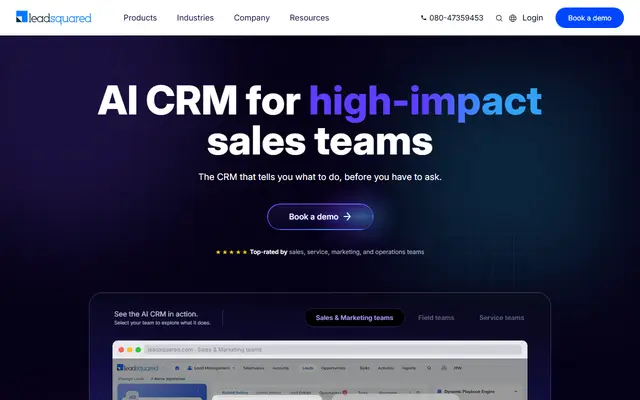 | LeadSquared | Regional · India | n/a | #45,081 | seen in search |
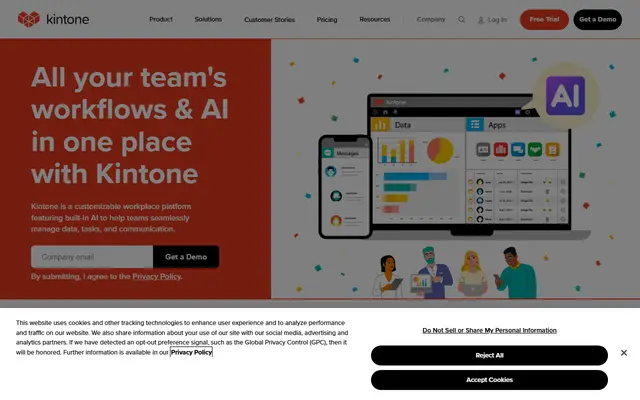 | Kintone | Regional · Japan | n/a | #183,192 | seen in search |
| Sansan | Regional · Japan | n/a | n/a | seen in search | |
 | RD Station CRM | Regional · Brazil | n/a | #23,340 | seen in search |
| Saphyte (Loyica) | Regional | n/a | n/a | seen in search |
Built-in features of platforms you already use to Salesforce (2)
Capabilities that already ship inside a suite or platform you pay for. They rarely match a specialist tool feature for feature, but they cost nothing extra. For Salesforce, this list contains 2 entries in this group, including Streak and Microsoft Lists (Microsoft 365). See all built-in alternatives across every product →
Choosing among built-in alternatives to Salesforce
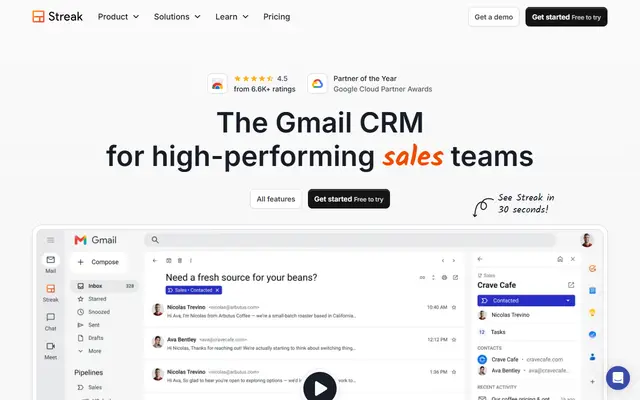
Two are listed: Streak, a CRM inside Gmail, and Microsoft Lists in Microsoft 365, a light tracker without CRM functions. They suit very small teams. See the built-in hub. Streak has Majestic rank 39,800 in our data. These tools suit teams that already live in Gmail or Microsoft 365 and need nothing more than a simple pipeline.
Adjacent tools to Salesforce (1)
Products that cover part of the job or approach it from another angle. Useful when you only need a slice of the original product. For Salesforce, this list contains 1 entry in this group, including ZoomInfo. See all adjacent alternatives across every product →
Choosing among adjacent alternatives to Salesforce
One is listed: ZoomInfo, founded in 2000, a data and lead-enrichment product, not a CRM. It complements rather than replaces. See the ZoomInfo page and the adjacent hub. ZoomInfo is a data and enrichment product, so it fits alongside a CRM, not instead of it. Decide whether lead data is your real gap before replacing the CRM itself.
| Site | Name | Type | Founded | Majestic rank | Check |
|---|---|---|---|---|---|
 | ZoomInfo | Adjacent | 2000 | #4,059 | seen in search |
DIY and self-made approaches to Salesforce (4)
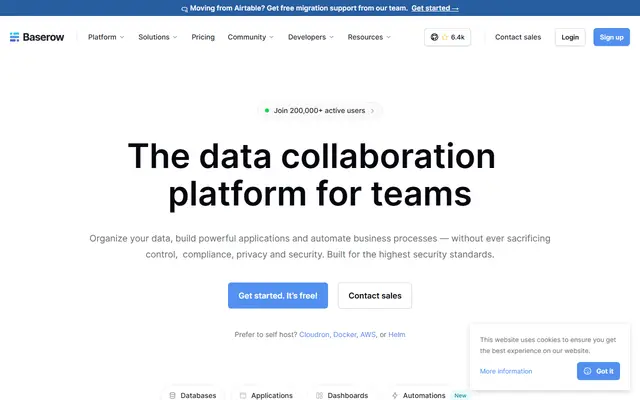
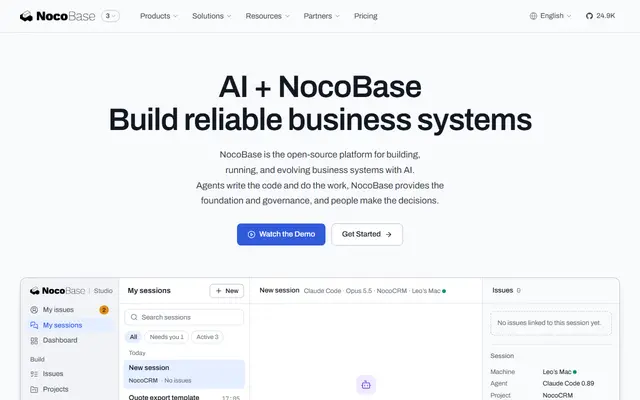
Spreadsheets, scripts and workflows you assemble yourself. Cheap and flexible for small needs, but they depend on whoever built them. For Salesforce, this list contains 4 entries in this group, including Airtable as a CRM, SmartSuite, Baserow and NocoBase. See all diy alternatives across every product →
Choosing among DIY alternatives to Salesforce
Four are listed: Airtable as a CRM, SmartSuite, Baserow and NocoBase. They need setup. Baserow is self-hostable and NocoBase is an open-source no-code tool for building a CRM. See the DIY hub. Airtable, founded in 2012, SmartSuite and Baserow, a Dutch self-hosted option, give flexibility but no ready sales process. They suit firms with unusual workflows and someone to maintain the build.
Migration checklist: moving away from Salesforce
Moving a CRM touches every salesperson, so plan around the sales calendar, not around IT convenience. Avoid cutting over at quarter end, when pipelines are most sensitive. Start by deciding what to bring: usually accounts, contacts, open deals and recent activity, while years of dormant records can be archived instead. Tell the sales team in advance which date is the last for the old system, and name one owner for data questions.
Custom objects and fields are the hardest part. A platform as configurable as this one often holds fields that nobody remembers creating. Review them and decide which survive. The Pipedrive page shows a simpler data model for comparison. After the move, compare pipeline totals and open-deal counts between old and new systems, owner by owner, to catch mapping errors early.
- Export accounts, contacts, deals, activities, notes and attachments with their owners.
- List custom objects, fields, record types and automation rules, and mark which will be rebuilt.
- Map pipeline stages and statuses between the old and new systems.
- Test an import with a small batch and check duplicates and relationships.
- Reconnect email, calendar, marketing and billing integrations.
- Rebuild key reports and dashboards before users switch.
- Train users in short sessions and keep a support channel open for the first weeks.
- Keep the old system read-only until the first full quarter closes.
Mistakes to avoid when switching
The most common error is trying to recreate every old customisation. A migration is a chance to drop unused fields. Another is switching at a busy time for sales. Finally, do not assume a simpler tool will stay simple if you add heavy automation later. Teams also underestimate people. Salespeople build habits around views, reports and shortcuts, and a new interface can slow them for weeks, so schedule training and ask a few champions to help colleagues. Avoid launching with half-finished data, since sellers who find missing contacts stop trusting the tool and go back to personal spreadsheets.
- Copying every legacy field and automation instead of reviewing them.
- Skipping a test import and finding broken relationships afterwards.
- Moving at quarter end when forecasts matter most.
- Ignoring how seats and plans scale as the team grows.
- Cancelling the old contract before data has been verified.
What the public data says about these alternatives
Our data contains 47 alternatives, all seen in search. By type the counts are open-source 10, regional 10, direct 9, enterprise 6, DIY 4, budget 3, free 2, built-in 2 and adjacent 1.
Salesforce was founded in 1999 with Majestic rank 344, Tranco rank 256 and about 35,000 employees. Several alternatives rank higher or close by: Oracle at 87, HubSpot at 200, Zendesk at 204 and Odoo at 340. At the other end, Kylas sits at 577,667, Krayin CRM at 401,186 and NocoBase at 248,444. Founding years run from 1977 for Oracle to 2012 for Bitrix24, monday and Airtable. Regional labels are Russia, India and Japan twice each, and France, Belgium and Brazil once each. These are signals of prominence, not quality. The methodology page explains each source.
Frequently asked questions
What is the best free alternative to Salesforce?
Our data lists Bitrix24, noted for a free plan with unlimited users, and Folk, a light contact CRM. Open-source CRMs such as SuiteCRM and EspoCRM have no licence fee but need hosting. Free plans change, so check current limits. Free plans change, so check current limits first.
Is there an open-source alternative to Salesforce?
Yes. Our data lists ten, including SuiteCRM, described as the closest to Salesforce with an AGPL licence, EspoCRM, Twenty, Corteza, Odoo CRM, Frappe CRM and CiviCRM for non-profits. They need technical effort to run. Check each project's recent activity and licence. Confirm licence terms. Read the licence text.
What is the cheapest alternative to Salesforce?
We do not publish prices. The budget group names Bigin by Zoho, Less Annoying CRM and Capsule, and the free group names Bitrix24 and Folk. Compare seat limits and what each plan excludes, not only the headline fee. Compare seat limits, automation and add-on charges across current plans.
Which alternative is closest to Salesforce?
Among open-source tools, our data calls SuiteCRM the closest, and Corteza has objects like Salesforce. Among hosted tools, Microsoft Dynamics 365 Sales and Zoho CRM are the nearest in scope, with Zoho described as offering enterprise-level functions for less. Trial the shortlist with a copy of real deals and your own reports.
Is Salesforce shutting down any products?
Our data says Salesforce as a whole has not been closed or renamed in 2026, but that it often renames and closes individual products, with Advertising Studio as an example. Check the vendor's announcements for any product you depend on. Verify announcements for any product you depend on.
Are there alternatives for Russia, India or Japan?
Yes. Our regional group lists amoCRM and BPMSoft from Russia, Kylas and LeadSquared from India, and Kintone and Sansan from Japan. Kintone is noted as a low-code tool strong in Japan. Check language, hosting and local support with each vendor. Verify support language. Ask about invoices.
Can I export my data before switching?
Large CRMs generally allow data export, but formats, limits and handling of custom objects vary, and we do not verify them. Export early, test an import into the new tool and keep the old system read-only until you are satisfied. Keep copies outside the tool as well.
Which options suit enterprises?
Our enterprise group lists Microsoft Dynamics 365 Sales, Oracle PeopleSoft CRM, SAP CRM, Pegasystems, Creatio and Zendesk. Our data adds that PeopleSoft CRM is a legacy line and that one source says SAP CRM retires in 2027 to 2028. Ask each vendor for references from companies of similar size.
Bottom line
Salesforce remains the reference enterprise CRM, and nothing in our data says it is being withdrawn. The reasons to look elsewhere are specific: you want a simpler tool, lower cost, local-language support or code you control. Match the type to the reason and the shortlist shrinks quickly.
For most teams the practical path is a short list of three: one direct CRM such as HubSpot, Zoho CRM or Pipedrive, one budget or open-source option, and one adjacent tool if data is the real gap. Check current plans on each vendor site. Continue with the Zendesk page or the CRM and sales category.
More alternatives pages related to Salesforce
Where Salesforce shows up as an alternative
Salesforce appears in the alternatives lists of 12 other products: Genesys, Mailchimp, Leadfeeder, lemlist, Apollo.io, Lusha, Zendesk, Freshdesk, ServiceNow, MailerLite, SendGrid, Pipedrive. Comparing those lists shows which tools keep being recommended across the whole category.
Explore more in CRM & Sales Software
Pipeline management, customer records and sales automation. Browse the full CRM & Sales Software hub, or jump to a related comparison: Pipedrive, Zoho CRM.