Zendesk alternatives: 50 help desk options compared by type
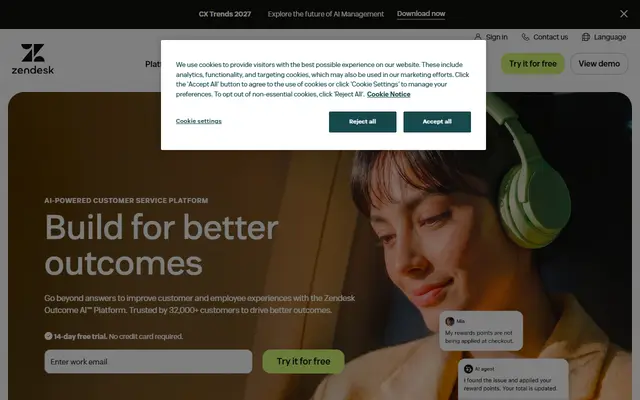
Zendesk is one of the best-known names in customer support software. It is a cloud platform for tickets, chat, voice and AI agents, founded in 2007 in the United States, and its domain sits at rank 204 in the Majestic Million. That visibility is exactly why so many teams eventually ask whether another tool would fit them better.
This page collects 50 alternatives from public sources and sorts them into ten types: direct competitors, budget options, a free option, enterprise suites, open-source projects, self-hosted software, regional vendors, built-in tools, adjacent products and do-it-yourself setups. Each type answers a different reason for leaving, whether that is price, data control, language support or simply wanting something lighter.
Nothing here is a ranking of quality. We did not measure speed, price or support response times, and the entries are not paid placements. Read the guides below, open the type pages that match your situation, and use the quick picks to build a short list of three or four candidates before you book any demo or start a trial.
Zendesk is available at zendesk.com. Public records list Zendesk as founded in 2007. Its headquarters country is recorded as United States. The most recent public figure for its headcount is about 3,830 employees. Its domain ranks #204 in the Majestic Million, a free public list of the most-linked-to domains on the web. Its domain ranks #300 in the Tranco list of the most visited domains.
This page lists 50 alternatives to Zendesk, spread across 10 types: direct (11), budget (3), free (1), enterprise (4), open source (11), self-hosted (1), regional (11), built-in (2), adjacent (4), diy (2).
49 of the 50 entries were seen in live web search results during our November 2026 review; the remaining entries are labelled unconfirmed so you know where extra checking is needed.
Regional options cover Europe, Russia, Latin America, India.
- Direct: 11 (22%)
- Budget: 3 (6%)
- Free: 1 (2%)
- Enterprise: 4 (8%)
- Open source: 11 (22%)
- Self-hosted: 1 (2%)
- Regional: 11 (22%)
- Built-in: 2 (4%)
- Adjacent: 4 (8%)
- DIY: 2 (4%)
49 of 50 entries (98%) were seen in live search results during our review; the rest are labelled “unconfirmed” and should be checked on the vendor site.
Quick comparison: the closest alternatives to Zendesk
| Site | Name | Type | Founded | Majestic rank | Check |
|---|---|---|---|---|---|
 | Freshdesk | Direct | n/a | #1,434 | seen in search |
 | Intercom | Direct | 2011 | #2,376 | seen in search |
 | HubSpot Service Hub | Direct | 2006 | #200 | seen in search |
 | Help Scout | Direct | 2011 | #5,253 | seen in search |
 | LiveAgent | Direct | n/a | #28,402 | seen in search |
What is Zendesk and why do people look for alternatives?
Zendesk is a cloud platform for customer support. According to public sources it covers ticketing, chat, voice and AI agents, so a support team can handle email, web chat and phone conversations in one place. The company was founded in 2007, is headquartered in the United States, and lists roughly 3,830 employees in the public data we used. Its main domain ranks 204 in the Majestic Million and 300 in the Tranco list, which puts it among the most visible support brands on the web.
Status checks in November 2026 found that the product operates under the same name. Zendesk's own website states that the purchase of the AI company Forethought was announced on 11 March 2026 and completed on 26 March 2026, and we found no rebranding. We also found no sign that Zendesk currently offers a free plan.
People search for alternatives for ordinary reasons. Some teams want a lower monthly bill or a lighter interface that a small group can learn in an afternoon. Others need data to stay on their own servers, which points toward open-source or self-hosted software. Some want a shared inbox that feels like email, others need strong WhatsApp or telephony support, and companies in Russia, Latin America or India may prefer a vendor that works natively in their language and with local rules.
A smaller group is moving in the other direction and wants a larger enterprise suite tied to a CRM. Because needs vary so widely, the list below is organised by type rather than by a single score. If you are still deciding whether to leave at all, start with the customer support category overview to see how the whole market is laid out.
How this list was built and what the labels mean
We compiled the list in November 2026 from public sources: web search results, vendor websites, open-source repositories and public ranking data such as the Majestic Million and Tranco list. Each alternative was assigned one type so that you can compare like with like. The full approach, including data licences and what we do not check, is described on the methodology page.
Two labels appear in the data. An entry marked as seen in search means we found it on the public web during the review and it matched the description we recorded. An entry marked unconfirmed was not confirmed in our search review, usually because a source was thin or the product was hard to find; we mention such entries with that caveat and never present them as a top pick. In this list one entry, the Gmail labels plus Google Sheets approach, is unconfirmed, while the other 49 were seen in search.
Types exist because the reason for leaving a tool usually decides where to look. A team escaping cost needs the budget-friendly type, while a team worried about data residency should read the open-source type first. Prices, features and current availability are not checked, so confirm them with each vendor.
How to choose a Zendesk alternative
Start from the reason you are leaving. A help desk replacement that solves the wrong problem simply moves the frustration to a new logo. Write down the three things about your current setup that cost you the most time or money, and treat those as hard requirements. Everything else is a preference that can be traded off.
Next, be honest about team size and channel mix. A five-person team answering email and chat does not need the same tool as a hundred agents running phone queues, service level agreements and several brands. Smaller teams usually gain more from a simple interface and quick setup, while larger ones need routing rules, roles, reporting and audit controls. Look at the whole category on the customer support hub before you commit to a direction.
Finally, plan the exit before you enter. Ask how tickets, customers, macros and help center articles can be exported, and how long a parallel run would take. Public information rarely settles these questions, so write them into your trial checklist and test them with a real export. The criteria below are the ones that most often decide the outcome for help desk buyers.
- Channels you actually use today: email, web chat, phone, WhatsApp, social messaging and any in-app support.
- Team size and roles: how many agents, whether light users can view tickets for free, and how permissions are handled.
- Automation and AI: macros, triggers, routing and whether AI agents are included or sold as an add-on.
- Data control: where data is hosted, whether you can self-host, and what export formats exist for tickets and customers.
- Integrations: your CRM, e-commerce store, billing tool and chat apps, plus API access for anything custom.
- Total cost over twelve months, including seats, add-ons, onboarding and migration effort rather than the headline price.
- Language and regional fit: interface languages, local phone numbers and compliance expectations in your market.
Quick picks by situation
If you want the closest like-for-like swap, look at Freshdesk, Help Scout and HubSpot Service Hub from the direct group. Freshdesk is described as a direct competitor with an Omni platform, and Help Scout is noted for an email-like interface. HubSpot Service Hub makes sense if your sales team already lives in HubSpot CRM.
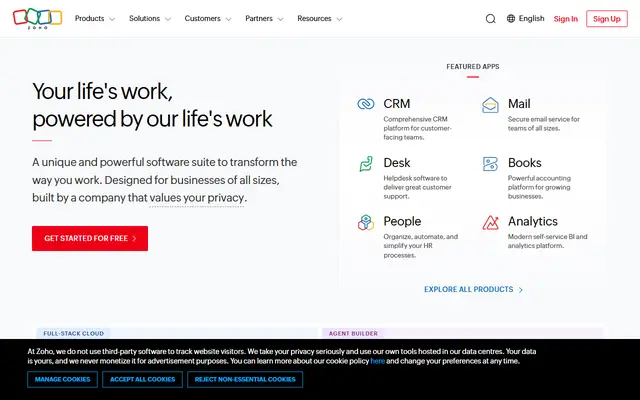
If cost is the main driver, Zoho Desk is noted as cheap with a free tier, and Helpdesk.com and Tidio target small teams that want simple ticketing or chat and bots. Spiceworks is the only free-type entry, with advertising and an IT focus, so it suits internal IT help rather than customer support.
If you sell online, Gorgias is built around e-commerce, and LiveAgent is noted for many channels and telephony. If your team works mostly in a mailbox, Front offers a shared team inbox, Hiver works inside Gmail, and Missive combines team email with chat.
If you need control over data, Zammad, FreeScout, osTicket and Chatwoot are the open-source names to check first, and HelpSpot is a PHP product you install yourself. If you need WhatsApp-heavy support, see Trengo and Gupshup. For large organisations that want CRM integration, Salesforce Service Cloud and Kustomer are the enterprise options, and Intercom puts its AI agent Fin at the centre.
All 50 alternatives to Zendesk by type
Direct alternatives to Zendesk (11)
Products that solve the same core problem for the same kind of buyer. Switching usually means moving data and retraining people, not changing how you work. For Zendesk, this list contains 11 entries in this group, including Freshdesk, Intercom, HubSpot Service Hub, Help Scout and LiveAgent. See all direct alternatives across every product →
Choosing among direct alternatives to Zendesk
Direct alternatives are full help desk or customer service platforms that cover the same ground as Zendesk. There are eleven in the list: Freshdesk, Intercom, HubSpot Service Hub, Help Scout, LiveAgent, Gorgias, Hiver, monday service, Deskpro, Front and HappyFox. All were seen in search.
The differences are mostly about philosophy. Help Scout and Front feel closer to email, which suits teams that think in conversations rather than tickets. Intercom puts its AI agent Fin in front, while HubSpot Service Hub and monday service attach support to a wider CRM or work platform. HappyFox is described as a classic help desk with an ITSM emphasis, and Deskpro is available in the cloud or installed locally. Gorgias is aimed at online stores, and LiveAgent is noted for many channels including phone.
To narrow the field, pick the two that match your working style and run the same ten real tickets through each. Compare how long it takes to configure routing and how pleasant the agent view feels after an hour of use. The direct type page explains this group in more detail and links to every product.
| Site | Name | Type | Founded | Majestic rank | Check |
|---|---|---|---|---|---|
| Freshdesk | Direct | n/a | #1,434 | seen in search |
| Intercom | Direct | 2011 | #2,376 | seen in search |
| HubSpot Service Hub | Direct | 2006 | #200 | seen in search |
| Help Scout | Direct | 2011 | #5,253 | seen in search |
| LiveAgent | Direct | n/a | #28,402 | seen in search |
 | Gorgias | Direct | n/a | #24,056 | seen in search |
 | Hiver | Direct | 2011 | #38,437 | seen in search |
 | monday service | Direct | 2012 | #1,281 | seen in search |
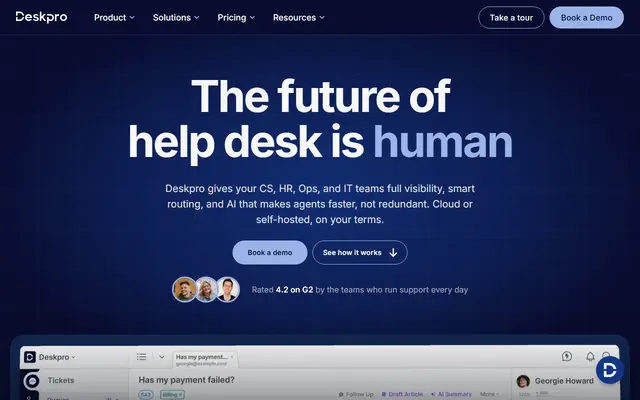 | Deskpro | Direct | n/a | #143,363 | seen in search |
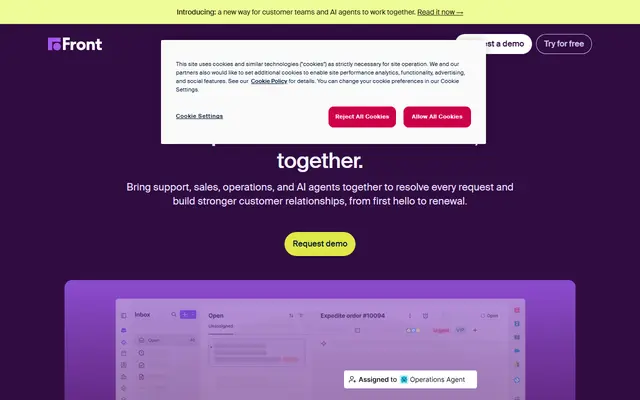 | Front | Direct | n/a | #70,382 | seen in search |
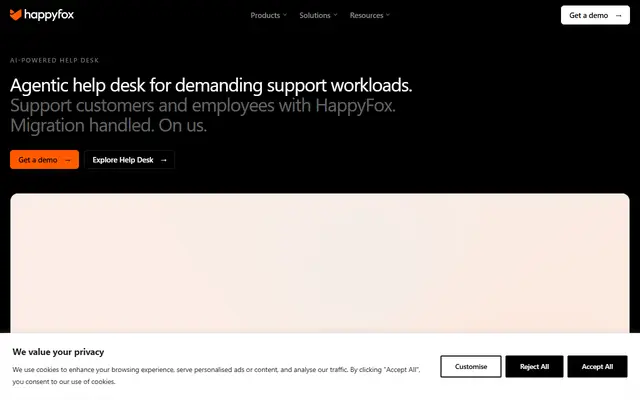 | HappyFox | Direct | n/a | #39,104 | seen in search |
Budget-friendly alternatives to Zendesk (3)
Lower-cost tools that cover the essential jobs without the full feature surface. A good fit when you pay for seats or features you rarely open. For Zendesk, this list contains 3 entries in this group, including Zoho Desk, Helpdesk.com and Tidio. See all budget alternatives across every product →
Choosing among budget-friendly alternatives to Zendesk
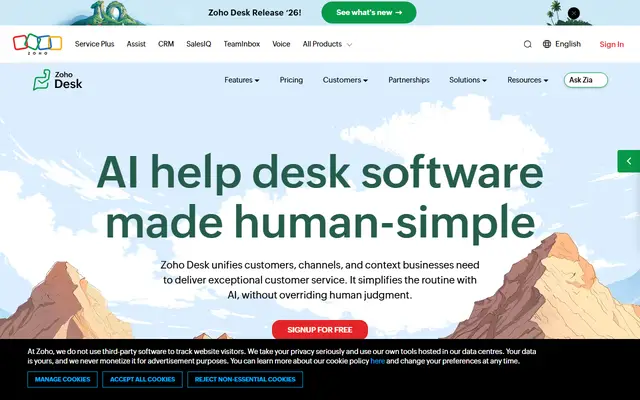
Three budget-friendly options appear in the list: Zoho Desk, Helpdesk.com and Tidio. All were seen in search. Zoho Desk is the most established, from a company founded in 1996 in India with a Majestic rank of 651, and the note describes it as cheap with a free tier. Our separate page on Zoho alternatives covers the wider suite it belongs to.
Helpdesk.com, founded in 2018, is described as simple ticketing for small teams, which fits a group that mainly answers email and needs little beyond a queue and a few canned replies. Tidio, founded in 2013, focuses on chat and bots for small businesses, so it is closer to a website messaging tool than a full ticket system.
Cheaper is only better when the missing features do not cost you hours elsewhere. Before choosing from this group, list the automations and reports you rely on now and check each one in a trial. If the budget group feels too thin, the open-source and free groups, such as Chatwoot and Spiceworks, offer other ways to cut licence spending. See the budget type page for the full picture.
Free options to Zendesk (1)
Tools with a free plan or free access that is usable on its own. Limits on volume, users or history usually apply, so check them before you commit. For Zendesk, this list contains 1 entry in this group, including Spiceworks. See all free alternatives across every product →
Choosing among free alternatives to Zendesk
Only one free-type alternative is listed: Spiceworks, founded in 2006 in the United States with a Majestic rank of 3603. The note describes it as free, supported by advertising and aimed at IT. That makes it a candidate for an internal IT help desk, where staff submit requests about devices and software, rather than for public customer support.
Free is a narrow category here because most commercial help desks that once had free plans have moved to paid tiers, and our sources found no free tier for Zendesk itself. If you want a no-licence route, the practical options are usually open source, such as Zammad, FreeScout and osTicket, or the free tiers of budget products like Zoho Desk, where our data notes one exists.
Remember that free rarely means zero cost. Advertising may be unacceptable inside a customer-facing environment, and self-run software needs hosting, backups and someone to maintain it. Treat free options as a way to validate your process before paying, not as permanent infrastructure for a growing team. Details on the group are on the free type page.
| Site | Name | Type | Founded | Majestic rank | Check |
|---|---|---|---|---|---|
 | Spiceworks | Free | 2006 | #3,603 | seen in search |
Enterprise-grade alternatives to Zendesk (4)
Platforms built for large teams: governance, audit trails, integrations and support contracts. They tend to cost more and take longer to roll out. For Zendesk, this list contains 4 entries in this group, including Salesforce Service Cloud, Kustomer, Helpshift and Pylon. See all enterprise alternatives across every product →
Choosing among enterprise-grade alternatives to Zendesk
Four enterprise-grade options are listed: Salesforce Service Cloud, Kustomer, Helpshift and Pylon. All were seen in search. They suit organisations with complex routing, several business units and a need to tie support to customer records.
Salesforce Service Cloud, from a company founded in 1999 with a Majestic rank of 344, is described as a large enterprise product linked to the Salesforce CRM; see our Salesforce alternatives page for context. Kustomer takes an omnichannel, CRM-style approach. Helpshift is noted for mobile support and many languages, which matters for app publishers with a global audience. Pylon is described, citing the vendor's blog, as B2B support software.
At this level the real questions are implementation effort, admin skills and contract terms rather than features. Ask who will configure the platform, how long onboarding takes and whether you will need a consultant. Because we do not check prices, request written quotes that include every module you plan to use. The enterprise type page lists the full group and the typical trade-offs.
| Site | Name | Type | Founded | Majestic rank | Check |
|---|---|---|---|---|---|
 | Salesforce Service Cloud | Enterprise | 1999 | #344 | seen in search |
 | Kustomer | Enterprise | n/a | #66,954 | seen in search |
 | Helpshift | Enterprise | n/a | #14,667 | seen in search |
 | Pylon | Enterprise | n/a | #128,385 | seen in search |
Open-source alternatives to Zendesk (11)
Projects whose source code is public. You can inspect, modify and often self-host them, at the price of doing more of the maintenance yourself. For Zendesk, this list contains 11 entries in this group, including Zammad, FreeScout, osTicket, Libredesk and Chatwoot. See all open source alternatives across every product →
Choosing among open-source alternatives to Zendesk
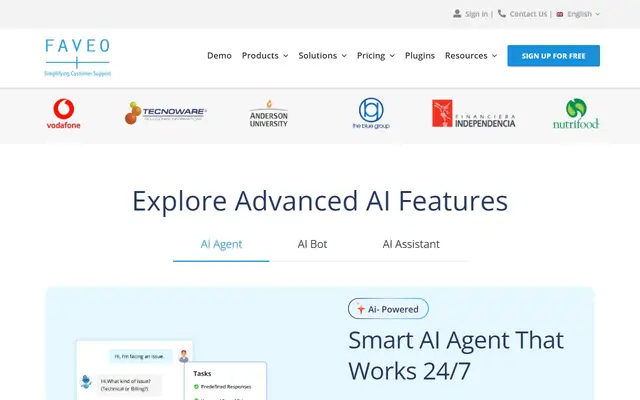
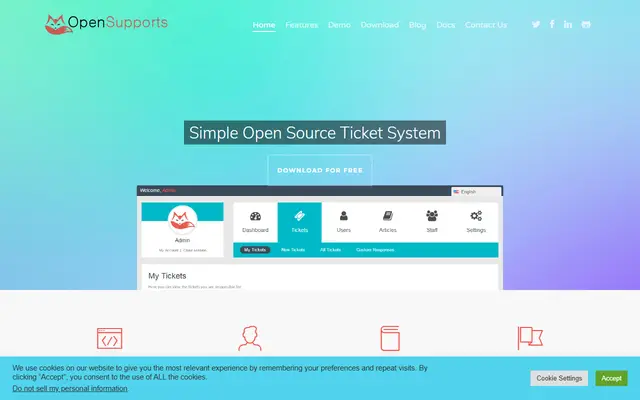
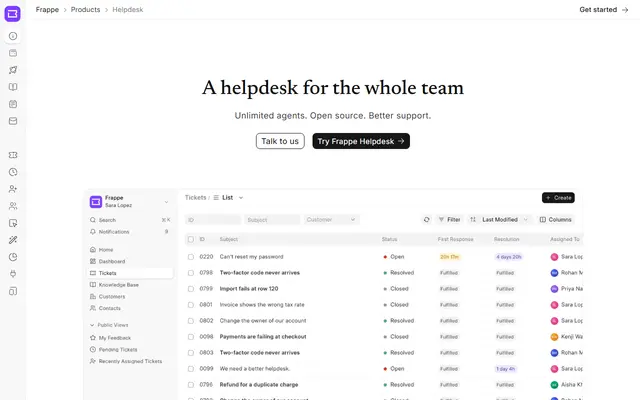
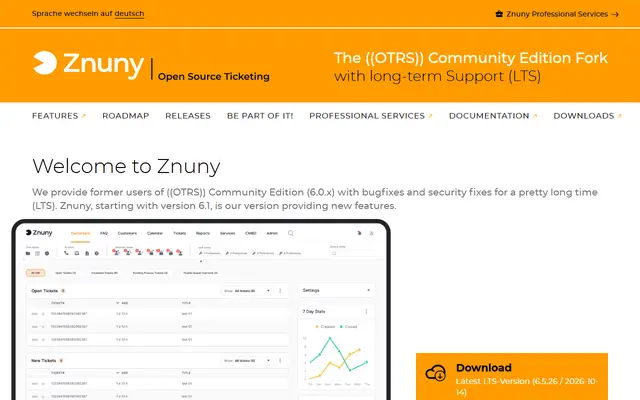
Eleven open-source projects appear in the list: Zammad, FreeScout, osTicket, Libredesk, Chatwoot, Peppermint, Faveo Helpdesk, OpenSupports, Frappe Helpdesk, Znuny and OTOBO. All were seen in search. They remove per-agent licence fees and give you control over data, but you take on hosting and upkeep.
Zammad is described as mature, licensed under AGPL and from Berlin. FreeScout is light, written in PHP and installable on ordinary hosting. osTicket is noted as the oldest open-source ticketing system, with a Majestic rank of 3911. Chatwoot is omnichannel, covering chat and social channels, while Libredesk is new and focused on a shared inbox and email. Znuny is a fork of OTRS Community Edition with long-term support, and OTOBO is another OTRS fork. Frappe Helpdesk sits on the Frappe and ERPNext platform, Faveo has an open version plus paid ones, and OpenSupports is minimalist.
Check how active each project is and who answers security reports before you install anything. Budget for backups and updates, and test email sending and attachments early. The open-source type page explains the model and its risks.
| Site | Name | Type | Founded | Majestic rank | Check |
|---|---|---|---|---|---|
 | Zammad | Open source | n/a | #133,819 | seen in search |
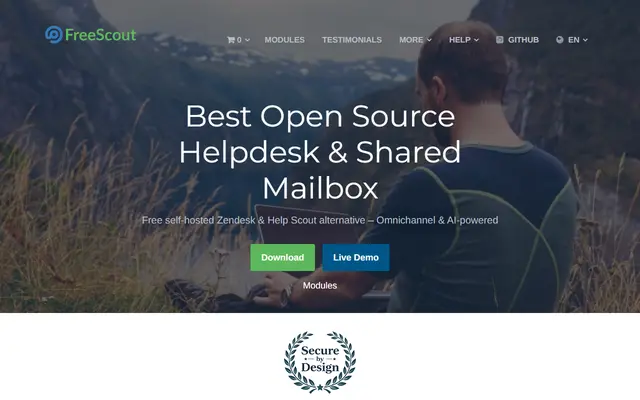 | FreeScout | Open source | n/a | #251,532 | seen in search |
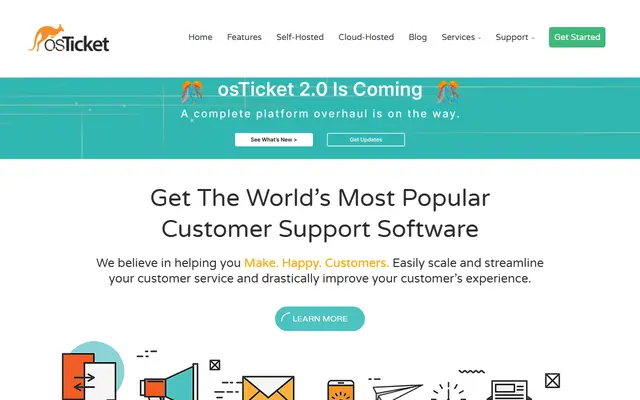 | osTicket | Open source | n/a | #3,911 | seen in search |
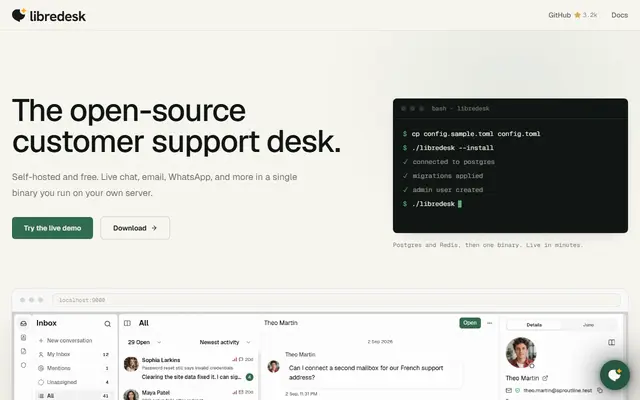 | Libredesk | Open source | n/a | #999,906 | seen in search |
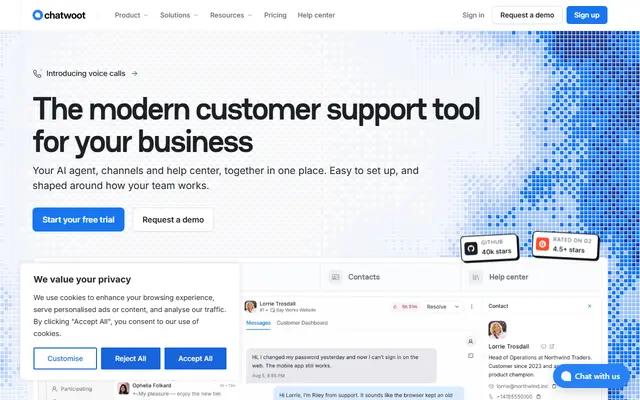 | Chatwoot | Open source | n/a | #51,624 | seen in search |
| Peppermint | Open source | n/a | n/a | seen in search | |
 | Faveo Helpdesk | Open source | n/a | #441,042 | seen in search |
 | OpenSupports | Open source | n/a | n/a | seen in search |
 | Frappe Helpdesk | Open source | n/a | n/a | seen in search |
 | Znuny | Open source | n/a | #289,615 | seen in search |
 | OTOBO | Open source | n/a | #952,690 | seen in search |
Self-hosted alternatives to Zendesk (1)
Software you run on your own server or computer. You keep control of the data and the uptime, and you take on updates, backups and security. For Zendesk, this list contains 1 entry in this group, including HelpSpot. See all self-hosted alternatives across every product →
Choosing among self-hosted alternatives to Zendesk
The self-hosted group contains a single entry: HelpSpot, a PHP help desk that you install on your own server, seen in search with a Majestic rank of 275365. Unlike the open-source projects, it is a product you run yourself rather than a community-built codebase, so the appeal is control over data and infrastructure combined with a vendor to talk to.
Because the group is so small, it helps to widen the question. Deskpro is described as available in the cloud and on premises, so it is worth checking if you want a vendor-supported product that can also be installed locally. Zammad, FreeScout and Znuny from the open-source list can be self-hosted as well, and the overlap is intentional: type labels describe the main way a product is offered, not the only way it can be used.
Before choosing a self-hosted route, confirm who will patch the server, where backups go and how email is received. Self-hosting trades a monthly fee for operational duties, which suits teams that already run their own infrastructure or work under strict data residency rules. Read the self-hosted type page for a fuller checklist.
| Site | Name | Type | Founded | Majestic rank | Check |
|---|---|---|---|---|---|
 | HelpSpot | Self-hosted | n/a | #275,365 | seen in search |
Regional and local alternatives to Zendesk (11)
Vendors that are strongest in a particular country or region: local languages, local payment methods, local data-residency rules and local support hours. For Zendesk, this list contains 11 entries in this group, including Crisp, Trengo, Dixa, Usedesk and Okdesk. See all regional alternatives across every product →
Choosing among regional alternatives to Zendesk
Eleven regional vendors are listed, grouped by where they are based. In Europe: Crisp, Trengo and Dixa. In Russia: Usedesk, Okdesk, Omnidesk and Naumen Service Desk. In Latin America: Octadesk, Movidesk and TomTicket. In India: Gupshup. All were seen in search.
Crisp is described as messenger-based support with EU data. Trengo is a shared inbox that includes WhatsApp, and Dixa offers a single queue for phone, chat and email. Among the Russian products, Usedesk is omnichannel and aimed at retail, Okdesk is built for service and field companies, Omnidesk is simple for small teams, and Naumen is a Russian ITSM product for large organisations. Octadesk is part of the Locaweb group, Movidesk is Brazilian and part of Zenvia, and TomTicket offers simple ticketing with WhatsApp. Gupshup is a messaging platform with WhatsApp.
Choose regional vendors when local language, local support hours, local payment methods or data rules matter more than global brand recognition. Check whether documentation exists in English if your team needs it. The regional type page shows how these products compare.
| Site | Name | Type | Founded | Majestic rank | Check |
|---|---|---|---|---|---|
 | Crisp | Regional · Europe | n/a | #13,922 | seen in search |
 | Trengo | Regional · Europe | n/a | #89,983 | seen in search |
 | Dixa | Regional · Europe | n/a | #124,881 | seen in search |
 | Usedesk | Regional · Russia | n/a | #613,058 | seen in search |
 | Okdesk | Regional · Russia | n/a | #531,292 | seen in search |
 | Omnidesk | Regional · Russia | n/a | #714,068 | seen in search |
 | Naumen Service Desk | Regional · Russia | 2001 | #197,985 | seen in search |
 | Octadesk | Regional · Latin America | n/a | #392,556 | seen in search |
 | Movidesk | Regional · Latin America | n/a | #136,944 | seen in search |
| TomTicket | Regional · Latin America | n/a | #425,257 | seen in search | |
 | Gupshup | Regional · India | 2004 | #82,772 | seen in search |
Built-in features of platforms you already use to Zendesk (2)
Capabilities that already ship inside a suite or platform you pay for. They rarely match a specialist tool feature for feature, but they cost nothing extra. For Zendesk, this list contains 2 entries in this group, including Google Groups: Collaborative Inbox and Microsoft 365 shared mailbox. See all built-in alternatives across every product →
Choosing among built-in alternatives to Zendesk
Two built-in options exist: Google Groups Collaborative Inbox and the Microsoft 365 shared mailbox. Both were seen in search. They are not help desks in the full sense, but they are already part of tools many companies pay for, so they cost nothing extra and need little setup.
The Google option is described as a free shared inbox without service level agreements, and the Microsoft option as a shared mailbox without tickets. That tells you what is missing: no ticket numbers, no assignment rules, no reporting on response time. For a team that receives a few dozen messages a week, those gaps may be acceptable. For anything with deadlines or several agents, they quickly become a source of dropped conversations.
A good test is to ask whether two people ever reply to the same customer by accident, or whether you would struggle to answer how many requests were open last Friday. If so, you have outgrown a shared inbox. Look at adjacent tools like Missive or Zoho TeamInbox as a middle step, or read the built-in type page to understand where these tools stop being enough.
Adjacent tools to Zendesk (4)
Products that cover part of the job or approach it from another angle. Useful when you only need a slice of the original product. For Zendesk, this list contains 4 entries in this group, including Missive, Drag, Zoho TeamInbox and Bitrix24. See all adjacent alternatives across every product →
Choosing among adjacent alternatives to Zendesk
Four adjacent products appear: Missive, Drag, Zoho TeamInbox and Bitrix24. All were seen in search. These are not full help desks but solve part of the same problem, which makes them useful when your support volume is modest or your needs are unusual.
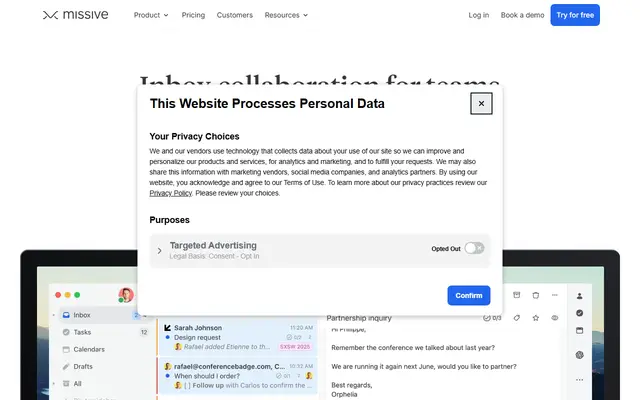
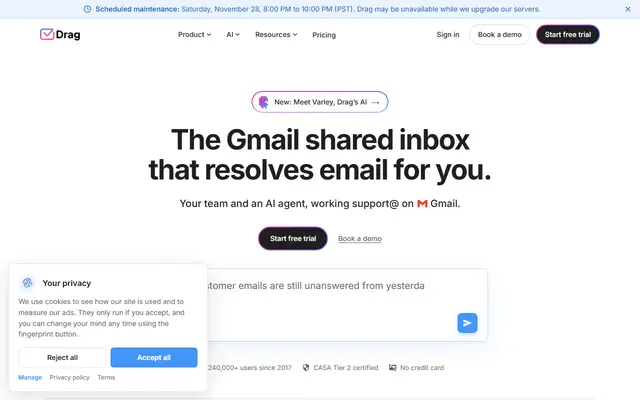
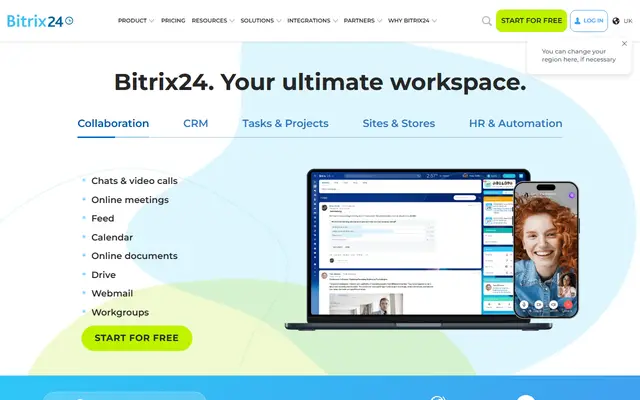
Missive is team email with chat built in. Drag is a kanban board layered over Gmail, so conversations become cards that move through stages. Zoho TeamInbox is described as a shared inbox only, and it belongs to the same company as Zoho Desk. Bitrix24, founded in 2012 with a Majestic rank of 14585, is a CRM-style all-in-one workspace that includes support features.
Adjacent tools work best for teams that treat support as one part of a broader job, such as account management or sales operations. They tend to fall short when you need formal service level tracking, large knowledge bases or detailed reporting. Test whether you can reproduce your three most common workflows without workarounds, and consult the adjacent type page for related products from other categories.
| Site | Name | Type | Founded | Majestic rank | Check |
|---|---|---|---|---|---|
 | Missive | Adjacent | n/a | #84,912 | seen in search |
 | Drag | Adjacent | 2018 | #197,641 | seen in search |
| Zoho TeamInbox | Adjacent | n/a | n/a | seen in search | |
 | Bitrix24 | Adjacent | 2012 | #14,585 | seen in search |
DIY and self-made approaches to Zendesk (2)
Spreadsheets, scripts and workflows you assemble yourself. Cheap and flexible for small needs, but they depend on whoever built them. For Zendesk, this list contains 2 entries in this group, including NocoBase and Gmail labels + Google Sheets. See all diy alternatives across every product →
Choosing among DIY alternatives to Zendesk
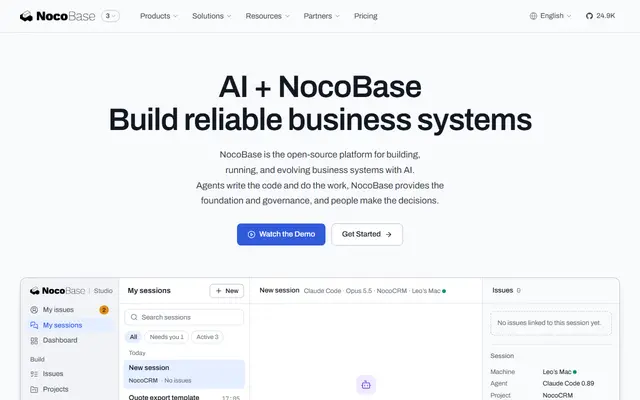
Two do-it-yourself approaches are listed. NocoBase is a low-code platform on which you can build your own ticketing application; it was seen in search and has a Majestic rank of 248444. The second, Gmail labels plus Google Sheets, is a manual way to track requests. It is not confirmed in our search review, so treat it as an idea rather than a product.
DIY makes sense in narrow cases: a very small team, unusual workflows that no packaged help desk handles, or a company with developers who prefer to own the whole system. The benefit is a tool shaped exactly to your process. The cost is that every feature, from email parsing to permissions, becomes your responsibility, and the person who built it becomes a single point of failure.
If you go this way, write down the minimum feature list first and set a review date. When requests grow or you find yourself rebuilding standard help desk features such as macros, reporting or customer history, that is the signal to adopt a packaged tool. The DIY type page covers when to stay with a homemade setup and when to stop.
Migration checklist: moving away from Zendesk
Moving a support desk is a project, not a weekend task. Plan in phases: audit, export, build, run in parallel and cut over. Begin by listing everything that lives in the current system, from tickets and customer records to macros, triggers, views, tags, help center articles, satisfaction surveys and integrations with other tools. Many teams discover that a third of their automations are obsolete, which is a good moment to retire them instead of copying them.
Test the export early. Ask the new vendor what import formats they support and run a small sample before you commit. Some tools import tickets as historical records only, which means open conversations will not carry over cleanly, so choose a quiet period for the switch. Because the status review found that Zendesk is operating under the same name, there is no forced deadline; you can take the time to do it properly.
Communicate with both customers and colleagues. Support addresses, forwarding rules and web forms should be updated in a planned order, and agents need a short training session on the new interface. Keep the old system in read-only mode for several months so that history stays searchable. Compare the options on the Zendesk alternatives overview and the direct type page before you decide, and use this checklist during execution.
- Inventory tickets, customers, organisations, tags, macros, triggers, automations, views and help center content.
- Export a full copy of the data and verify that attachments and internal notes are included, not only message text.
- Run a pilot import of a few hundred tickets and check dates, requesters, assignees and statuses.
- Rebuild essential automations and routing rules first, then add the rest after the team is comfortable.
- Update support email addresses, forwarding, web forms, chat widgets and API integrations in a planned sequence.
- Run both systems in parallel for a short period and track which one holds the latest customer conversation.
- Train agents on the new interface with real tickets and write a one-page cheat sheet of changes.
- Archive the old account in read-only form, and delete orphaned logins and API keys after the cutover.
Mistakes to avoid when switching
The most common error is choosing a tool from a feature table without testing it on real work. Marketing pages describe capabilities in general terms, and only your own tickets reveal whether a workflow takes two clicks or ten. Another frequent mistake is judging a tool by its price per seat alone, ignoring add-ons for AI, reporting, phone or extra channels that you may need within a year.
A third problem is trying to recreate the old system exactly. Configurations built over several years carry assumptions that no longer apply, and copying them wholesale imports old clutter into a new interface. Finally, teams underestimate the human side: agents who feel unheard during selection tend to find reasons the new tool does not work. Involve two or three of them in the trial and let them report back. The methodology page explains why we never rank products by a single score for exactly this reason.
- Choosing from a marketing page or a ranking without a trial on real tickets.
- Comparing seat prices only and forgetting add-ons, onboarding and migration time.
- Copying every old automation instead of rebuilding only the ones still needed.
- Skipping a parallel run and discovering missed email or broken forms after cutover.
- Leaving agents out of the decision, then wondering why adoption lags.
What the public data says about these alternatives
The list contains 50 alternatives. By type, direct competitors and open-source projects are tied for the largest groups with eleven each, and regional vendors also number eleven. Enterprise and adjacent products have four each, budget options three, built-in and DIY two each, and there is one free option and one self-hosted option. The mix shows that Zendesk's market is crowded at the standard help desk level, while truly free and self-hosted commercial products are rare.
Of the 50 entries, 49 were seen in search and one is unconfirmed: the Gmail labels plus Google Sheets approach. Zendesk itself was founded in 2007 and has a Majestic rank of 204. Among the alternatives, HubSpot Service Hub has a rank of 200 and Salesforce Service Cloud 344, so some enterprise rivals are at least as visible on the web. Zoho Desk is at 651, Freshdesk at 1434, Intercom at 2376 and Spiceworks at 3603.
At the other end, Libredesk has a rank of 999906, which fits a new project, and the Russian regional vendors rank between roughly 198 thousand and 714 thousand. Rank reflects web links, not product quality or market share, so use it only as a rough signal of visibility. The methodology page describes the sources.
Frequently asked questions
What is the best free alternative to Zendesk?
In our list Spiceworks is the only entry of the free type, and it is described as free, supported by ads and aimed at IT teams. For customer support, open-source options such as Zammad, FreeScout and osTicket remove licence fees but require hosting. Zoho Desk is noted as having a free tier. Check current terms with each vendor.
Is there an open-source alternative to Zendesk?
Yes, eleven open-source projects are listed, including Zammad, FreeScout, osTicket, Chatwoot, Libredesk, Znuny and OTOBO. Zammad is described as mature and AGPL-licensed, FreeScout as a light PHP tool, and Chatwoot as omnichannel. You trade licence fees for hosting, updates and security work, so plan maintenance before you install.
What is the cheapest Zendesk alternative?
We do not check prices, so we cannot name the cheapest one. The budget group contains Zoho Desk, Helpdesk.com and Tidio, and Zoho Desk is noted as cheap with a free tier. Open-source tools have no licence fee but carry hosting and maintenance costs. Compare total yearly cost, including add-ons, before deciding.
Which Zendesk alternative is closest to Zendesk itself?
The direct group is the place to look: Freshdesk, Intercom, HubSpot Service Hub, Help Scout, LiveAgent, Gorgias, Hiver, monday service, Deskpro, Front and HappyFox. Freshdesk is described as a direct competitor with an Omni platform. Run the same real tickets through two or three of them to see which feels closest to your workflow.
Can I export my data from Zendesk before switching?
Public sources do not give us a reliable answer on export formats, so check the current documentation and test a real export. Ask the new vendor which import formats they accept and run a pilot of a few hundred tickets. Confirm that attachments, internal notes and help center articles come across, not only message text.
Are there regional alternatives for non-English markets?
Yes. The list includes Crisp, Trengo and Dixa in Europe, Usedesk, Okdesk, Omnidesk and Naumen Service Desk in Russia, Octadesk, Movidesk and TomTicket in Latin America, and Gupshup in India. They suit teams that need local language support, local channels such as WhatsApp or regional data rules.
Do I need a full help desk, or is a shared inbox enough?
A shared inbox such as Google Groups Collaborative Inbox or a Microsoft 365 shared mailbox works for low volume, but our datas describe them as lacking service level agreements and tickets. If several agents answer customers or you need to report on response times, a help desk or tools like Missive or Front are a safer step.
How long does it take to switch help desks?
It depends on data volume, number of automations and team size, and we have no public figures to quote. Plan phases: audit, export, pilot, parallel run and cutover, and allow time for agent training. Keeping the old system read-only for a few months helps preserve searchable history after the move.
Did Zendesk change its name or get acquired recently?
We found no rebranding. According to Zendesk's own website, the purchase of the AI company Forethought was announced on 11 March 2026 and completed on 26 March 2026. That is an acquisition made by Zendesk rather than of it. Always verify current corporate news with official sources before making a decision.
Bottom line
There is no single best replacement for Zendesk, because the reason for leaving differs from team to team. If you want something comparable, start with the direct group and test Freshdesk, Help Scout or Intercom against your own tickets. If you want to save money, compare Zoho Desk and the other budget options, and consider the open-source projects only if you can run them reliably. If you need local language or WhatsApp strength, the regional group deserves a serious look.
Whatever you choose, build a short list of three, run the same real tickets through each, and test a data export before you sign anything. Prices and features were not checked here, and the list reflects public sources from November 2026. Browse the customer support category, then use the type pages to refine your short list, and confirm every detail directly with the vendors.
More alternatives pages related to Zendesk
Where Zendesk shows up as an alternative
Zendesk appears in the alternatives lists of 9 other products: Genesys, Aircall, Freshdesk, ServiceNow, Salesforce, Zoho CRM, Intercom, TOPdesk, Trengo. Comparing those lists shows which tools keep being recommended across the whole category.
Explore more in Customer Support & Messaging
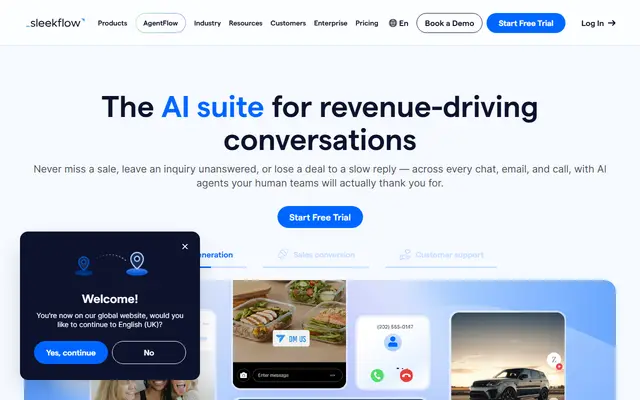
Help desks, shared inboxes, live chat and messaging platforms. Browse the full Customer Support & Messaging hub, or jump to a related comparison: Freshdesk, Intercom, Trengo, SleekFlow.