RingCentral alternatives: 42 options compared by type
RingCentral is a cloud business phone and communications provider. According to the public data behind this directory, the company was founded in 2003, is headquartered in the United States, and its domain sits at Majestic rank 5600 and Tranco rank 2159. A phone system touches every desk, every customer call and often the contact centre, so a decision to stay or leave is rarely taken lightly, and that is why people keep comparing it with other providers.
This page lists 42 alternatives and sorts them into nine types: direct competitors, budget-friendly services, enterprise-grade platforms, open-source projects, self-hosted systems, regional specialists, built-in options, adjacent tools and do-it-yourself builds. Each type answers a different reason for looking. A team that wants a cheaper cloud phone needs a different shortlist from one that wants to host its own PBX or one that needs a provider with local numbers and support in a particular country.
Everything here rests on public sources reviewed in November 2026. We did not run hands-on trials, and we do not publish prices, call-quality scores or feature tables, because they change often and are not part of our data. What we offer is a structured map of who the alternatives are, where they come from and which ones we could confirm in a search review. Use it to build a shortlist, then check current plans on each vendor site. The wider telephony and communication category shows how these products relate.
RingCentral is available at ringcentral.com. Public records list RingCentral as founded in 2003. Its headquarters country is recorded as United States. Its domain ranks #5,600 in the Majestic Million, a free public list of the most-linked-to domains on the web. Its domain ranks #2,159 in the Tranco list of the most visited domains.
This page lists 42 alternatives to RingCentral, spread across 9 types: direct (8), budget (3), enterprise (5), open source (10), self-hosted (4), regional (7), built-in (1), adjacent (2), diy (2).
40 of the 42 entries were seen in live web search results during our November 2026 review; the remaining entries are labelled unconfirmed so you know where extra checking is needed.
Regional options cover Europe, France, Germany, Netherlands.
- Direct: 8 (19%)
- Budget: 3 (7%)
- Enterprise: 5 (12%)
- Open source: 10 (24%)
- Self-hosted: 4 (10%)
- Regional: 7 (17%)
- Built-in: 1 (2%)
- Adjacent: 2 (5%)
- DIY: 2 (5%)
40 of 42 entries (95%) were seen in live search results during our review; the rest are labelled “unconfirmed” and should be checked on the vendor site.
Quick comparison: the closest alternatives to RingCentral
| Site | Name | Type | Founded | Majestic rank | Check |
|---|---|---|---|---|---|
 | Dialpad | Direct | 2014 | #12,381 | seen in search |
| 8x8 | Direct | 1987 | #19,903 | seen in search | |
 | GoTo | Direct | 2003 | #3,030 | seen in search |
 | Nextiva | Direct | n/a | #14,840 | seen in search |
| Vonage | Direct | n/a | n/a | seen in search |
What is RingCentral and why do people look for alternatives?
RingCentral sits in the market usually called cloud telephony or unified communications as a service: business phone numbers, calling, messaging and meetings delivered over the internet instead of from a box in a cupboard. Our data records the founding year as 2003 and the headquarters country as the United States. Nothing in our public sources points to a closure, a rebrand or a change of ownership, so the reasons for comparing are practical rather than dramatic.
Cost is the first and most common reason. A phone system is billed per user, so a ten-person office and a five-hundred-seat contact centre see very different totals, and teams often discover that they pay for modules they never open. Whether a rival is actually cheaper depends on current plans, which we do not verify. The second reason is fit: a small shop wants simple calling and a shared number, while a support team wants queues, call recording and reporting.
Other motives are more specific. Companies already living in Microsoft or Zoom tools may prefer the phone product that sits inside the same account. European firms often want a provider with local numbers, local support and data hosted in their own legal area. Technical teams may want an open-source PBX they can modify, and privacy-minded organisations may want calls to stay on their own servers. Finally, some buyers simply want a second quote before renewing.
The sections below explain how we compiled the list, how to choose between types, and how to plan a move without losing a single inbound call. Comparable markets are covered on the pages for Aircall and Genesys, which approach calling from the call-centre side.
How we built this list
The list was compiled in November 2026 from public sources only: the Majestic Million ranking for domain prominence, the Tranco list, Wikidata for founding years and headquarters, and a manual review of public web search results to see which products are presented as substitutes for RingCentral. The methodology page gives licences and limits.
Each entry has one of two statuses. Seen in search means the product was described as an alternative or competitor in public results during the review. Unconfirmed means it appears in our source data but we could not match it in that review; such entries are shown for completeness and never offered as a top pick. Of the 42 entries here, 40 were seen in search and 2 are unconfirmed. We group entries into types because a hosted phone service, a Linux PBX and a shell script are very different answers. The first two hubs to read are direct alternatives and open-source alternatives. We do not rank by quality or accept payment for inclusion.
How to choose a RingCentral alternative
Start with the calls themselves. Count the users, note how many are on the phone all day and how many only need a number for occasional use, and list the countries where you must have local numbers. Then decide whether voice is the whole job or only part of it. Some teams need calling, team chat and video in one app; others only need reliable inbound and outbound lines with a decent mobile client.
Next, think about where the phone system must connect. Calls that are logged automatically in a CRM or help desk save real time, so check which integrations each candidate offers rather than assuming they match. Think about hardware too: desk phones, headsets and analogue lines can limit your options, and a provider that supports your existing handsets lowers the cost of switching. Review number portability early, because moving numbers is usually the slowest part of any change.
Finally, consider who will run the system. A hosted service shifts upkeep to the vendor, while a PBX you run yourself gives control but makes you responsible for updates, security and call quality. Read our guides to enterprise-grade options and self-hosted options if either matches your situation. These are the criteria worth weighing:
- Number coverage: confirm local and toll-free numbers in every country where you take calls.
- Number porting: ask how long a transfer takes and whether the old line can stay active until it finishes.
- Call handling: queues, auto-attendants, voicemail transcription and call recording often decide the choice for support teams.
- Integrations: check connectors to your CRM, help desk and calendar before you commit.
- Devices and apps: verify desk phone compatibility and the quality of mobile and desktop clients.
- Compliance and hosting: for regulated data, confirm where calls and recordings are stored.
- Support and contract terms: look at response channels, minimum terms and how seats can be reduced.
Quick picks by situation
If you want the nearest like-for-like swap, begin with the direct group: Dialpad, 8x8, GoTo and Nextiva are all cloud phone providers that compete for the same small and mid-size business buyer. Aircall and CloudTalk lean toward sales and support teams that live in their phone all day, which may suit a contact-centre use better than a general office.
If budget is the constraint, look at Ooma, Quo and Google Voice, which our data places in the budget group. Quo is listed under its own domain, quo.com, and was seen in search. A very small team that only needs a few lines may not need a full unified communications suite at all.
Organisations that already pay for another platform should compare Zoom Phone and Microsoft Teams Phone, since the phone line then lives next to meetings and chat. Large telecom estates sometimes look at Cisco Webex Calling, though Avaya and Mitel are unconfirmed in our review. For full control, Asterisk and FreePBX are open-source foundations, while 3CX and STARFACE are self-hosted systems. European buyers can look at Ringover, Placetel, NFON, sipgate and Wildix. A related read is the Twilio page, which covers building calling into your own software.
All 42 alternatives to RingCentral by type
Direct alternatives to RingCentral (8)
Products that solve the same core problem for the same kind of buyer. Switching usually means moving data and retraining people, not changing how you work. For RingCentral, this list contains 8 entries in this group, including Dialpad, 8x8, GoTo, Nextiva and Vonage. See all direct alternatives across every product →
Choosing among direct alternatives to RingCentral
Direct alternatives are cloud phone services aimed at the same buyers. Our data lists eight, and all were seen in search. Dialpad (founded 2014) and 8x8 (founded 1987) are both based in the United States, as is GoTo, founded in 2003. Nextiva, Vonage and CloudTalk round out the group, Sangoma comes from Canada with a 1984 founding year, and Aircall is French and was founded in 2014. See the direct alternatives hub for the type as a whole. Compare number coverage and integrations first.
| Site | Name | Type | Founded | Majestic rank | Check |
|---|---|---|---|---|---|
| Dialpad | Direct | 2014 | #12,381 | seen in search |
| 8x8 | Direct | 1987 | #19,903 | seen in search | |
| GoTo | Direct | 2003 | #3,030 | seen in search |
| Nextiva | Direct | n/a | #14,840 | seen in search |
| Vonage | Direct | n/a | n/a | seen in search | |
 | Sangoma | Direct | 1984 | #23,852 | seen in search |
 | Aircall | Direct | 2014 | #24,444 | seen in search |
 | CloudTalk | Direct | n/a | #29,967 | seen in search |
Budget-friendly alternatives to RingCentral (3)
Lower-cost tools that cover the essential jobs without the full feature surface. A good fit when you pay for seats or features you rarely open. For RingCentral, this list contains 3 entries in this group, including Ooma, Quo and Google Voice. See all budget alternatives across every product →
Choosing among budget-friendly alternatives to RingCentral
Budget-friendly options trade breadth for price and simplicity. Our data names three, all seen in search: Ooma, founded in 2004 in the United States, Quo, and Google Voice. They suit small offices, freelancers and shops with a few lines. Expect lighter reporting, fewer integrations and simpler call routing than a full suite, and check what the cheapest plan leaves out. The budget hub lists similar products in other categories.

Enterprise-grade alternatives to RingCentral (5)
Platforms built for large teams: governance, audit trails, integrations and support contracts. They tend to cost more and take longer to roll out. For RingCentral, this list contains 5 entries in this group, including Microsoft Teams Phone, Cisco Webex Calling, Zoom Phone, Avaya and Mitel. See all enterprise alternatives across every product →
Choosing among enterprise-grade alternatives to RingCentral
Enterprise-grade options target large organisations. Our data lists five: Microsoft Teams Phone, Cisco Webex Calling and Zoom Phone were seen in search, while Avaya and Mitel are not confirmed in our review. Zoom Phone is listed under zoom.com with a founding year of 2011 and a Majestic rank of 479. Expect sales-led buying, longer contracts and formal onboarding. Compare them through the enterprise hub and the Genesys page for contact-centre needs.
| Site | Name | Type | Founded | Majestic rank | Check |
|---|---|---|---|---|---|
| Microsoft Teams Phone | Enterprise | n/a | n/a | seen in search | |
| Cisco Webex Calling | Enterprise | n/a | n/a | seen in search | |
 | Zoom Phone | Enterprise | 2011 | #479 | seen in search |
| Avaya | Enterprise | n/a | n/a | unconfirmed | |
| Mitel | Enterprise | n/a | n/a | unconfirmed |
Open-source alternatives to RingCentral (10)
Projects whose source code is public. You can inspect, modify and often self-host them, at the price of doing more of the maintenance yourself. For RingCentral, this list contains 10 entries in this group, including Asterisk, FreePBX, FusionPBX, FreeSWITCH and Elastix. See all open source alternatives across every product →
Choosing among open-source alternatives to RingCentral
Open-source options give you code to inspect and run. Our data lists ten, all seen in search: Asterisk (founded 1999), FreePBX, FusionPBX, FreeSWITCH, Elastix, SIPfoundry, AiPBX, OpenSIPS, Linphone (founded 2001) and IvozProvider. Some are PBX cores, others are management layers or softphones. They cost little in licence terms but demand skill: you provide hosting, updates and a SIP trunk. See the open-source hub for the wider picture.
| Site | Name | Type | Founded | Majestic rank | Check |
|---|---|---|---|---|---|
 | Asterisk | Open source | 1999 | #9,961 | seen in search |
 | FreePBX | Open source | n/a | #32,654 | seen in search |
 | FusionPBX | Open source | n/a | #438,102 | seen in search |
| FreeSWITCH | Open source | n/a | n/a | seen in search | |
| Elastix | Open source | n/a | n/a | seen in search | |
| SIPfoundry | Open source | n/a | n/a | seen in search | |
| AiPBX | Open source | n/a | n/a | seen in search | |
 | OpenSIPS | Open source | n/a | #361,827 | seen in search |
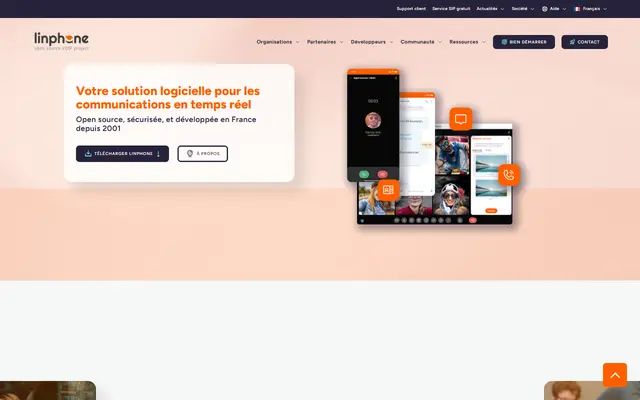 | Linphone | Open source | 2001 | #38,333 | seen in search |
| IvozProvider | Open source | n/a | n/a | seen in search |
Self-hosted alternatives to RingCentral (4)
Software you run on your own server or computer. You keep control of the data and the uptime, and you take on updates, backups and security. For RingCentral, this list contains 4 entries in this group, including 3CX, STARFACE, Nextcloud Talk and OpenTalk. See all self-hosted alternatives across every product →
Choosing among self-hosted alternatives to RingCentral
Self-hosted systems run on your own server or private cloud. Our data names four, all seen in search: 3CX, STARFACE, Nextcloud Talk (founded 2016) and OpenTalk. 3CX and STARFACE are PBX products, while Nextcloud Talk and OpenTalk focus on messaging and video. This route keeps call data under your control but makes uptime your job. Read the self-hosted hub and the LogMeIn page for related remote-work tools.
| Site | Name | Type | Founded | Majestic rank | Check |
|---|---|---|---|---|---|
| 3CX | Self-hosted | n/a | #13,606 | seen in search | |
| STARFACE | Self-hosted | n/a | n/a | seen in search | |
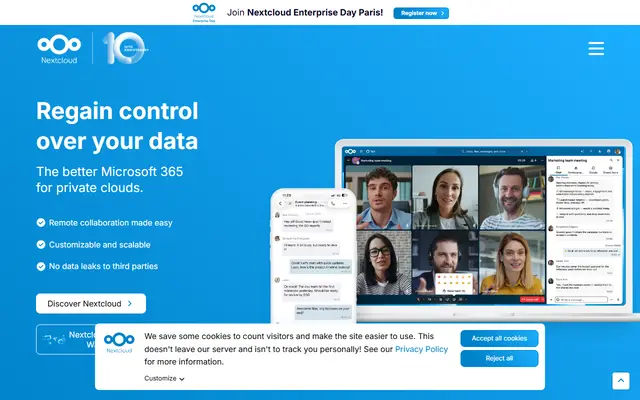 | Nextcloud Talk | Self-hosted | 2016 | #1,687 | seen in search |
| OpenTalk | Self-hosted | n/a | n/a | seen in search |
Regional and local alternatives to RingCentral (7)
Vendors that are strongest in a particular country or region: local languages, local payment methods, local data-residency rules and local support hours. For RingCentral, this list contains 7 entries in this group, including Wildix, Ringover, Placetel, NFON and Voys. See all regional alternatives across every product →
Choosing among regional alternatives to RingCentral
Regional providers are built around local numbers, languages and legal rules. Our data lists seven, all seen in search: Wildix and Telavox (both labelled Europe), Ringover (France), Placetel, NFON and sipgate (Germany), and Voys (Netherlands). A local provider can simplify number registration, invoicing and support in your language. The trade-off is a smaller ecosystem of integrations. The regional hub shows other local specialists.
| Site | Name | Type | Founded | Majestic rank | Check |
|---|---|---|---|---|---|
 | Wildix | Regional · Europe | n/a | #163,185 | seen in search |
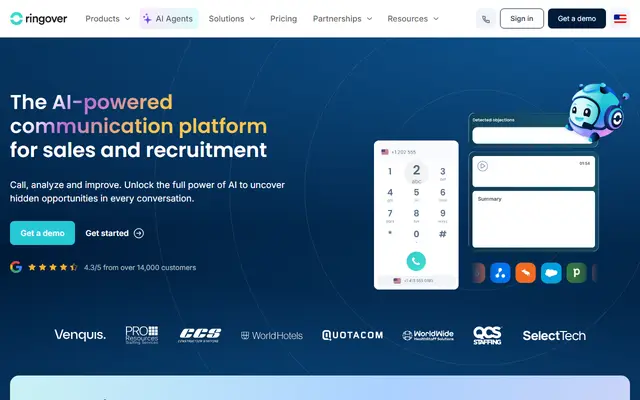 | Ringover | Regional · France | n/a | #121,740 | seen in search |
| Placetel | Regional · Germany | n/a | n/a | seen in search | |
| NFON | Regional · Germany | n/a | n/a | seen in search | |
| Voys | Regional · Netherlands | n/a | n/a | seen in search | |
| sipgate | Regional · Germany | n/a | n/a | seen in search | |
| Telavox | Regional · Europe | n/a | n/a | seen in search |
Built-in features of platforms you already use to RingCentral (1)
Capabilities that already ship inside a suite or platform you pay for. They rarely match a specialist tool feature for feature, but they cost nothing extra. For RingCentral, this list contains 1 entry in this group, including Brevo Phone. See all built-in alternatives across every product →
Choosing among built-in alternatives to RingCentral
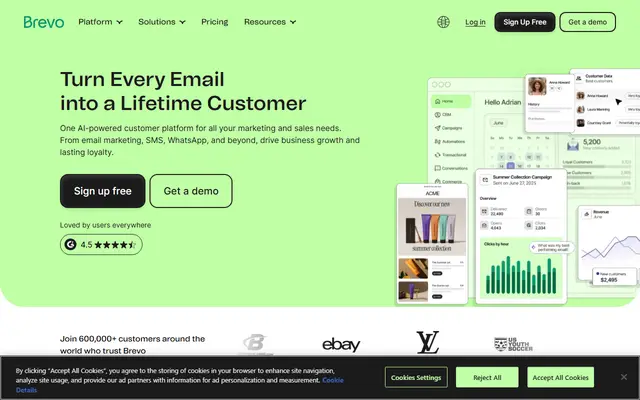
Built-in means calling that comes as part of another platform. Our data lists one: Brevo Phone, listed under brevo.com, founded in 2012, headquartered in France and seen in search. It suits teams that already use that platform for marketing and want calls in the same account. It is unlikely to replace a full office phone system, so treat it as a complement. The built-in hub collects similar cases.
Adjacent tools to RingCentral (2)
Products that cover part of the job or approach it from another angle. Useful when you only need a slice of the original product. For RingCentral, this list contains 2 entries in this group, including Slack and TrueConf. See all adjacent alternatives across every product →
Choosing among adjacent alternatives to RingCentral
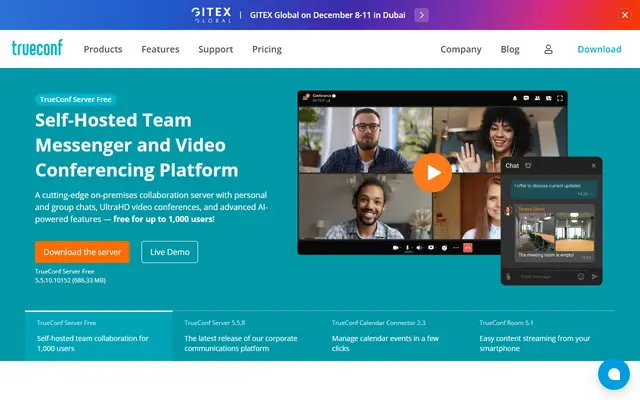
Adjacent products replace part of what RingCentral does without being a phone system. Our data lists two, both seen in search: Slack for team messaging and TrueConf for video conferencing, founded in 2003 and headquartered in Russia according to our data. Choose one when chat or meetings are the real need and phone lines can be bought elsewhere. The adjacent hub has more examples.
DIY and self-made approaches to RingCentral (2)
Spreadsheets, scripts and workflows you assemble yourself. Cheap and flexible for small needs, but they depend on whoever built them. For RingCentral, this list contains 2 entries in this group, including Asterisk + SIP trunk (Vonage) and Callytics. See all diy alternatives across every product →
Choosing among DIY alternatives to RingCentral
DIY means assembling your own system from parts. Our data lists two, both seen in search: Asterisk combined with a SIP trunk from Vonage, and Callytics. This gives maximum control and can cost little for a small team, but you become the maintainer of dial plans, security and carrier relations. See the DIY hub for the approach and compare with the managed route on the Aircall page.
Migration checklist: moving away from RingCentral
Moving a phone system is mainly about not dropping calls, so plan around your numbers. Request number porting as early as the new provider allows, keep the old service running until the transfer completes, and agree a cutover time outside business hours. Then export what you can: call logs, voicemail greetings, queue settings and user lists, stored somewhere neutral.
Run a pilot with a few users before the full move, covering inbound, outbound, transfers, voicemail and mobile use. Expect call routing to be rebuilt rather than copied, since each provider models queues and schedules in its own way. Keep a written map of every number and where it should ring, and test emergency calling at each site. Tell customers and colleagues about any changed numbers or extensions in advance.
- List every number, extension, hunt group and auto-attendant with its routing rules.
- Ask both providers for the porting timeline and keep the old plan until it completes.
- Export call logs, recordings and voicemail you must retain for legal or business reasons.
- Record greetings and opening hours, then rebuild them in the new system.
- Check desk phones and headsets for compatibility, or budget replacements.
- Reconnect CRM, help desk and calendar integrations and test call logging.
- Pilot with a small group and log every fault before the full cutover.
- Verify emergency calling and fax or alarm lines, which are often forgotten.
Mistakes to avoid when switching
The most common error is comparing headline per-user prices without checking what is included. Recording, analytics, extra numbers and international minutes can change the total, so ask for a quote against your real usage. Another is underestimating the porting delay and cancelling the old service too early, which can leave numbers dead for days.
Teams also forget the people side. Receptionists, sales reps and support agents have habits built around one interface, so schedule training. Finally, avoid relying on an unconfirmed entry without verifying that the product is still active; Avaya and Mitel are the two in this list that we could not confirm in our search review. Reading a directory page such as LogMeIn alternatives is no substitute for checking each vendor yourself.
- Choosing by brand or by one demo feature instead of by your real call flows.
- Comparing prices without counting recording, numbers and international calling.
- Cancelling the old service before the number port has completed.
- Skipping a pilot and discovering routing faults on a Monday morning.
- Forgetting alarm, fax and emergency lines during the move.
- Relying on an unconfirmed entry without checking that it is still active.
What the public data says about these alternatives
Our data contains 42 alternatives, of which 40 were seen in search and 2 are unconfirmed. By type, the largest groups are open-source (10), direct (8) and regional (7), followed by enterprise (5), self-hosted (4), budget (3), adjacent (2), DIY (2) and built-in (1). The size of the open-source group shows how many PBX projects exist, although most need skilled staff to run.
RingCentral has a Majestic rank of 5600 and a Tranco rank of 2159. Among the alternatives, Zoom Phone's domain sits at 479, Brevo at 1136 and Nextcloud at 1687, while GoTo is at 3030. At the other end, FusionPBX is at 438,102 and OpenSIPS at 361,827. Where years are known, Sangoma (1984) and 8x8 (1987) are the oldest, Asterisk dates from 1999, and Dialpad and Aircall were founded in 2014. Countries are partial: the United States appears five times. Treat these as signals about prominence and origin, not quality. The methodology page explains each source.
Frequently asked questions
What is the best free alternative to RingCentral?
Our data has no dedicated free type for this page, but several entries cost nothing in licence terms. Open-source PBX projects such as Asterisk and FreePBX are free to download and need your own hosting. Google Voice sits in our budget group instead. Check current terms, since free options usually shift costs to setup and upkeep.
Is there an open-source alternative to RingCentral?
Yes. Our data lists ten open-source options, all seen in search, including Asterisk, FreePBX, FusionPBX, FreeSWITCH, OpenSIPS and Linphone. Some are full PBX systems and others are components or softphones. They suit teams with telephony skills who are ready to run servers and SIP trunks.
What is the cheapest alternative to RingCentral?
Based on our public sources, the budget group is Ooma, Quo and Google Voice. We do not list prices, so compare current plans against your real number of users, numbers and calling regions. A cheaper per-user fee can be offset by extra charges for recording or international minutes.
Which RingCentral alternative is closest in features?
The direct group is the nearest match: Dialpad, 8x8, GoTo, Nextiva and Vonage all compete for business phone buyers, and Aircall and CloudTalk lean toward sales and support calling. Match the choice to the modules you actually use, such as queues, recording and integrations. Verify each product's current features on its own site.
Can I keep my phone numbers when I switch?
Usually numbers can be ported to a new provider, but the rules and timing depend on the country and the carrier. We do not verify porting terms. Request the transfer early, keep the old service active until it completes, and confirm the process with the new vendor in writing.
Are there alternatives for European businesses?
Yes. Our regional group includes Ringover from France, Placetel, NFON and sipgate from Germany, Voys from the Netherlands, and Wildix and Telavox, both labelled Europe. All seven were seen in search. They may help with local numbers, language and support, but check integrations before choosing.
Should I host my own phone system instead?
Self-hosting suits teams that want data on their own servers and can handle updates, security and call quality. Our data lists 3CX, STARFACE, Nextcloud Talk and OpenTalk as self-hosted options. If nobody can own uptime, a hosted service is usually the safer route. Review the vendor documentation before deciding.
Do I need an enterprise platform?
Only if your size or procurement rules demand it. Our enterprise group lists Microsoft Teams Phone, Cisco Webex Calling and Zoom Phone, plus Avaya and Mitel, which we could not confirm in our review. Smaller teams often find a direct cloud provider simpler and easier to administer.
Bottom line
RingCentral remains a prominent provider, and nothing in our public sources suggests it is being withdrawn. The reasons to look elsewhere are specific: you want to pay for fewer modules, you need local numbers and support in a particular country, you prefer the phone line inside a platform you already use, or you want to run the system yourself. Match the type to the reason and the shortlist shrinks quickly.
For most teams the practical path is a short list of three: one direct provider such as Dialpad, 8x8 or GoTo, one budget or regional option, and one wildcard such as a self-hosted PBX if you have the skills. Run a pilot, test your number port, and check current plans on each vendor site. Entries marked unconfirmed deserve extra care. Continue with the Genesys page or the telephony category.
More alternatives pages related to RingCentral

Where RingCentral shows up as an alternative
RingCentral appears in the alternatives lists of 1 other product: Aircall. Comparing those lists shows which tools keep being recommended across the whole category.
Explore more in Telephony, Video & Communications
Cloud phone systems, contact centers, CPaaS and video hosting. Browse the full Telephony, Video & Communications hub, or jump to a related comparison: Genesys, Aircall, Twilio, Vimeo.