MYOB Alternatives: 50 Accounting Software Options for 2026
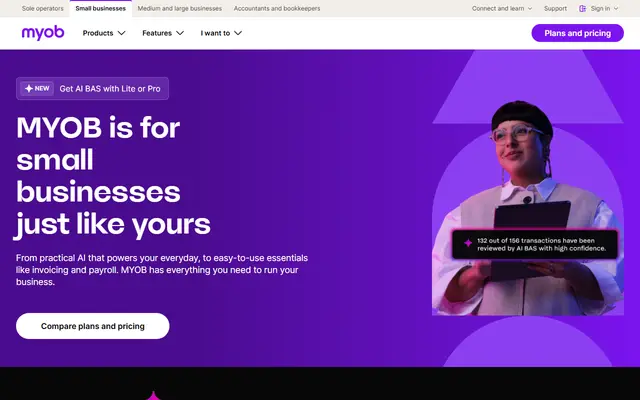
MYOB is accounting software that small and mid-sized businesses use for bookkeeping, invoicing and reporting. People start looking for something else for ordinary reasons: the price no longer matches the size of the business, a bookkeeper prefers another tool, the company is growing into an ERP, or it simply wants a product built around the tax rules of its own country. This page collects fifty alternatives so that the search does not have to start from a blank page.
Every entry comes from public sources and is sorted into one of ten types, such as direct competitors, free tools, open-source projects, enterprise suites and regional products. Thirty of the fifty were seen in a public web search review carried out in November 2026. The other twenty are marked as not confirmed in our search review, which means we found a reference to them but could not corroborate it.
Use the sections below to narrow the field. The first half explains what MYOB is, how to choose a replacement and which tool fits which situation. The middle walks through each type of alternative. The last part covers migration, common mistakes and what the public data shows. For the wider picture, see the accounting category hub and our methodology page.
MYOB is available at myob.com. Its domain ranks #25,412 in the Majestic Million, a free public list of the most-linked-to domains on the web. Its domain ranks #24,776 in the Tranco list of the most visited domains.
This page lists 50 alternatives to MYOB, spread across 10 types: direct (7), budget (3), free (3), enterprise (5), open source (5), self-hosted (4), regional (15), built-in (3), adjacent (3), diy (2).
30 of the 50 entries were seen in live web search results during our November 2026 review; the remaining entries are labelled unconfirmed so you know where extra checking is needed.
Regional options cover Australia, New Zealand, United Kingdom, France, Germany, Netherlands, Spain, Sweden and more.
- Direct: 7 (14%)
- Budget: 3 (6%)
- Free: 3 (6%)
- Enterprise: 5 (10%)
- Open source: 5 (10%)
- Self-hosted: 4 (8%)
- Regional: 15 (30%)
- Built-in: 3 (6%)
- Adjacent: 3 (6%)
- DIY: 2 (4%)
30 of 50 entries (60%) were seen in live search results during our review; the rest are labelled “unconfirmed” and should be checked on the vendor site.
Quick comparison: the closest alternatives to MYOB
| Site | Name | Type | Founded | Majestic rank | Check |
|---|---|---|---|---|---|
 | Xero | Direct | 2006 | #2,716 | seen in search |
 | QuickBooks Online | Direct | n/a | n/a | seen in search |
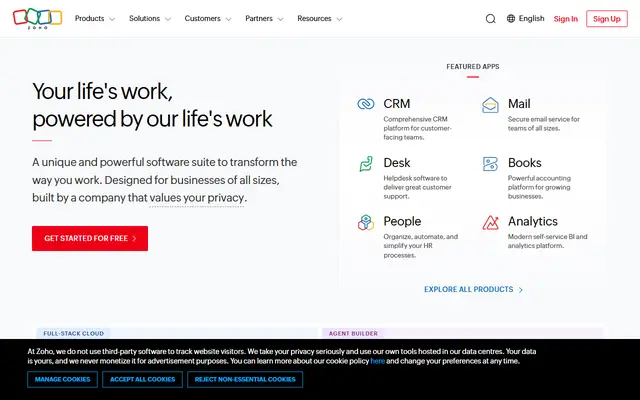
 | Zoho Books | Direct | n/a | n/a | seen in search |
 | FreshBooks | Direct | n/a | #5,299 | seen in search |
 | Sage Accounting | Direct | 1981 | #3,446 | unconfirmed |
What is MYOB and why do people look for alternatives?
MYOB, found at myob.com, is an accounting product. In our public data its domain has a Majestic rank of 25,412 and a Tranco rank of 24,776, which places it among the widely referenced business software sites but well behind the largest global names. We do not state prices, plans or feature lists for it here, because the public data we compiled does not include them. What we can say is what a product in this category normally does: it records transactions, issues invoices, tracks bills, reconciles bank activity and produces the reports a business owner or accountant needs at the end of a period.
People look for alternatives to accounting software for a handful of recurring reasons. The first is cost relative to value: a sole trader or a small studio may find a full ledger more than it needs, while a growing company may find it too light. The second is the accountant. Bookkeepers tend to standardise on one or two tools, and a client sometimes has to follow. The third is geography. Tax filing, payroll rules, e-invoicing formats and bank feeds differ by country, so a business that moves or expands may want a product designed around its new home market.
A fourth reason is control. Some owners want their books on their own server, which points to open-source or self-hosted options. Others want fewer separate subscriptions and prefer the invoicing already built into a payments platform. Finally, there is the upgrade path: once inventory, multiple entities or complex approvals appear, an ERP such as NetSuite becomes a realistic next step. The sections that follow sort the fifty options so that each of these motivations has a clear starting point, and they stay general where the public data is silent.
How we built this list
The list was compiled from public sources in November 2026. We started from product names that appear repeatedly in published comparisons and search results for MYOB-type software, then added each product's domain, country and founding year where an open dataset gave one, plus its Majestic rank as a rough popularity signal. Our methodology page explains the sources and licences in full.
Two labels matter. Seen in search means the product appeared as a current option in our public web search review in November 2026. Unconfirmed, which we also write as not confirmed in our search review, means we found a reference but could not corroborate it, so it should be checked before you rely on it. Unconfirmed entries are never presented as top picks.
Types exist because the word alternative hides very different trade-offs. A free cloud tool, a self-hosted open-source ledger and an enterprise ERP all replace accounting software, but they differ in cost, effort and risk. Grouping them lets you compare like with like. We did not test any of these products, and prices, features and availability are not checked, so confirm them with each vendor.
How to choose a MYOB alternative
Start with the job the software has to do rather than with a brand. Write down what runs through your books each month: invoices sent, bills paid, bank accounts, payroll runs, stock movements, foreign-currency transactions and the reports your accountant asks for. Then split that list into must-haves and nice-to-haves. A business that only invoices a dozen clients has very different needs from one that holds inventory in three locations.
Next, consider where you operate. Tax and compliance rules are local, so a regional product built for your country can save more effort than a bigger international name. If you file in the UK, Germany, India or Japan, look at the regional alternatives first. If your accountant already works in a specific tool, check how well the alternative lets them collaborate before anything else.
Finally, think about the exit as well as the entry. Choose a product whose data you can export in standard formats, and run a small trial with real data before committing. Compare the price of the full stack you will actually use, including add-ons, payroll and extra users, rather than the headline figure. The criteria below are the ones we would weigh first for accounting software.
- Fit with your tax regime: sales tax or VAT handling, e-invoicing rules and year-end filing for your country.
- Bank feeds and reconciliation for the banks you actually use.
- Accountant access: can your bookkeeper work in it without sharing a login?
- Growth ceiling: inventory, multi-currency, multiple entities and approvals if you expect them.
- Data portability: export of the chart of accounts, contacts, open invoices and history.
- Deployment model: hosted by a vendor, hosted by you, or a desktop file.
- Total cost, counting users, add-ons, payroll and any implementation help.
Quick picks by situation
If you want the nearest like-for-like replacement for a small business, begin with Xero, QuickBooks Online, Zoho Books and FreshBooks. They all appeared in our search review as direct competitors, and each has a dedicated page or sits inside a broader suite page on this site.
If the budget is tight, Wave and Manager.io are the free options we saw, and ZipBooks and Invoice Simple are the budget-minded ones. A freelancer who mostly needs to invoice may find an invoicing tool enough and skip full double-entry accounting altogether. If you already take payments through a processor, Stripe Invoicing and Square Invoices are built-in options worth a look, and the Stripe page covers that ecosystem.
If you want to own your data, Akaunting, Invoice Ninja, GnuCash, ERPNext and Odoo can be run on your own infrastructure, which suits technical teams. If you are based in Australia, the United Kingdom, Germany, India or Japan, check Reckon, FreeAgent, sevDesk, Lexware Office and TallyPrime, which were seen in search as local products. If you have outgrown bookkeeping and need an ERP, compare NetSuite, Sage Intacct, Microsoft Dynamics 365 Business Central and Acumatica. And if you are still running everything in a spreadsheet, Google Sheets and Microsoft Excel appear in the do-it-yourself group, but they carry the usual risks of manual books.
All 50 alternatives to MYOB by type
Direct alternatives to MYOB (7)
Products that solve the same core problem for the same kind of buyer. Switching usually means moving data and retraining people, not changing how you work. For MYOB, this list contains 7 entries in this group, including Xero, QuickBooks Online, Zoho Books, FreshBooks and Sage Accounting. See all direct alternatives across every product →
Choosing among direct alternatives to MYOB
Direct alternatives do the same job as MYOB for the same kind of customer. In our review the verified ones are Xero, QuickBooks Online, Zoho Books and FreshBooks. Xero lists New Zealand as its headquarters country and a 2006 founding year, Zoho Books sits under a company founded in 1996 in India, and FreshBooks lists Canada. QuickBooks Online has the strongest Majestic standing of the four, at rank 546.
Three more direct names, Sage Accounting, Sage 50 and Bonsai, are not confirmed in our search review, so treat them as leads to check. Sage's domain data shows a United Kingdom headquarters and a 1981 founding year.
When comparing direct options, test the same three tasks in each: import your contacts and chart of accounts, reconcile one month of bank activity, and produce the report your accountant needs. Direct tools usually differ most in how they handle local tax and in the ecosystem of connected apps. Browse the full direct alternatives hub to compare across categories.
| Site | Name | Type | Founded | Majestic rank | Check |
|---|---|---|---|---|---|
| Xero | Direct | 2006 | #2,716 | seen in search |
| QuickBooks Online | Direct | n/a | n/a | seen in search |
| Zoho Books | Direct | n/a | n/a | seen in search |
| FreshBooks | Direct | n/a | #5,299 | seen in search |
| Sage Accounting | Direct | 1981 | #3,446 | unconfirmed |
| Sage 50 | Direct | 1981 | #3,446 | unconfirmed |
 | Bonsai | Direct | n/a | #36,809 | unconfirmed |
Budget-friendly alternatives to MYOB (3)
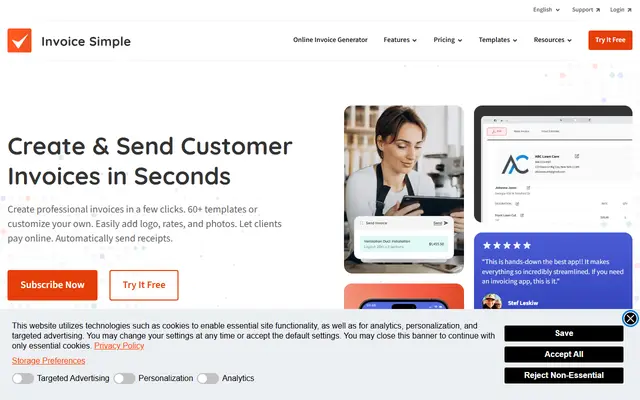
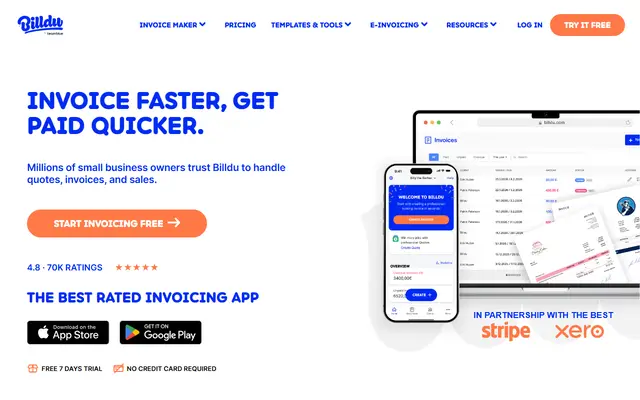
Lower-cost tools that cover the essential jobs without the full feature surface. A good fit when you pay for seats or features you rarely open. For MYOB, this list contains 3 entries in this group, including ZipBooks, Invoice Simple and Billdu. See all budget alternatives across every product →
Choosing among budget-friendly alternatives to MYOB
Budget-friendly options aim at very small businesses and freelancers who want to pay less and can live with a narrower scope. We found three: ZipBooks and Invoice Simple, both seen in search, and Billdu, which is not confirmed in our search review. Their Majestic ranks are 191,098, 119,446 and 180,385, which suggests a smaller footprint than the mainstream direct tools.
A smaller footprint is not a flaw in itself, but it means fewer integrations, fewer accountants familiar with the product and less public documentation. Before switching, check whether the tool can handle your tax, bank connections and reporting needs, and whether it will still do so if your volume doubles.
There is little point comparing prices on this page, since we do not track them. Instead, count the features you would need to bolt on elsewhere. A cheap invoicing app plus a separate expense tool plus a spreadsheet can cost more in time than one slightly dearer ledger. The budget-friendly hub shows how this type looks in other categories.
Free options to MYOB (3)
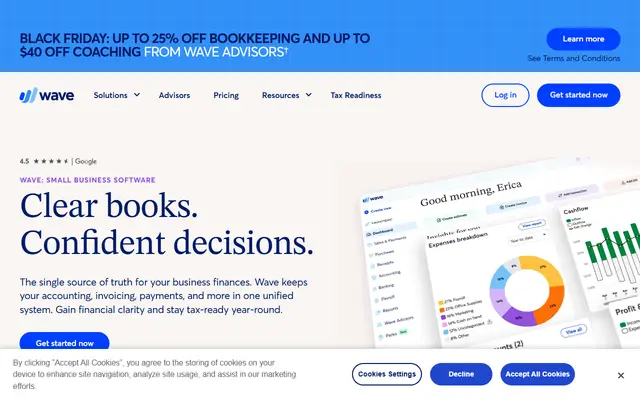
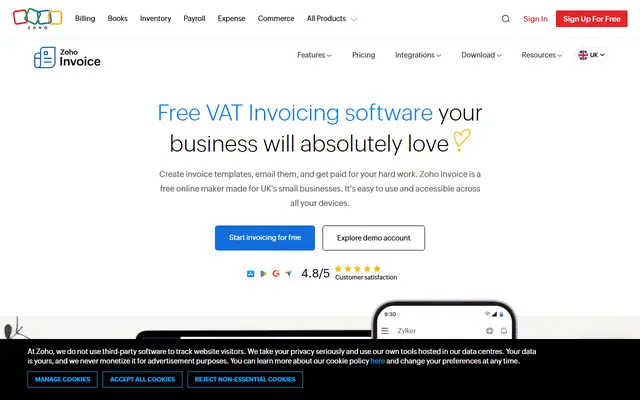
Tools with a free plan or free access that is usable on its own. Limits on volume, users or history usually apply, so check them before you commit. For MYOB, this list contains 3 entries in this group, including Wave, Zoho Invoice and Manager.io. See all free alternatives across every product →
Choosing among free alternatives to MYOB
Free alternatives cost nothing to start with, though the business model behind them varies, so read what is actually free. Our review found three: Wave, a product with a Canada headquarters entry and a 2009 founding year; Zoho Invoice, from the same 1996-founded India-based company as Zoho Books; and Manager.io, whose Majestic rank is 243,289.
Free tools suit sole traders, side projects and very small companies with simple books. They are a poor fit when you need payroll in several countries, inventory, or an audit trail that a lender or investor will inspect. Check which features sit behind a paid tier and what happens to your data if the free plan changes.
Because only three free options turned up, the pool is thin, and two of the three are invoicing-focused rather than full ledgers. If you need a complete free ledger with full control, the open-source and self-hosted groups below may fit better, at the cost of doing your own setup. See the free alternatives hub for other categories.
| Site | Name | Type | Founded | Majestic rank | Check |
|---|---|---|---|---|---|
 | Wave | Free | 2009 | #10,711 | seen in search |
 | Zoho Invoice | Free | n/a | n/a | seen in search |
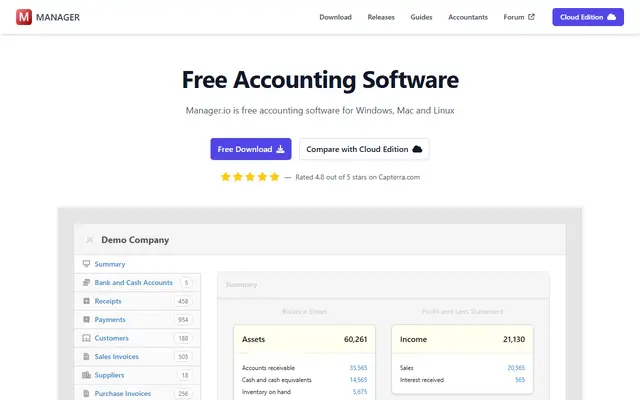 | Manager.io | Free | n/a | #243,289 | seen in search |
Enterprise-grade alternatives to MYOB (5)
Platforms built for large teams: governance, audit trails, integrations and support contracts. They tend to cost more and take longer to roll out. For MYOB, this list contains 5 entries in this group, including NetSuite, Sage Intacct, Microsoft Dynamics 365 Business Central, Acumatica and SAP Business One. See all enterprise alternatives across every product →
Choosing among enterprise-grade alternatives to MYOB
Enterprise-grade options are for businesses that have outgrown standalone bookkeeping and need multi-entity consolidation, workflow approvals, inventory or project accounting. We saw NetSuite (listed with a 1998 founding year and a United States headquarters), Sage Intacct, Microsoft Dynamics 365 Business Central and Acumatica, which lists the United States and 2006. SAP Business One also appears, but it is not confirmed in our search review.
Business Central stands out for its Majestic rank of 9, though that reflects the Microsoft domain rather than the product alone. Rank figures for entries on large corporate domains should be read with that in mind.
Moving up to this tier usually means a longer project: implementation partners, data mapping, user training and a parallel run. Budget time as well as licence cost. If you are weighing it, ask whether a mid-market direct tool with a few add-ons would meet your needs for another year or two. Our enterprise-grade hub compares the same step in other categories.
| Site | Name | Type | Founded | Majestic rank | Check |
|---|---|---|---|---|---|
 | NetSuite | Enterprise | 1998 | #3,596 | seen in search |
| Sage Intacct | Enterprise | 1981 | #3,446 | seen in search |
 | Microsoft Dynamics 365 Business Central | Enterprise | n/a | n/a | seen in search |
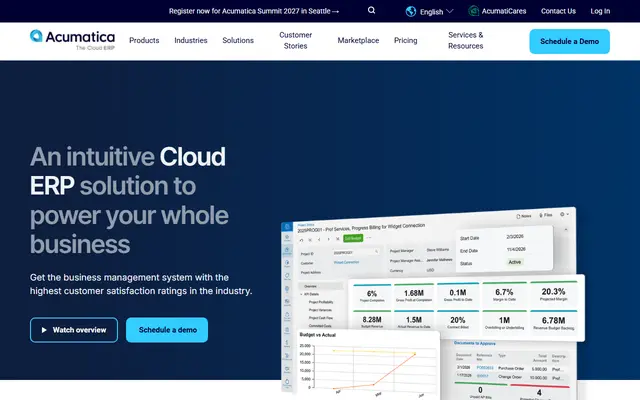 | Acumatica | Enterprise | 2006 | #46,805 | seen in search |
 | SAP Business One | Enterprise | 1972 | #618 | unconfirmed |
Open-source alternatives to MYOB (5)
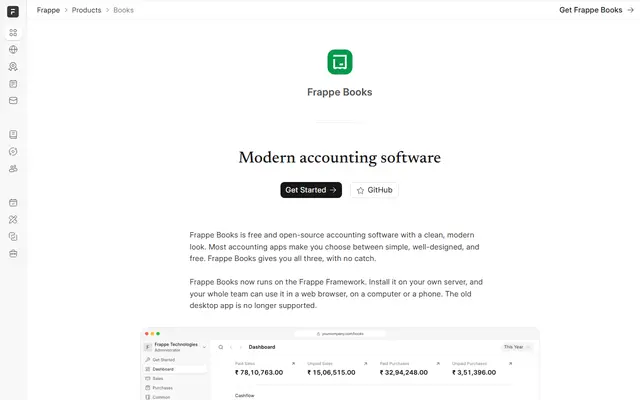
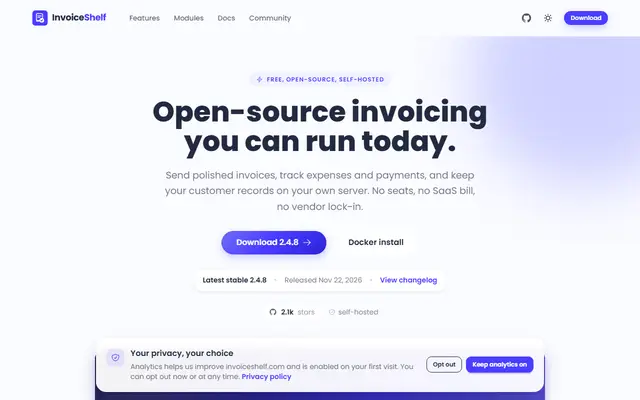
Projects whose source code is public. You can inspect, modify and often self-host them, at the price of doing more of the maintenance yourself. For MYOB, this list contains 5 entries in this group, including Akaunting, Invoice Ninja, GnuCash, Frappe Books and InvoiceShelf. See all open source alternatives across every product →
Choosing among open-source alternatives to MYOB
Open-source alternatives publish their code, so you can inspect, modify and host them yourself. We saw five: Akaunting, Invoice Ninja, GnuCash, Frappe Books and InvoiceShelf. GnuCash has the longest history in the group, with a 1997 founding year in our data and a Majestic rank of 18,644.
These projects differ widely. GnuCash is a classic double-entry ledger, while Invoice Ninja and InvoiceShelf concentrate on invoicing. Akaunting and Frappe Books sit in between. Because the public data does not describe features, check each project's documentation for bank import, multi-currency and tax handling.
The saving on licence fees is real, but so is the effort. You or someone you hire must handle installation, updates, backups and security, and you must accept community support unless you buy it. For an accounting system that holds financial records, a tested restore procedure is not optional. Read the open-source hub for how this type works across categories.
| Site | Name | Type | Founded | Majestic rank | Check |
|---|---|---|---|---|---|
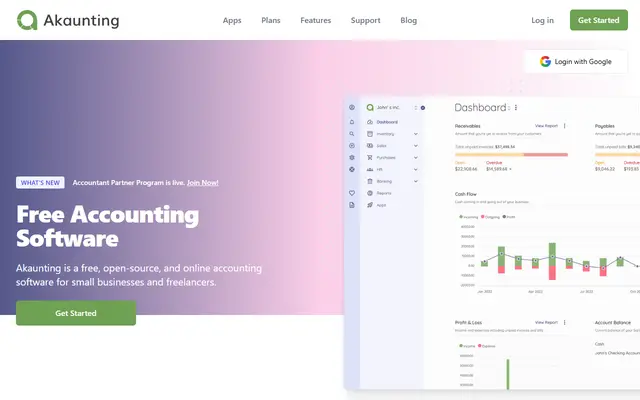 | Akaunting | Open source | n/a | #130,637 | seen in search |
 | Invoice Ninja | Open source | n/a | #59,928 | seen in search |
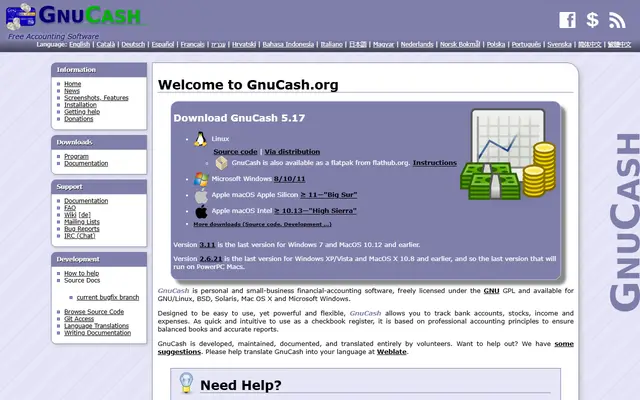 | GnuCash | Open source | 1997 | #18,644 | seen in search |
 | Frappe Books | Open source | n/a | n/a | seen in search |
 | InvoiceShelf | Open source | n/a | n/a | seen in search |
Self-hosted alternatives to MYOB (4)
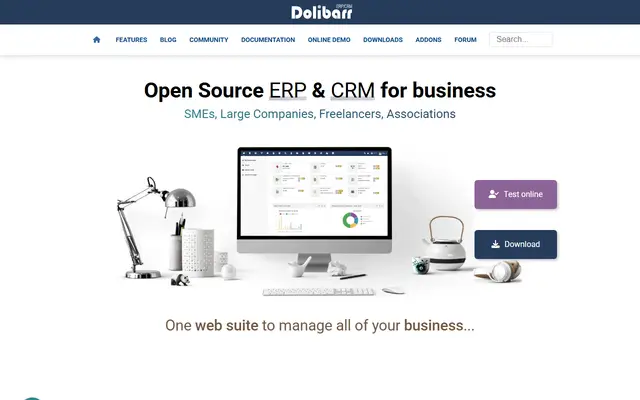
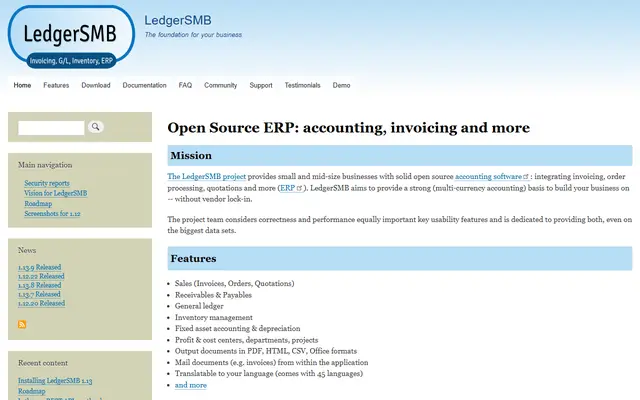
Software you run on your own server or computer. You keep control of the data and the uptime, and you take on updates, backups and security. For MYOB, this list contains 4 entries in this group, including ERPNext, Odoo, Dolibarr and LedgerSMB. See all self-hosted alternatives across every product →
Choosing among self-hosted alternatives to MYOB
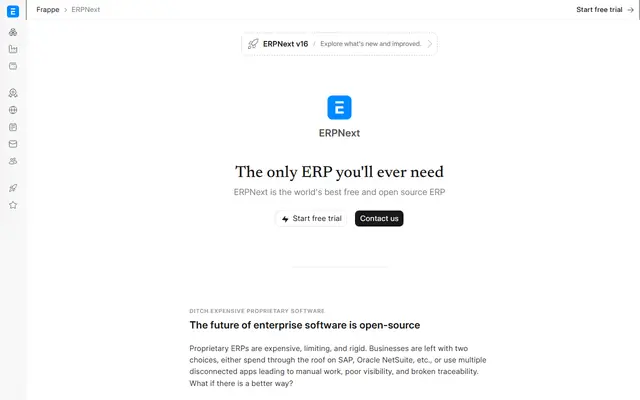
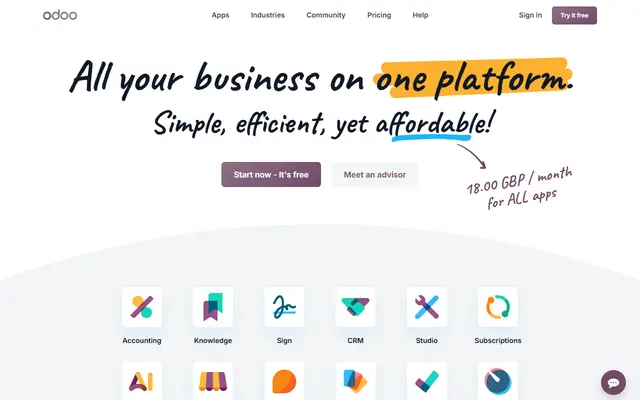
Self-hosted products run on a server you control, whether a rented virtual machine or your own hardware. Our review found ERPNext, Odoo, Dolibarr and LedgerSMB. The first three were seen in search; LedgerSMB is not confirmed in our search review. Odoo has a 2004 founding year and a Majestic rank of 340, Dolibarr dates to 2002, and ERPNext ranks 22,986.
Several of these are full business suites rather than pure accounting tools, so you gain inventory, sales and other modules alongside the ledger, along with a larger system to learn and maintain. That breadth can replace several subscriptions, but it can also make a simple bookkeeping job feel heavy.
Plan for hosting costs, a backup schedule, security patching and someone responsible for upgrades. If nobody on the team can do that, a hosted service from the same project, where one exists, may be safer. The self-hosted hub explains the trade-offs more broadly.
| Site | Name | Type | Founded | Majestic rank | Check |
|---|---|---|---|---|---|
 | ERPNext | Self-hosted | n/a | #22,986 | seen in search |
 | Odoo | Self-hosted | 2004 | #340 | seen in search |
 | Dolibarr | Self-hosted | 2002 | #19,607 | seen in search |
 | LedgerSMB | Self-hosted | 2006 | #454,683 | unconfirmed |
Regional and local alternatives to MYOB (15)
Vendors that are strongest in a particular country or region: local languages, local payment methods, local data-residency rules and local support hours. For MYOB, this list contains 15 entries in this group, including Reckon, Saasu, Bookipi, Hnry and Cashflow Manager. See all regional alternatives across every product →
Choosing among regional alternatives to MYOB
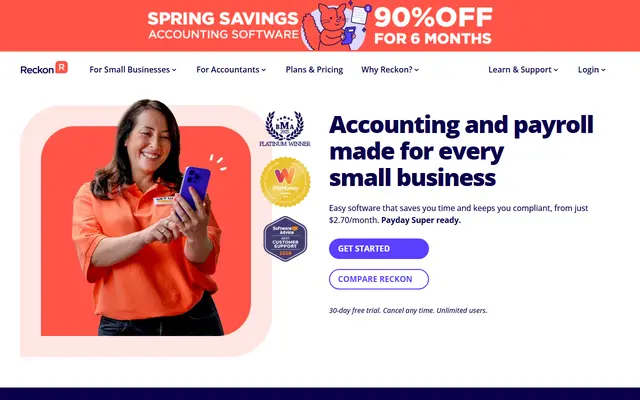
Regional products are built around one country's tax rules, banks and filing formats. This is the largest group, with fifteen entries. Verified ones include Reckon and Saasu (Australia), FreeAgent (United Kingdom, founded 2007), Pennylane (France), sevDesk (Germany, 2013), Lexware Office (Germany, 1989) and TallyPrime (India, 1988).
Not confirmed in our search review are Bookipi (Australia), Hnry and Cashflow Manager (New Zealand), Moneybird (Netherlands), Holded (Spain), Fortnox (Sweden), freee and Money Forward (Japan). Treat them as leads rather than recommendations.
The case for a regional tool is compliance fit: local tax returns, statutory reports and bank connections often work better when the product was designed for them. The case against is reach, since a business that trades across borders may outgrow a single-country tool. If your accountant already uses a particular local product, that is often decisive. Compare the full regional alternatives hub when you want examples from other markets.
| Site | Name | Type | Founded | Majestic rank | Check |
|---|---|---|---|---|---|
 | Reckon | Regional · Australia | 1987 | #169,946 | seen in search |
 | Saasu | Regional · Australia | n/a | #632,440 | seen in search |
 | Bookipi | Regional · Australia | n/a | #261,961 | unconfirmed |
 | Hnry | Regional · New Zealand | n/a | #761,861 | unconfirmed |
| Cashflow Manager | Regional · New Zealand | n/a | n/a | unconfirmed | |
 | FreeAgent | Regional · United Kingdom | 2007 | #32,620 | seen in search |
 | Pennylane | Regional · France | n/a | #56,719 | seen in search |
 | sevDesk | Regional · Germany | 2013 | #57,384 | seen in search |
 | Lexware Office | Regional · Germany | 1989 | #16,067 | seen in search |
 | Moneybird | Regional · Netherlands | n/a | #519,222 | unconfirmed |
 | Holded | Regional · Spain | 2016 | #58,074 | unconfirmed |
 | Fortnox | Regional · Sweden | 2001 | #93,903 | unconfirmed |
 | TallyPrime | Regional · India | 1988 | #44,318 | seen in search |
 | freee | Regional · Japan | 2012 | #22,011 | unconfirmed |
 | Money Forward | Regional · Japan | n/a | #18,076 | unconfirmed |
Built-in features of platforms you already use to MYOB (3)
Capabilities that already ship inside a suite or platform you pay for. They rarely match a specialist tool feature for feature, but they cost nothing extra. For MYOB, this list contains 3 entries in this group, including Stripe Invoicing, Square Invoices and PayPal Invoicing. See all built-in alternatives across every product →
Choosing among built-in alternatives to MYOB
Built-in alternatives are invoicing features that live inside a platform you may already use. We saw three: Stripe Invoicing, Square Invoices and PayPal Invoicing. Stripe Invoicing and Square Invoices were seen in search, while PayPal Invoicing is not confirmed in our search review. Stripe lists a 2010 founding year and a United States headquarters entry, and see the Stripe page for related options.
The appeal is simplicity: invoices, payment and reconciliation sit in one place, so there is nothing extra to buy. The limit is scope. A payments platform's invoicing is rarely a general ledger, so you may still need accounting software for bills, tax and year-end reports.
Built-in tools make sense when most of your revenue already passes through that platform and your books are simple. They make less sense when you have supplier bills, stock or payroll to manage. Think of them as a complement or a stepping stone, and see the built-in hub for other examples.
| Site | Name | Type | Founded | Majestic rank | Check |
|---|---|---|---|---|---|
 | Stripe Invoicing | Built-in | 2010 | #136 | seen in search |
 | Square Invoices | Built-in | 2009 | #1,029 | seen in search |
| PayPal Invoicing | Built-in | 1998 | #84 | unconfirmed |
Adjacent tools to MYOB (3)
Products that cover part of the job or approach it from another angle. Useful when you only need a slice of the original product. For MYOB, this list contains 3 entries in this group, including Employment Hero, Dext and Bill. See all adjacent alternatives across every product →
Choosing among adjacent alternatives to MYOB
Adjacent tools do not replace a full accounting package; they take over one slice of what it did. Our review lists three, all of them not confirmed in our search review: Employment Hero, Dext and Bill. Bill lists a United States headquarters and a 2006 founding year, while Dext and Employment Hero carry Majestic ranks of 42,274 and 39,856.
Names in this group should be read as ideas for splitting the workload rather than as replacements. A company might keep a lightweight ledger and hand payroll, receipt capture or bill payment to a specialist. That can work well, but each additional tool needs its own integration and its own bill.
Because all three entries are unconfirmed, verify what each does today before building a plan around it. The adjacent hub shows how this type appears in other categories.
DIY and self-made approaches to MYOB (2)
Spreadsheets, scripts and workflows you assemble yourself. Cheap and flexible for small needs, but they depend on whoever built them. For MYOB, this list contains 2 entries in this group, including Google Sheets and Microsoft Excel. See all diy alternatives across every product →
Choosing among DIY alternatives to MYOB
The do-it-yourself route means running your books in a spreadsheet. Two entries appear: Google Sheets and Microsoft Excel, and both are not confirmed in our search review as accounting alternatives, although the products themselves are very well known. Google Sheets has a Majestic rank of 1, and Excel's entry shows a 1975 founding year, a United States headquarters entry and a rank of 9.
A spreadsheet can be enough for a very small operation with a handful of transactions a month. You control the layout and pay nothing extra. But there is no built-in audit trail, no automatic bank feed and no protection against a broken formula, and your accountant will have to trust the file.
If you take this path, keep a locked monthly copy, separate input from calculation, and move to proper software before volume or complexity grows. The DIY hub gives examples from other categories. For Microsoft-centred workflows, the SharePoint page may also be relevant.
Migration checklist: moving away from MYOB
Switching accounting systems is easiest at a natural boundary, such as the start of a financial year or a tax quarter. Pick a cut-over date, tell your accountant early, and decide how much history you will carry into the new system. Many businesses bring only opening balances and open items, and keep the old system read-only for audit purposes.
Work in a sequence. First export everything you can from MYOB and store it somewhere safe, then set up the new product with a chart of accounts that mirrors the old one or a cleaner version you have agreed with your accountant. Import contacts, then open invoices and bills, then opening balances. Reconcile the new system against the old one on the cut-over date before you stop using the old one.
Run both systems side by side for at least one reporting period if you can, and compare totals for revenue, tax and bank balances. Do not cancel the old subscription until you have confirmed that exports are complete and that you can read them. The checklist below covers the steps most businesses should not skip.
- Pick a cut-over date at a period end and agree it with your accountant.
- Export chart of accounts, contacts, open invoices, open bills, and full transaction history.
- Take a final trial balance and bank reconciliation in MYOB and archive both.
- Recreate tax codes and rates in the new tool and test them on sample transactions.
- Import opening balances and reconcile them against the archived trial balance.
- Reconnect bank feeds and payment links, and check invoice templates and numbering.
- Run both systems in parallel for one period and compare totals.
- Keep read-only access or a full archive for the statutory retention period in your country.
Mistakes to avoid when switching
The most common mistake is choosing by price alone. A cheaper tool that lacks a feature you need will cost more in manual work, and moving a second time is expensive. Compare the whole workflow, not the subscription line.
The second is skipping the accountant. They will have to work in the new system or receive its reports, and they may already know which tools suit your tax regime. Involve them before you pick, not after.
Others are technical. Businesses forget to export attachments, misapply tax codes, or import duplicate contacts that later distort reports. A rushed cut-over in the middle of a period makes reconciliation harder than it needs to be. Read the accounting category hub for further context before you decide.
- Choosing on headline price without counting users, add-ons and payroll.
- Switching mid-period instead of at a month, quarter or year end.
- Leaving the accountant out of the decision.
- Forgetting to export attachments, notes and historical reports.
- Cancelling the old subscription before verifying the new system's totals.
- Relying on an unconfirmed entry without checking it with the vendor.
What the public data says about these alternatives
The list holds 50 alternatives. Thirty were seen in our public web search review in November 2026 and twenty are not confirmed in our search review. By type, regional products are the biggest group with fifteen, followed by direct competitors with seven, enterprise suites and open-source projects with five each, and self-hosted tools with four. Budget, free and built-in and adjacent groups have three each, and the do-it-yourself group has two.
Forty-seven of the fifty entries have a Majestic rank, which we use only as a rough popularity signal. The lowest numbers, meaning the highest standing, belong to Google Sheets at 1 and to Microsoft Dynamics 365 Business Central and Microsoft Excel at 9, all on very large domains. MYOB itself sits at 25,412, so many regional and open-source names rank further down.
Twenty-seven entries carry a founding year. The oldest are SAP Business One at 1972 and Microsoft Excel at 1975, and the most recent in the list is Holded at 2016. Countries named in the data include the United States with five entries, the United Kingdom with four, and New Zealand, India, Germany and Australia with three each. The numbers describe public visibility, not quality.
Frequently asked questions
What is the best free alternative to MYOB?
In our public-source review the free options are Wave, Zoho Invoice and Manager.io. Wave and Zoho Invoice are cloud tools, and Manager.io is a separate accounting product. Free usually means limited scope, so check which features are paid, and see the free alternatives hub for how this compares with other categories.
Is there an open-source alternative to MYOB?
Yes. Akaunting, Invoice Ninja, GnuCash, Frappe Books and InvoiceShelf were all seen in search. GnuCash is a double-entry ledger, while Invoice Ninja and InvoiceShelf focus on invoicing. Open source removes licence fees but adds installation, backup and update work, so check that someone on your side can maintain it.
Which MYOB alternative is closest in function?
The direct group is the best place to start: Xero, QuickBooks Online, Zoho Books and FreshBooks were seen in search. They target the same small-business buyer. Run the same test in each, importing contacts, reconciling a month of bank activity and producing your usual reports, and let that result decide.
What is the cheapest alternative?
We do not track prices, so we cannot name a cheapest option. The free group (Wave, Zoho Invoice, Manager.io) and the budget group (ZipBooks, Invoice Simple) are the natural places to look. Compare total cost, including users, payroll and add-ons, directly with each vendor before you decide.
Can I export my data from MYOB before switching?
Plan to export before you cancel anything. Our public data does not describe MYOB's export formats, so confirm in its help documentation what you can download. Take contacts, the chart of accounts, open invoices and bills, and a final trial balance, and keep an archive of reports for your country's retention period.
Are there accounting tools built for my country?
Often, yes. We found regional products for Australia, New Zealand, the United Kingdom, France, Germany, the Netherlands, Spain, Sweden, India and Japan. Reckon, FreeAgent, sevDesk, Lexware Office and TallyPrime were seen in search. Several others are not confirmed in our search review, so verify them first.
When should I move from accounting software to an ERP?
Consider an ERP when you need multi-entity consolidation, stock control, approval workflows or project costing that bookkeeping software handles poorly. NetSuite, Sage Intacct, Microsoft Dynamics 365 Business Central and Acumatica appeared as enterprise-grade options. Expect a longer implementation, and ask whether add-ons to a simpler tool would do instead.
Can I just use a spreadsheet instead?
For a handful of transactions a month, yes, using Google Sheets or Microsoft Excel. You lose bank feeds, an audit trail and protection against formula errors. Both entries are not confirmed in our search review as accounting alternatives. Move to dedicated software before volume grows or an outside party needs to review your books.
How were these alternatives chosen?
They come from public sources and a public web search review in November 2026. Entries seen in search are corroborated, while unconfirmed ones are marked as not confirmed in our search review. Inclusion is not paid for. See the methodology page for sources, licences and the limits of the data.
Bottom line
There is no single best replacement for MYOB, because the right answer depends on country, size and how much work you want to do yourself. For most small businesses the shortlist starts with Xero, QuickBooks Online, Zoho Books and FreshBooks. For tight budgets, look at Wave or Manager.io. For data control, look at Akaunting, GnuCash, ERPNext or Odoo. For local compliance, a regional tool such as FreeAgent, sevDesk or TallyPrime may beat any global name.
Whatever you choose, move at a period end, involve your accountant, test with real data and keep an archive of the old books. Treat unconfirmed entries as leads, not recommendations, and verify prices and features directly with vendors. When you are ready to compare further, return to the accounting category hub or read how we compile our lists on the about page.
More alternatives pages related to MYOB
Where MYOB shows up as an alternative
MYOB appears in the alternatives lists of 2 other products: QuickBooks, Xero. Comparing those lists shows which tools keep being recommended across the whole category.
Explore more in Accounting & ERP Software
Bookkeeping, invoicing and small-business ERP. Browse the full Accounting & ERP Software hub, or jump to a related comparison: FreshBooks, QuickBooks, Xero.